Chinese butterfly valves: innovation?
2026-01-16
When you hear “Chinese butterfly valves?”, the first thought for many is cheap and cheerful. But behind this superficial assessment lies a much more complex picture, which I have observed for the last seven years, working with the supply of fittings for industrial facilities. Yes, the mass segment is often just copies of old European models, but if you dig deeper, towards design institutes and serious manufacturers, the picture changes. The question is not whether there are innovations, but where they are and what they are aimed at. Often these are not revolutionary breakthroughs, but targeted, but critically important improvements for specific, sometimes very stringent, conditions.
Where do the legs of a stereotype come from?
The stereotype about low quality did not arise out of nowhere. Previously, about ten years ago, a stream of frankly weak products poured onto the market. Thin cast iron, poor seal tolerances, bearing units that failed after six months of operation in the “open-close” mode. Many got burned by this and formed a persistent prejudice. I myself remember a project where they saved money on shut-off valves for water treatment - after eight months I had to change halfbutterfly valvesdue to rod corrosion and swelling of the rubber seat. It turned out that the manufacturer saved on the grade of stainless steel for the rod and on the EPDM composition.
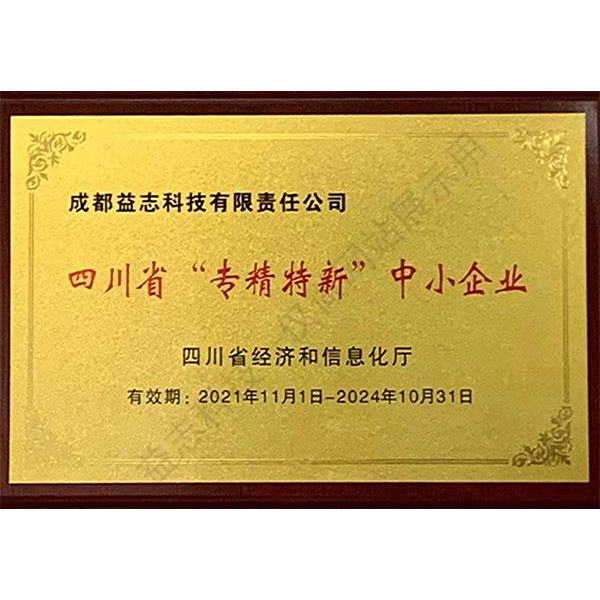
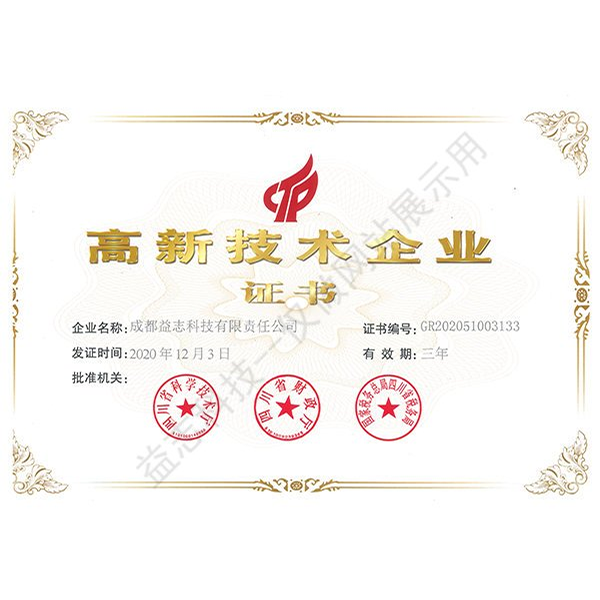
But the key word is “before?”. The situation began to change when large Chinese chemical and energy holdings began to place high demands on their contractors and suppliers. They needed reliability comparable to European ones, but without the European price. This created demand for other products. Companies have emerged that are initially focused not on the b2c market “a little bit of everything”, but on complex design solutions. For example, Chengdu Yizhi Technology Co. - this is a design institute created by a chemical technology company. Their websiteyzkjhx.ru- this is not just a catalog of goods, it shows a project approach. Such players have different tasks, and they often develop or seriously modify the fittings to suit their needs.
This is where the first layer of “innovation” lies. - not in the invention of a new principle of shutter operation, but in deep adaptation. They take the classic design and begin to “finish” it: select seat materials (Viton, EPDM with special additives for resistance to specific environments), experiment with disk coatings (epoxy, nickel plating), strengthen the shaft, recalculate the drive mounting points. This is not always noticeable from the outside, but for a production line working with an aggressive environment, this is a matter of uninterrupted operation for years.
Where to look for real improvements: materials and execution
Marketing slogans aside, I see the main progress in three areas: seal materials, corrosion resistance and compatibility with automation systems. Let's start with the most painful place - the saddle. Standard EPDM is a lottery. Good Chinese manufacturers now often provide not just a certificate, but detailed test reports for resistance to specific chemicals. I saw specifications where, for the same valve diameter, 5 options for seat material were offered, each for its own environment. This is already systematic work.
The second point is the coatings and materials of the case and disk. Epoxy-coated cast iron of 250-300 microns has become virtually the standard for aquatic environments. But for something more serious they go further. Full stainless steel body (CF8M) - expensive, but there are intermediate options. For example, a cast iron body with a 316 stainless steel disc, polished or even Hastal coated at key contact points. Or a combination of a carbon steel body with an internal epoxy coating and a duplex stainless steel rim. This is not an innovation on a global scale, but for the price segment of Chinese products it is a serious step forward. Such solutions are actively promoted by design institutes, like the aforementioned Chengdu Yizhi Technology, which themselves face the problem of corrosion at their chemical facilities.
The third point is unification and preparation for automation. Previously, there could have been a problem with the mounting dimensions of the flanges or with adaptation to the drive. Nowadays, many series are initially designed taking into account standard interfaces for electric drives (for example, according to ISO 5211). Models have appeared with the ability to install position sensors and limit switches directly into the housing, without artisanal modifications. This suggests that the mindset has shifted from ?make a part? to “build it into the system?”.
Case study: when ?almost? - doesn't count
I would like to give an example that well illustrates both progress and the remaining pitfalls. We had a project - modernization of a section of a pipeline for weakly acidic wastewater (pH about 4-5, with impurities). Temperature up to 60°C, variable pressure. The customer wanted to optimize the budget and considered Chinese options. We chose a manufacturer with a good reputation and provided the environment. They offeredbutterfly valvewith EPDM seat ?for acids?. According to the passport, everything is perfect.
Installed. After 4 months - leakage in the closed position. They opened it. The saddle was deformed and lost its elasticity, but not uniformly, but in places. It turned out that the problem was in the heterogeneity of the medium itself - periodically traces of a solvent appeared in the flow, for which this particular EPDM composition was not designed. The manufacturer, of course, said: “You haven’t fully described the environment?” Partly right. But on the other hand, the European supplier in such a situation usually requests a sample of the test medium or immediately offers a more resistant and expensive material, laying down a reserve. Chinese often follows the path “fits according to the table - that means it fits?”. It's a difference in approach.
The solution was found through the same designer - we contacted the technologists of Chengdu Yizhi Technology. They requested a detailed chemical analysis, including possible impurities, and recommended upgrading to a FKM/Viton seat, even though it was 30% more expensive. Valves of the same brand, but with a different seat, have been working for more than two years without any complaints. Conclusion: there are innovations in materials, but their application requires a very detailed dialogue with the supplier. You can't just choose from a catalog.
Interim results: what has really changed
So, to summarize the current moment. High quality Chinese industrialbutterfly valveceased to be just a copy. This is often a well-designed device with a thoughtful selection of materials for specific conditions. Innovations are applied, adaptive in nature: better seat materials, more resistant coatings, improved shaft and bearing units design to reduce friction torque, better preparation for automation.
But the main change is the emergence of suppliers with an engineering culture. These are not trading companies, but rather technological or design institutes that themselves use these fittings at their facilities. Their website is the sameyzkjhx.ru, may look modest, but behind it is specific experience and understanding of technological processes. With such people you can already speak the same language, discuss not only the price and terms, but also the chemical composition of the environment, temperature peaks, and cyclical work.
There remains a weak point - quality control in mass production. Even a good manufacturer may have a batch where they saved on heat treatment of the shaft or coating thickness. Therefore, now it is not so much the brand that has become critically important, but the presence of serious technical supervision and acceptance at the manufacturing plant. Without this, even the most innovative, on paper, development can turn into a headache.
So innovation or not?
Let's return to the title question. If by innovation we mean the creation of a fundamentally new type of shutter, then no, Chinese manufacturers are not the first here. They follow the beaten path. But if we look more broadly - at the ability to quickly, flexibly and cost-consciously adapt existing solutions to the increasingly complex requirements of the global market, then their innovativeness is obvious.
They have learned to fill a niche where above-average reliability is needed, but the prices of European brands are unacceptable. Their ?innovation? — in effective engineering and optimization. In the ability, having a basic design, through iteration and selection of materials, to obtain a device that will serve the stated period in specific, sometimes very difficult, conditions. This is a valuable skill.
Therefore, my final advice to colleagues: stop dividing into “Chinese”? and “European?”. Divide by ?suitable? and ?inappropriate?. Ask detailed questions about the environment, request material test reports, check factory mechanical test certificates. Look not just for a salesperson, but for engineering support. With some Chinese suppliers, especially those that grew out of design institutes like Chengdu Yizhi Technology Co., Ltd., such a dialogue is already possible. And this, perhaps, is the main and most important innovation in recent years - a paradigm shift from simple production to a comprehensive technological solution.