Chinese butterfly valves: innovation?
2026-01-16
When you hear “Chinese butterfly valves?”, the first thought for many is cheap and cheerful. But over the past seven or eight years, the picture has changed dramatically. It's not just about price, but about the fact that some manufacturers have seriously taken up engineering solutions that were previously the prerogative of Europeans or Americans. The most common question from clients: “Where is the innovation?” Are you copying? Partly right, but only partly. Now I’ll explain with my fingers what I see in practice.
From copying to adaptation: evolution of the approach
Previously, about ten years ago, the Chinese shutter was often an exact, but inferior copy. They took the drawings, simplified the materials - cast iron instead of stainless steel, gland seals instead of bellows - and put them on the market. Problems began immediately: leaks along the rod on steam lines, corrosion of the disk in aggressive environments, failure to withstand the declared pressure. There were a lot of defects in the CIS, hence the persistent reputation of unreliability.
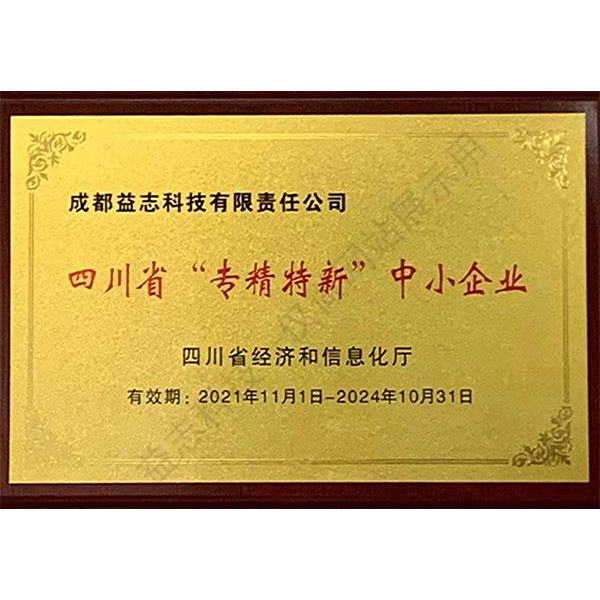
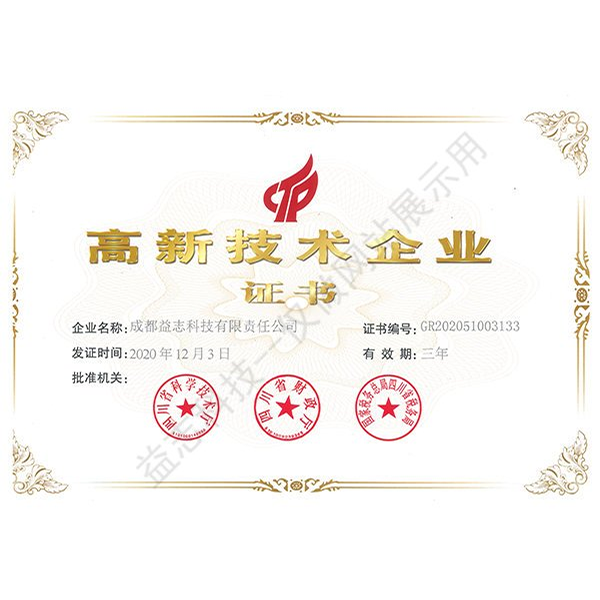
The turning point, in my opinion, began with the arrival of design institutes on the market that work not for the flow, but for specific technological processes. For example, Chengdu Yizhi Technology Co. — their websiteyzkjhx.rushows the approach well. This is not just a plant, but an engineering company created by a chemical holding. They design systems for themselves, and valves are one of the elements. Therefore, their products are initially tailored to the real conditions of chemical production, and not to abstract GOST standards.
I have observed their evolution. At first they made standard models. Then they appearedbutterfly valveswith eccentric disc mounting to minimize contact with the seat and reduce wear. Not a revolution on a global scale, but for the Chinese market - a step from primitive copying to a meaningful design. This is an adaptation, not a copy.
Materials and coatings: where real progress lies
The biggest leap is in materials. Previously, everything depended on cost. Now many manufacturers, especially those exporting to countries with strict regulations, have begun to actively use 316/316L stainless steels, duplex steels, and Inconel. But the main thing is not the material itself, but the understanding of where to use it.
I had experience with the delivery of a batch of valves for a low-abrasive pulp transportation line. The customer saved money and took a model with a disk made of 304 stainless steel with conventional polishing. After six months - increased wear and jamming. The problem was not the grade of steel, but the hardness of the surface. We ordered the next batch from the samemanufacturer, but with an additional hardening coating of the disk using the HVOF (high-velocity flame spraying) method. The resource has tripled. This was a non-standard request for a Chinese supplier, but they managed it by selecting the parameters.
This is where innovation is visible - not in the invention of new alloys, but in the competent application of existing processing and coating technologies for a specific task. Many Chinese engineers now understand this. Yizhi Technology's website, by the way, shows that they are focusing on housing and seal materials for different environments - this is a direct response to past industry mistakes.
Actuators and “intelligence”: catching up, but adding their own
The drive has always been a problem. Previously, they installed anything, often inappropriate in terms of time or protection class. Now the situation is better. Major players, including Chengdu Yizhi, often use well-known brands of drives (AUMA, Rotork) in complete supplies for critical facilities. But they are also developing their analogues.
An interesting trend is the integration of the simplest elements of “intelligence”. We are not talking about a full-fledged IIoT system, but about built-in position and torque sensors with an analog output or Modbus interface. The goal is not so much “smart?” management, how much diagnostics. So that you can remotely understand that the shutter, for example, has not reached the end or is overloaded due to a blockage.
On the one hand, this is marketing. On the other hand, there are practical benefits. At one of the fertilizer production facilities we just installed such “simplified-intelligent” ones.butterfly valves. A warning about increased torque was triggered on one of them - crystallization of the product in the line was detected in time, and an emergency stop was avoided. The technology itself is not new, but its availability and reliable implementation in the middle price segment is the merit of Chinese manufacturers who sensed the demand.
Field testing: where theory meets reality
All innovations are tested on site. I’ll tell you about two cases that taught me a lot. The first one is negative. We ordered a batch of lined valves for hydrochloric acid. Lining - ethylenepropylene. On paper everything is perfect. In practice, after installation on a vertical section of the pipeline, a problem was discovered: the weight of the disk in the closed state created a load on the lower part of the seat, and with temperature cycles the lining there began to peel off. The manufacturer did not take this nuance into account in the design of the disk support. I had to modify it on the spot.
The second case is positive. A valve was needed to quickly cut off the flow of hot ash (up to 450°C). Standard solutions were not suitable due to abrasive and temperature. A Chinese company (I won’t name it, it’s not Yizhi) offered an option with a heat-resistant alloy disk and a seat made of a ceramic-metal composition. The skepticism was enormous. But they provided test results on a stand that was as close as possible to our conditions. They did. It's been running for three years now, replacing only one o-ring according to plan. This is an example where the adaptation of materials to extreme conditions is the main innovation.
What's in the bottom line? Prospects and limitations
So is this innovation? If you expect breakthrough patents from China in the fundamental design of the shutter, it’s unlikely. Their strength now lies elsewhere. In the aggressive improvement of existing designs, in the optimization of production processes (which reduces the price without losing quality), in flexibility and speed of response to market demands. They learned to listen to operations engineers, not just sales managers.
Restrictions remain. The main thing is on-line quality control. You can make an excellent experimental batch, but in the series there will be shafts with incorrect heat treatment. Therefore, choosing a supplier is critical. You need to look not just for a factory, but for companies with a strong design department, such as the mentioned Chengdu Yizhi Technology Co., who understand where their product will work. Their description as a design institute is not just words for a website, it is the essence of their advantage.
The future, I think, lies in further customization. There will be no “universal Chinese shutter?”. There will be lines clearly segmented for petrochemicals, energy, pulp and paper, and food. And each will have its own developments in materials, seals, and flange configurations. Innovation is now not a bright flash, but a constant process of targeted improvements, which ultimately produces a product that can compete on an equal footing with European analogues in 70% of applications. The remaining 30% is still the domain of premium brands, but the line is gradually blurring.