Chinese butterfly valves: innovation?
2026-01-14
When you hear “Chinese butterfly valves?”, the first thing that comes to mind for most buyers is the price. Cheap. And immediately followed by doubts about reliability. I thought so myself ten years ago. But now, after dozens of projects where these valves have been working for years, you understand that the question is not the country of origin, but who makes them and how. Innovation here is not about space technology, but about smart, pragmatic solutions to specific engineering problems that sometimes don’t even occur to our European partners. Or they come, but the price becomes prohibitive.
From stereotype to specific passport
Previously, the main problem was not bias, but a basic lack of information. They will bring a sample, and the documents will contain bare dimensions and pressure. To what standard are the seals made? What is the machining accuracy of the saddle? What is the actual corrosion resistance of the material? Silence. Now the situation is changing dramatically. Leading manufacturers, especially those working for the foreign market, are forced to play by international rules.
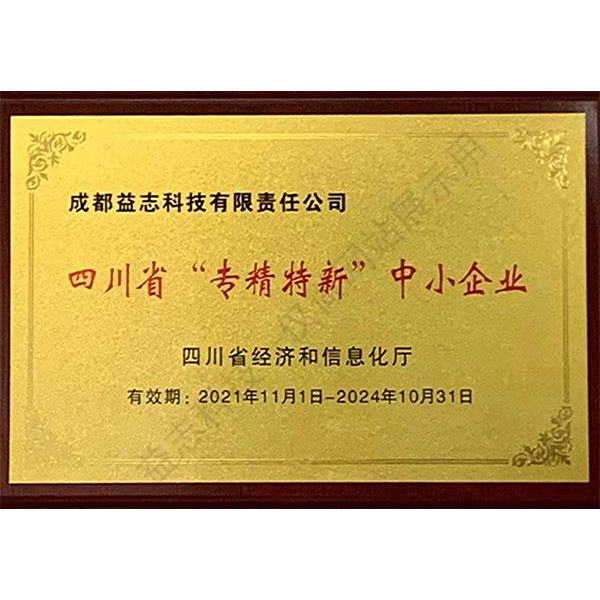
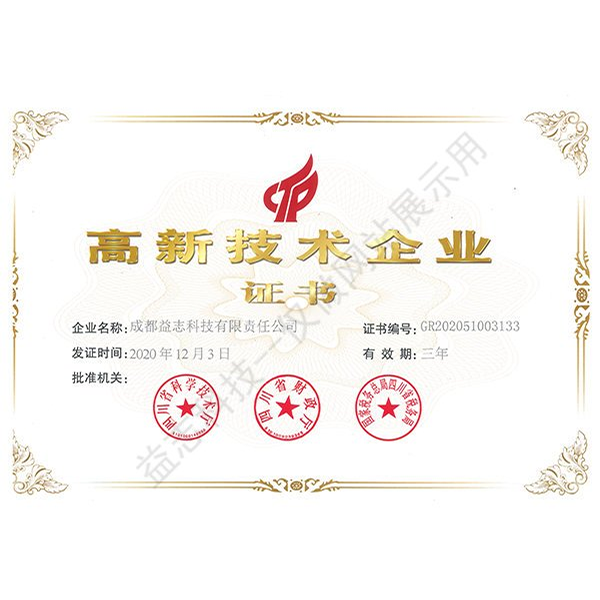
Take Chengdu Yizhi Technology Co., for example. — their websiteyzkjhx.ruI sometimes look for a general understanding of trends. This is not just a plant, but a design institute with a serious authorized capital. And you can feel it. They don't just sell hardware, but offer solutions tailored to the specifics of the environment. Their technicians can spend hours discussing which fluoropolymer coating or type of stainless steel would be best for your particular flow that contains, say, abrasive impurities. This is already a level.
But this is the top. There is still a sea of offers on the market, where under the brand name “innovation” They are trying to sell you an old design with a new logo. Therefore, my first filter is now not the country, but the manufacturer’s willingness to provide comprehensive calculations and test reports. If in response to a query about the flow coefficient (Cv) or cycle life “dry?” you receive a detailed PDF, not a monosyllabic letter - this is already a serious sign.
Where is the real progress? Materials and “filling”
If we talk about real shifts, they are in two planes: seal materials and seat design. Europeans have been polishing their standard solutions for decades - EPDM, NBR, PTFE. Chinese engineers, not burdened by such a history, began to actively experiment with composites.
I have seen, for example, valves for aggressive environments, where an elastic metal insert of a special shape is integrated into the seat material - not a ring, but something wavy. It is stated that this compensates for microdeformations of the case and ensures tighter contact along the entire perimeter, even with distortions. Sounds great. In practice, in one chemical washing project they were installed - so far there are no complaints, for three years now. But the price was, of course, higher than the Chinese average.
Another direction is coatings. Not just sputtering, but multilayer systems, often based on nickel-phosphorus matrices with inclusions of carbides or PTFE. For the food or pharmaceutical industry, this is sometimes the only option to get the corrosion resistance of 316L steel with the wear resistance of tungsten carbide. But here lies a pitfall: the quality of application. Once I encountered the fact that the coating on the mating part of the flange began to peel off in scales after six months. The manufacturer, naturally, blamed the installers. Since then, I have been demanding certificates for the application process, and not just for the final composition.
Epidemic of "smart" shutters and my skeptical position
Now it is fashionable to talk about IoT and “smart” valves Chinese manufacturers are in the forefront here. They offer valves with built-in position and temperature sensors, even vibration leakage sensors. Looks like aerobatics innovation.
But let's be honest. The bulk of butterfly valves are installed on lines where the main thing is to reliably shut off or open the flow. Do you need a built-in Bluetooth module that will report every turn of the handle? In 95% of cases - no. This is redundancy that only adds points of potential failure and complicates repairs in the field.
Much more valuable “intelligence”, in my opinion, is thoughtful mechanics. For example, a system of double or triple seals with a control cavity between them. An inert gas or test fluid can be injected into this cavity and the integrity of the main seal can be remotely monitored. This is a practical innovation that solves a real safety problem in chemical plants. I came across such solutions in the catalogs of the same Chengdu Yizhi Technology. This suggests that they think in terms of engineering, not just marketing.
Failures that teach more than successes
You can't talk about innovation without remembering failure. The most striking case I had was about six years ago. We decided to make a batch of shutters with “revolutionary” ones. a polymer seat, which, according to the supplier, could withstand temperatures up to +180°C and was chemically inert to everything. For our line with alternating supply of hot steam and alkaline solution - ideal.
Everything worked at the stand. In reality, after two months the leaks began. It turned out that with sharp thermal cycles (steam 160°C -> cold solution 30°C) this “innovative” the polymer lost elasticity and developed microcracks. The manufacturer threw up his hands - they say that the passport indicates resistance to temperature, and not to thermal shock. The lesson was harsh: any new feature should be tested in conditions as close to the process as possible, and not according to standard laboratory tests. Since then, I always ask for cyclic testing if extreme parameters are stated.
This case, by the way, clearly shows the difference between manufacturers. Reputable companies that have their own design institute (like the mentioned Chengdu Yizhi Technology Co., Ltd.) usually themselves warn about such risks and offer alternatives. Small ones sell a “universal solution”? for all occasions.
So, innovation or not?
Returning to the title question. Yes, there is innovation. But they are not of a breakthrough, stunning nature. This is evolution. This is an adaptation of proven global practices to meet more stringent cost requirements and specific, sometimes more complex, operating conditions in Asia and other emerging markets.
Chinese manufacturers have learned to make very reliable, predictablebutterfly valvesfor standard applications. Their strength lies in optimizing production and price. And where real difficulties begin (high cycles, aggressive environments, complex thermodynamic regimes), theirinnovationaimed at searching for non-standard combinations of materials and design solutions. Sometimes it turns out brilliantly, sometimes it fails.
For an engineer or buyer, this means that today one cannot blindly reject or accept Chinese products. You need to delve deeply. Look not at the brand, but at the specific engineering team behind it, at its experience and approach to solving problems. And then you can find equipment that is not just a cheap copy, but a truly smart and profitable solution. This, perhaps, is the main shift - access to quality engineering has become wider, and it is no longer strictly tied to a geographical map.