Chinese butterfly valves: innovation and reliability?
2026-01-14
This is a question that constantly comes up in conversations with customers, especially those who are used to working with European brands. Many people still equate “Chinese?” and “cheap and unreliable?”. But over the past ten years the picture has changed dramatically. We are no longer talking about simple copying, but about our own engineering solutions, which sometimes make you think. I myself went through this skepticism until I started working closely with specific suppliers and saw production from the inside.
Where do the legs of stereotypes come from?
Previously, about fifteen years ago, the main complaint was about the materials. Cast iron of dubious composition, stainless steel, which began to “bloom” after a couple of cycles, rubber seals that could not withstand temperature changes. I remember one heating supply project in Siberia - they installed budget Chinese DN300 valves. After the winter, almost all of them showed signs of corrosion on the stem, and the Teflon seats were cracked from the cold. It was then that many, including me, formed a strong opinion: for serious conditions - only proven European brands.
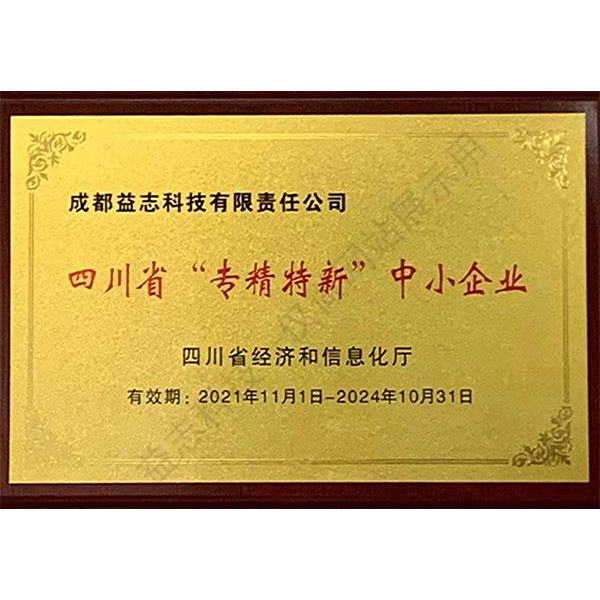
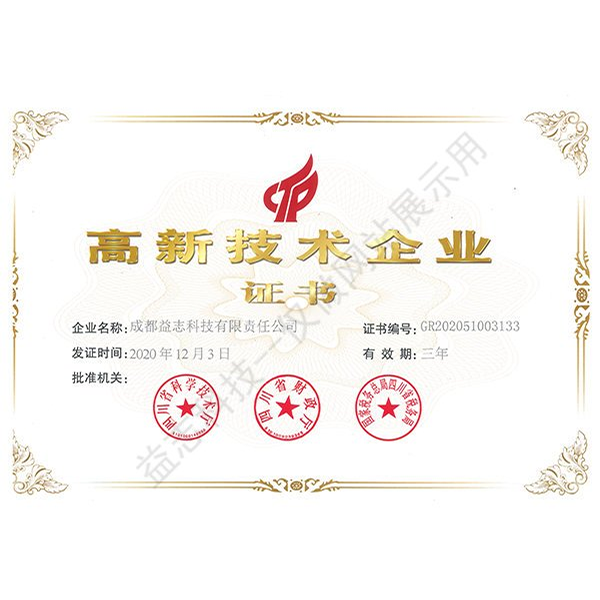
But it was precisely such failures that became an impetus for manufacturers. Instead of simply driving volume, some companies began to invest in metallurgy and polymers. The key point is the emergence of design institutes at factories. This is not just a sales department with engineers. These are structures that work to adapt products to specific standards and environments. Just one of the striking examples -Chengdu Yizhi Technology Co.This is not just a plant, but a design institute created on the basis of a chemical technology company. When you have a founder -Huaxi Technology, which itself works in the field of chemical technology, the approach to the selection of materials for fittings for aggressive environments is changing fundamentally. From the very beginning, they are forced to think about corrosion resistance not in the abstract, but based on real processes.
Websiteyzkjhx.ru– this is their Russian-speaking “face?”. The interesting thing is not that there are beautiful pictures, but the presence of technical bulletins on application in different environments. I had almost never seen anything like this from Chinese suppliers before. This is an indirect sign that there is something to share, there is accumulated experience, and not just a catalogue.
Where real innovation is visible
If we talk about innovation, then it is naive to expect some kind of revolution in design from the disc valve. The principle is the same everywhere. The whole ?kitchen? - in the details. And this is where Chinese engineers began to show flexibility, which is often lacking in large European players.
The first is seal materials. Standard – EPDM, NBR, Viton. But the number of requests for specialized polymers, for example for the pulp and paper industry or seawater, is growing. And Chinese manufacturers began to offer custom solutions faster and cheaper. It’s not always perfect the first time, but it’s a fact: they engage in dialogue. We worked on an object with deaerated sea water - the European supplier asked for six months and a huge amount of money to develop a special saddle composition. Contacted viaYizhi Technology, their chemists within a month selected a composite based on PTFE with additives, which successfully passed tests on the bench. The key thing is that they had motivation, since this is a strategic direction for them.
The second is the drive design. Increasingly, they are asking for not just a shutter, but a ready-made assembly - a shutter with a gearbox and electric drive, pre-assembled and adjusted. European brands often supply this separately, installation and commissioning is a headache on site. The Chinese, especially such manufacturing institutes, see this as added value. They offer turnkey solutions, with the ability to install drives of different brands. This is convenient for the designer.
Reliability: how to evaluate it now
Reliability is no longer an abstract concept. Today it can be measured not only by the warranty period, but also by a test report on a specific media. This is where the connection with technological institutes is important.
Registered capital of 120 million yuan, the same asChengdu Yizhi Technology, is not just a number for a brochure. This usually means in-house test benches, the ability to conduct cyclic tests, leak tests at different pressures and temperatures. Previously, we only received general ISO type certificates. A test report can now be requested for an environment of, say, 40% caustic soda solution at 80°C. And it will be provided. This is a game changer.
But there are also pitfalls. The biggest problem is the consistency of quality from batch to batch. With a large European brand, you are sure that the thousandth shutter will be like the first. With a Chinese supplier, even a good one, there are misfires. One batch is ideal, the next is a small thing, but unpleasant: the markings are crooked, the bolts on the flanges turn a little more rigidly. This suggests that the production culture at some stages is still catching up with engineering thought. You need to very carefully choose a partner who values his reputation and has a long history of work in a particular segment, like Huaxi in the chemical industry.
Practical cases and ?rakes?
I will give two examples from personal practice. Successful and not so successful.
Successful: Replacement of valves on the low pressure steam supply line (up to 12 bar, up to 200°C) at a thermal power plant. European reinforcement was “eaten up” budget. Considered the offer fromChengdu Yizhi. Their trump card is their own casting and processing of housings made of high-strength nodular cast iron. It was important to design it with a thermally expanded seat that compensates for temperature differences. We delivered a trial batch. After two years of work - zero complaints. Tightness class “A”, rods without traces of corrosion. Savings on purchases are about 40%. What was decisive was not only the price tag, but also the willingness of their engineers to calculate the expansion and provide it to us.
Unsuccessful: VCS facility with glycol coolant. Stainless steel valves were required. 316SS and special seal. We discussed everything in the specifications, received samples - everything was great. And in the serial supply, the sealing rings on several valves from the batch turned out to be slightly larger in cross-section. During installation they were damaged and a leak occurred. The problem was solved by replacing the rings, but downtime on site costs money. It turned out that there was a change in the supplier of rubber products at the plant without proper notification to the customer. Lesson: Even with an advanced supplier, it is necessary to include in the contract provisions for control and notification of any changes in the component supply chain.
Results and look ahead
So what?Chinese butterfly valvesreliable? The answer can no longer be clear: yes? or not?. It all depends on the specific manufacturer and his approach. If this is a plant that operates as a stand-alone factory without deep technological expertise, the risk remains high. If there is a serious technological holding or design institute behind it, as is the case withChengdu Yizhi Technology Co., Ltd., which grew out of the needs of the chemical industry, is a different level of dialogue.
Their reliability is no longer accidental. It is the result of focused work on materials, testing and adaptation. They have learned to close those niches where Europeans are slow or too expensive - aggressive environments, custom solutions, complex components.
But you can't relax. When choosing, you need to look not at beautiful websites, but at the history of the company, at its “parent” company. industry, request not general certificates, but specific test reports, and most importantly, start with a trial delivery in not the most critical areas. There is innovation, quality has increased, but production and supply chain discipline still requires the utmost attention. It is this balance between technological potential and production culture that now determines real reliability in the market.