Chinese gas seal: innovation?
2026-01-14
When you hear “Chinese gas seal?”, the first reaction of many in our field is skepticism. Like, what new can they offer other than copying proven Western or Soviet designs? I myself thought so for a long time, until I came across a project at one of the installations in Tatarstan about five years ago. They just decided to try installing Chinese valves on the exhaust gas line. And it was not just a “shutter”, but a whole control system with a claim to “intellectuality”. That’s when I started to figure out where the real changes are and where it’s just marketing.
From copies to our own developments: evolution of the approach
Previously, about ten to fifteen years ago, Chinese manufacturers actually often followed the path of reverse engineering. They took, say, a reliable German gate valve, disassembled it, made their own drawings, adjusted for materials and machines. The result was predictable: the device seemed to be similar, but in terms of service life in an aggressive environment, the same tightness in extreme cycles of “open-closed” - lost. The problem was not only in metals, but also in production culture, tolerances, and assembly.
But the situation was changing, and quickly. The key point that I noticed is the emergence of large Chinese players with their own design and research institutes. They stopped just copying, they started counting, modeling, testing. For example, they began to actively use CFD modeling to optimize flow and reduce vibrations in the valve, which was almost never seen before. This is a different level of investment.
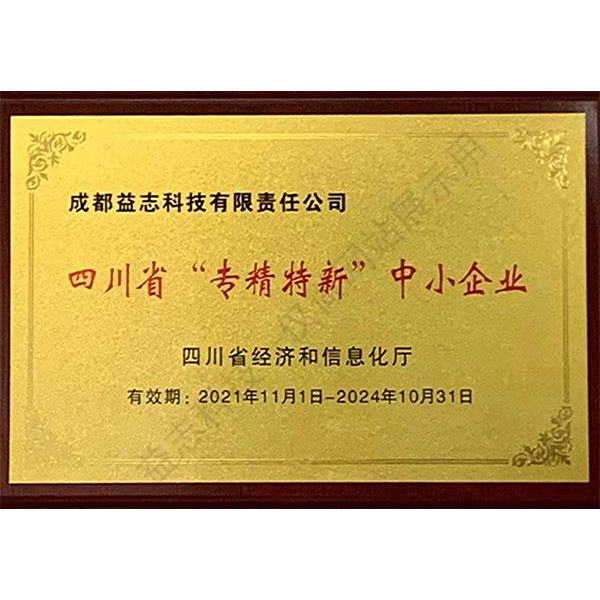
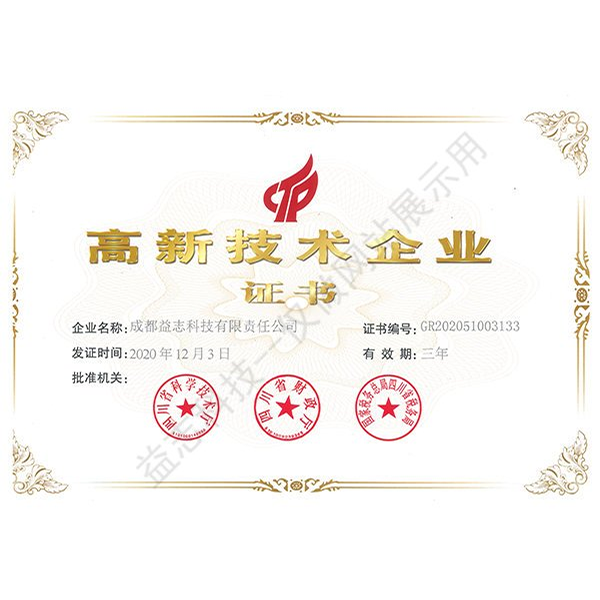
A striking example of this approach is the companyChengdu Yizhi Technology Co.. This is not just a plant, but a design institute created on the basis of a chemical technology company. Looked at their websiteyzkjhx.ru— it is clear that the emphasis is on R&D. The registered capital of 120 million yuan is a serious application. By the way, they do not hide that they grew out of the needs of the parent company Huaxi Technology for reliable fittings for their chemical processes. That is, they know the problems from the inside, which is always valuable.
Where to look for innovation? Not where you expect
You expect to see a breakthrough in materials or a fundamentally new damper design. And often innovation is in the little things that add up to a big effect. For example, in a sealing system. A classic headache for gas valves with dust or abrasive particles is wear of the sealing surfaces. In some models, Chinese engineers went for combined solutions: a basic metal seal plus specially shaped elastomeric inserts, which continue to hold when the former wear out. Not space technology, but practical.
Another point is the drives and control system. This is where progress is obvious. Integration of torque, position, and temperature sensors directly into the drive housing with data output via an industrial protocol is now practically a standard for their mid- and high-end price segments. And the cost is so “sophisticated”? version is often comparable to the price of a simple European shutter without “brains”. For modern automated process control systems this is a gift.
But there were also negative experiences. I remember that at one thermal power plant they installed Chinese gates with “smart” ones. forecast of residual life. The algorithm was based on counting cycles and pressure drops. But in reality, the main wear was caused by abnormal vibration from neighboring equipment, which the sensors did not track. The forecast turned out to be optimistic and had to be changed ahead of schedule. Conclusion: any innovation must be tested in specific conditions, and not just in the laboratory.
Field Test: Talking to Metal
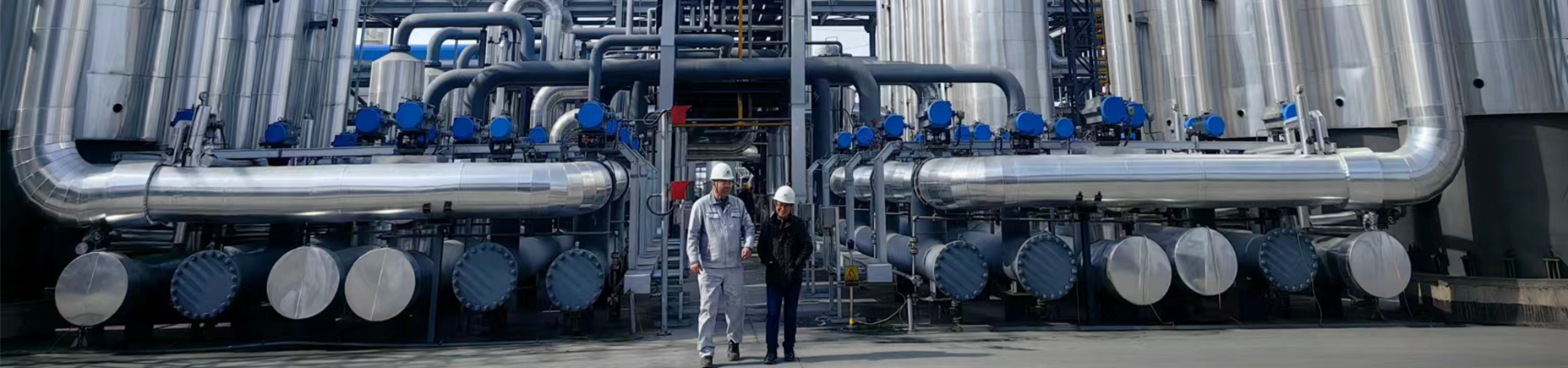
All theory pales before practice. The most indicative case for me is connected precisely with the installation in Tatarstan, which I mentioned. There the task was to block the flow of exhaust flue gases after the scrubber - the environment was humid, with acid residues, and the temperature was unstable. European analogues offered three-way solutions.
We set up two Chinese for the experiment.gas sealslide type with electric drive. Structurally, nothing supernatural, but there were some nuances. First, the interior coating. Not just a coating was applied, but using a method similar to plasma spraying, a layer of especially resistant ceramics was applied. Secondly, the design of the guides for the gate is with labyrinthine channels for supplying purified air, creating an air curtain against abrasive getting into the grooves. It worked.
They have worked for more than four years with a planned overhaul cycle of three years. Opened it up last year - minimal wear. Yes, there was a problem with the position sensor gasket on one of them, which began to “glitch?” in severe frosts. They replaced it with a domestic analogue, and that’s it. But in terms of the main functions - tightness, actuation force - there are no complaints. It makes you think.
Cost of issue and logistics of thoughts
Of course, the main argument in favor of China is cost. But not everything is clear here. A cheap gate valve for $2000 is most likely a lottery. It may run out of time, or it may jam in six months. The risk is high. But products from such engineering-oriented companies as the mentioned Chengdu Yizhi Technology are already in a different segment. Their price may be 30-40% lower than their European counterpart, but not by several times. You pay not for metal, but for calculations, tests, and often for more flexible customization.
Customization, by the way, is a different story. One project required a non-standard flange and an extended shaft for a specific installation. The German supplier named a period of 5 months and a astronomical price. The Chinese from the same design institute sent translated drawings to our request in a week, and they promised production in 10 weeks. Done in 9. This speaks to the flexibility of production chains and the desire to enter into complex projects.
But logistics and service are their Achilles heel. Even if the factory does it quickly, shipping by sea and customs takes time. The presence of spare parts warehouses in the EAEU is still rare. And if something breaks, you can wait a month or a month and a half for a replacement unit. This is critical for many industries. Therefore, their products often go to the stage of new construction or planned reconstruction, where the deadlines are known in advance, and not for urgent replacement “here and now”.
So is this innovation? Personal resume
To sum it up, let me return to the title question. Yes, in the areagas valvesThere are innovations from China today. But these are not breakthrough discoveries, but rather competent engineering optimization, active implementation of modern design methods (CAE, CFD) and integration of digital interfaces. They learn quickly and close the gaps they had yesterday.
Their strength lies in their approach to solving a specific technological problem, often working closely with chemists and technologists, as is the case with Huaxi Technology. This gives an understanding of actual operating conditions. Weaknesses are the predictability of quality in the budget segment and the still weak service network in our region.
Should we consider them as an alternative? For not the most critical applications, for projects with a clear plan and, what is important, if you have a competent technical specification and choose a proven supplier, and not the first one you come across - definitely yes. They no longer just copy, they offer their own, sometimes very clever, solutions. Ignoring this fact means losing efficiency and savings. But you need to approach without rose-colored glasses, with a cool head and a pressure gauge in your hands.