Where to find Chinese gas butterfly valve exporters?
2026-01-14
The question seems to be simple - you type it into the search and you get hundreds of sites. But here's the catch: most of them are either trading companies that don't produce anything themselves, or factories that make everything from plumbing fixtures to complexgas butterfly valves, but without any real experience in the specifics of gaseous media. The difference in price and quality can be colossal, and a mistake in choosing a supplier is expensive - tested from my own experience.
Mistakes at the start and where to look for the right manufacturers
When we just started purchasing fittings for medium-pressure gas pipelines, the first thing we did was go to Alibaba. We found several suppliers with beautiful pictures, convincing ISO certificates and attractive prices. Ordered a trial batchbutterfly valveswith double-sided eccentricity, supposedly for gas. When we arrived, it seemed like nothing. But during the very first field tests at a facility in Kazakhstan, problems began with tightness after 50-60 opening-closing cycles, and the seals began to sweat. It turned out that the manufacturer used standard water seals and simply re-glued the nameplate. Classic story.
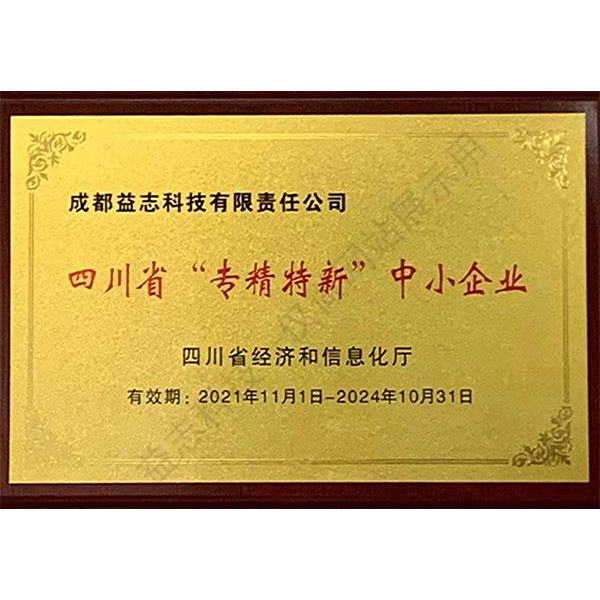
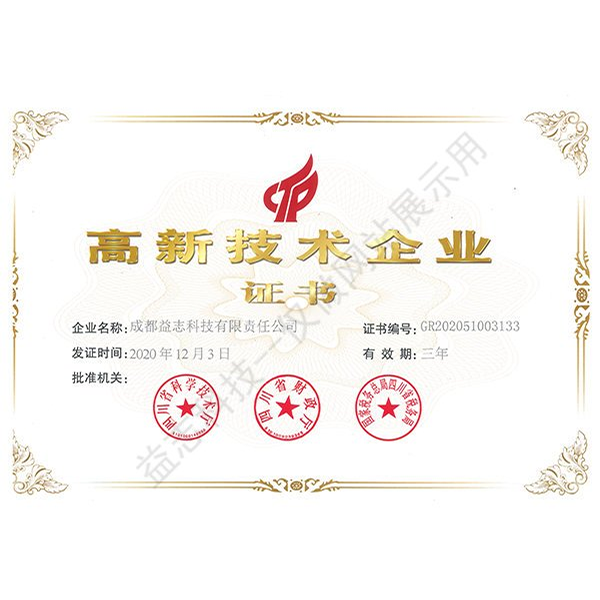
Therefore, the first conclusion: you need to search not on general sites, but in professional industry directories. For example, sites that clearly position themselves as engineering or design institutes working in the oil and gas sector serve as a good filter. They are often themselves part of a production holding. Here, for example,Chengdu Yizhi Technology Co.is just a design institute created by a chemical technology company. Their websiteyzkjhx.rufocused on the Russian-speaking segment, which already indicates serious intentions in the CIS market. The registered capital of 120 million yuan is also not just a number, but an indicator of scale and, as a rule, the presence of its own facilities or close ties with them.
Such organizations rarely trade on wheels. You need to contact them through the technical department, discuss the parameters of the medium (not just gas, but composition, pressure, temperature), requirements for standards (GOST, API 609, ISO 5211). If, from the first request, they immediately send you a price list without a single clarifying question, this is a bad sign.
What to look at besides the website: certificates and real cases
The website is a showcase. The real test begins when you ask for documentation. The real manufacturer or its authorized exporter for gas fittings is required to have not only ISO, but also specific SIL type certificates (Safety Integrity Level) for fittings used in critical areas, or certificates for fire-resistant performance. Many Chinese factories now receive them, but it is important that the certificate is tied to a specific model, and not to the company in general.
I definitely ask about reference lists, preferably with projects outside of China. It’s good if there are supplies to countries with similar climatic conditions and standards - to Russia, Kazakhstan or the countries of the Middle East. For example, the sameChengdu Yizhi Technology Co., judging by the structure of their website and information, positions itself as part of the technology company Huaxi, which hints at possible integration into the supply chain for large chemical or gas processing complexes. This is an important indirect sign.
Personally, I always ask for a video or photo from production, specifically the assembly and testing area of the fittings. Not a beautiful promotional video, but a raw video where you can see how leak tests are carried out (for example, using air under water or a helium leak detector), how the hardness of the disk is checked. If they send it quickly and without problems, there is more trust.
Direct contacts vs. agents: with whom to negotiate
There's a dilemma here. Working directly with the factory is often cheaper, but more difficult in communication: language barrier, difference in mentality, lack of understanding of our technical standards (the same TR TS 032). An agent or trading company in China that specializes specifically in oil and gas equipment can solve these problems, but will add 10-25%. Feasibility depends on volume.
For medium and large quantities, I tend to look for specialized trading companies that have an office in China and a staff of Russian-speaking or English-speaking engineers. They act as a filter: they will competently draw up technical specifications for the plant, control production according to specifications, and organize acceptance. They are easy to find at professional exhibitions in China, such as CIPPE in Beijing or China Offshore Oil & Gas in Shanghai.
But there is a third way - as in the case ofyzkjhx.ru. This is a design institute, which, in essence, is an engineering link between the customer and production. It is interesting to work with such structures on complex projects where not just a shutter is needed, but a solution: selection of material (for example, Stellite disk coating for an abrasive medium), type of drive, control system. Their value lies in their competence, and not just in the price of the product.
Price vs. Cost of ownership: what you shouldn’t skimp on
The biggest mistake is to chase the lowest unit price. Cgas butterfly valvesthis is especially dangerous. The difference of 15-20% often lies in the details: the material of the sealing surfaces (PTFE, metal-to-metal), the quality of the casting of the body (the absence of cavities is important), the precision of the trunnions. A cheap valve may pass acceptance tests at the factory, but fail within a year due to stem corrosion or bushing wear.
Therefore, in negotiations, I always split the price: the cost of the base model, the cost of options (special design, sealing material), the cost of packaging (gas often requires a vacuum or inert environment), the cost of documents (passport in Russian, certificates of origin, factory test reports). Sometimes an expensive supplier includes all this in the price, but a cheap one does not, and in the end the difference disappears.
The key point is spare parts. A reliable exporter is always ready to supply a repair kit (seals, bushings, bearings) immediately, for a specific order. And he has popular items in stock. If this is difficult, it means that production is not continuous, but piecemeal, and there will be problems with the logistics of spare parts in the future.
Pre-shipment inspection and logistics details
Factory inspection prior to shipment should never be overlooked. If the volume is large, it is worth going yourself or hiring an inspection company in China (for example, SGS or Bureau Veritas). Not only the conformity of the product is checked, but also the labeling, packaging (for gas fittings, protection against moisture and dust getting inside the housing), and packaging is required.
Logistics are a separate headache. Sea transportation requires proper securing of equipment in the container. Once we received a batch where the valves were simply placed on their ends, and as a result of the impact during rolling, several rods were bent. Now we always specify in the contract the requirements for packaging and sealing the container, and require a photo report.
And last but not least - customs clearance. HS code forgas butterfly valvesmust be accurate. A good exporter will provide all the necessary documents for customs (invoice, packing list, certificate of origin) correctly completed. Companies such as the mentioned Chengdu Yizhi Technology Co., Ltd. usually have foreign trade specialists on staff, which greatly simplifies the process. Their status as a design institute also adds weight to the documents in the eyes of customs authorities.
As a result, the answer to the question of where to find it lies not at one point, but in a chain of actions: weed out general traders, find specialized players with an engineering background, test them on real cases and technical support details, and only then look at the price. It takes longer, but is more reliable. As practice shows, saving time on searching means spending it triple on fixing problems later.