Chinese butterfly valves: innovation?
2026-01-14
When you hear this combination - “Chinese butterfly valves?” - Many people are immediately skeptical. Like, what could be innovative there? Copies, cheap steel, crooked welding. I myself thought so about ten years ago, until I started working closely with the supply of fittings for large facilities in the CIS. And then it turned out that the question was much deeper than just the price per piece. We are talking about a whole evolution of an approach, where innovation is not necessarily a breakthrough technology, but often a smart, pragmatic solution to old problems. And Chinese manufacturers, especially those that grew out of serious design institutes, are showing very interesting things here.
From ?iron? to the project: paradigm shift
Previously, everything was simple: there is a specification, say API 609, you need a 150 mm valve, a pressure of 16 bar. You order from a trusted European and sleep peacefully. Problems began on site, when installing in cramped conditions or when integrating with outdated piping. A classic example is flanges. Chinese factories, especially those that were originally engineering companies, quickly caught on. They didn't blindly copy the geometry. Instead, they started offering options that are for the ?old? brands seemed marginal: valves with wafer mounting for different flange standards (DIN, ANSI, GOST) in one design, or with elongated necks for insulation, which could be ordered not from a catalog, but simply by entering the required size in the technical specifications.
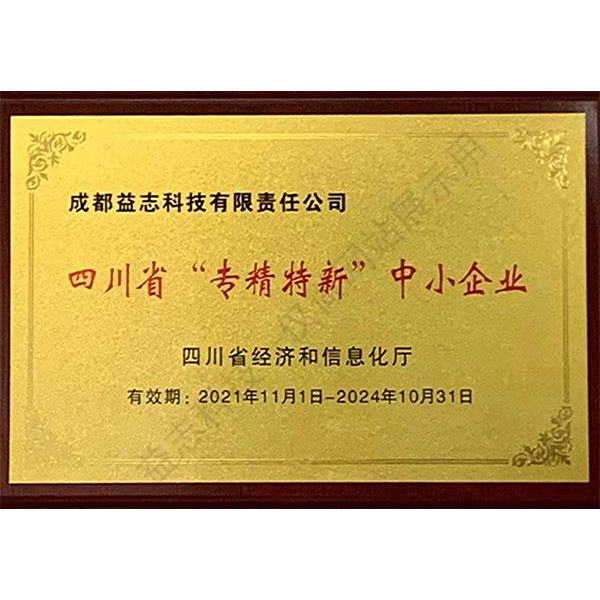
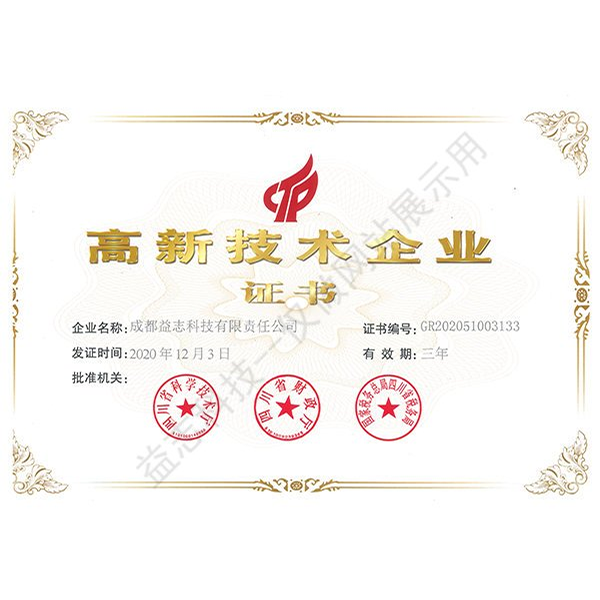
This is their first, invisible from the outside, innovation - flexibility for the project. They went beyond the logic of “we sell what we have?” into the logic “we’ll adapt it to your task?”. I remember how for one petrochemical plant in Kazakhstan they neededbutterfly valveswith a stainless steel disc, but with a carbon steel body with a special coating for an aggressive atmosphere. The European supplier named a period of 8 months and a astronomical price. The Chinese partner, namely the design institute Chengdu Yizhi Technology Co., which is part of the Huaxi Technology structure, requested piping drawings, sent its engineer (yes, they practice this) and delivered the batch 12 weeks later. And this was not a handicraft - all the certificates, leak tests, reports on ultrasonic inspection of welds were there. The key thing is that they perceived this as a typical design problem, and not as an exception.
And here is an important point. When a company like Yizhi Technology (their website, by the way, https://www.yzkjhx.ru, is useful for understanding their portfolio), is based on a design institute with a registered capital of 120 million yuan, it changes the DNA. They think not in machines, but in units, systems, environments. Therefore their ?innovation? often lie in the plane of materials science and layout. For example, combination seals for switching from water to weak acids without replacing fittings are a small thing, but they save weeks on site.
Materials and ?invisible? improvements
Speaking of materials, the stereotype is ?Chinese steel? long outdated. Serious players work on imported billets from Japan or Korea, and even outperform some special steels. But their main trump card is working with coatings. Not just catalog paint, but comprehensive anti-corrosion protection for a specific environment. I saw them testing a multi-layer epoxy coating for valves operating in coastal areas with high salinity. They tested in a salt spray chamber not the standard 500 hours, but 2000. For them, this was not certification, but a normal design stage.
Another layer is seals. Standard - EPDM, NBR, Viton. But the number of variations in hardness, profile, combinations (for example, a metal ring plus an elastomer for high drops) is enormous. They did not invent these materials, but they took the logic of their use to the maximum. It is possible to order the same valve diameter with five different sealing options for different phases of the process. For a European manufacturer this is unprofitable, but for a Chinese manufacturer with their flexible production lines it is common practice.
And of course, drives. There is innovation in integration. They haven't put on any? drive. The assembly is assembled - shutter + gearbox + electric drive or pneumatic drive - and rolled it out on the stand as a single unit. They check the torque, speed, number of “open-close” cycles. This allows you to avoid the classic problem when the drive is powerful, but the valve seal assembly jams after six months of operation. They are not selling a part, but a functional unit, ready for use. This, in my opinion, is the most important innovation - a systematic approach.
The cost of error and real cases
Not everything is perfect, of course. There were also failures. Previously, about seven years ago, we came across an order for a batch of valves for heating systems. The price was excellent, the plant seemed to have a name. But they saved on the simplest thing - on processing the seats for bearings in the housing. As a result, after the first season, play and leakage appeared along the spindle. I had to change the entire batch. It was the same ?old school? - do it faster and cheaper. Now such manufacturers are leaving the market.
A positive case is associated precisely with companies with an engineering background. There was a project to modernize a chemical line, which required replacing old valves withbutterfly valvesin conditions of shortage of space. We needed compact ones, but with full passage and the possibility of installing an explosion-proof electric drive. A local distributor offered a solution from Chengdu Yizhi. They not only selected a model, but also provided a 3D model of the unit for integration into the general drawing, and calculated the loads on adjacent supports. The valves came with already installed brackets for a specific drive, which saved the installers a lot of time. This is real value, which outweighs even the lowest price.
It's these little things that make up the picture. Is this innovation? In an academic sense, no. In practical terms, for the site engineer who wants a reliable, predictable and easily integrated unit, the answer is absolutely yes. This is an innovation in service, in the approach to the client, in the depth of elaboration of details.
What's the result? The future is hybrids
Where is everything going? I see a trend towards further ?intellectualization? seemingly simple fittings. This is not about IoT (although this already exists), but about the predictability of the resource. There are more and more requests for data on cyclic fatigue tests, on the predicted service life of seals depending on the environment. Chinese manufacturers, especially those like Yizhi, which grew out of chemical technology (Huaxi Technology), are actively involved in this. They have their own laboratories, stands, and accumulate a database.
Their next ?trick? - these are probably digital twins of products. Not just a PDF catalog, but a file with parameters for CAD, data on weight, moment of inertia, recommended installation conditions. This is the next level of that same design logic.
So, back to the title question. Yes, there is innovation in Chinese butterfly valves today. But you need to look for them not in space alloys, but in the ergonomics of installation, in the flexibility of configuration, in the depth of elaboration of the application. These are innovations born not in a pure laboratory, but in thousands of real, often very complex objects around the world. And this is their main strength. They solve not abstract engineering problems, but specific problems of an installer in a cramped well or a technologist who needs to quickly switch a line from one reagent to another. And this, perhaps, is the most honest criterion.