Wet CO2 removal method: effective?
2026-01-11
When it comes to wet flue gas scrubbing, especially in the context of CO2 capture, many people immediately conjure up a picture of a standard scrubber with a nozzle and an alkaline solution. But efficiency is not just a figure of ?90%+? in the installation passport. This is a complex story, where theory often diverges from operating practice, and the main judges are the operators and the accounting department, which calculates the costs of reagents and sludge disposal.
What is hidden behind “high efficiency”? in your passport?
Almost every manufacturer or engineering institute, offering technology, provides data on absorption efficiency at the level of 95-99%. However, these figures almost always refer to laboratory conditions or a pilot plant with an ideal, stable gas flow. In reality, at a large thermal power plant or cement plant, the composition of the gas “dances?” — the concentration of SO2, dust, temperature changes. And this is where the nuances begin.
For example, classicwet methodamine-based (MEA) in a scrubber can indeed show efficiency close to theoretical. But only if we are talking about a clean, cooled and dried stream. Add in real impurities, especially oxygen, and uncontrolled oxidation and degradation of the amine begins. Efficiency does not drop immediately, but gradually, and the operator sees this only by the increasing consumption of the reagent to maintain the same degree of purification. It's not an accident, it's ?quiet? eating up the budget.
Therefore, when they come to our institute with a request for a CO2 capture project, the first question is not “what efficiency do you want?”, but “what is the exact and worst-case composition of the inlet gas, including trace impurities?” and “where to put the spent solution or sludge?”. Without answers to these questions, any declared effectiveness is just a pretty number.
Problems that are not written about in brochures
One of the key problems is corrosion. Alkaline environments, hot solutions of carbonates or amines, and the presence of even trace amounts of chlorides are an ideal recipe for the destruction of ordinary carbon steel. In projects, we encountered situations where, after six months of operation, the scrubber had to be stopped for unscheduled repairs due to corrosion pits in the splash zone. The effectiveness at this moment, naturally, was zero. It is necessary to lay expensive alloys or special coatings, which dramatically changes the economics of the entire project.
Another headache is the formation of persistent deposits and salt plugs. Especially when using lime slurries. Theoretically, everything is simple: Ca(OH)2 reacts with CO2, resulting in CaCO3. In practice, calcium carbonate sticks to the nozzle, nozzles, and heat exchanger tubes. Flushing helps, but it requires stopping. What if stopping is impossible? Then the efficiency gradually decreases due to a decrease in the contact area of gas and liquid.
And, of course, energy costs. The absorption process itself is not the most energy-intensive. But desorption of CO2 from solution (regeneration) requires enormous heating costs. Often up to 70% of all operating expenses. It is possible to build a scrubber with an efficiency of 99%, but if half of the steam from the thermal power plant itself is spent on regeneration, then what kind of overall efficiency of the enterprise can we talk about? This is a dead end.
Experience from real projects: where compromise was sought
One project for an ammonia plant was to capture CO2 from the conversion stream. The concentration was high, but so was the temperature. Classicwet methodwith MEA required deep cooling of the gas, which led to large capital costs for refrigerators. Instead, they proposed and worked on an option with hot potash washing (K2CO3). The absorption efficiency on paper was lower - about 85-90%. But we avoided a huge cooling unit and condensate collectors, and regeneration took place at a higher temperature, which made it possible to use waste heat from another process stream. For the plant, the final economic efficiency of this ?less efficient? from the point of view of the chemistry of the method turned out to be higher.
Another case was an attempt to use an improved amine solution from a European supplier in a small boiler room. The solution promised high resistance to oxidation. But they did not take into account the Russian specifics - the higher sulfur content in the fuel. SO2, even in trace amounts, not completely captured in the previous step, irreversibly bound with the amine, forming heat-stable salts. The reagent lost its activity irretrievably. The project, alas, did not reach its specifications. The pre-treatment system had to be modified, which again hit the economy.
Alternatives and hybrid solutions
Nowadays there is a lot of talk about “dry” methods, membranes, adsorbents. But in large-scale industries, such as energy or metallurgy,wet methodso far unrivaled in terms of scalability and sophistication. Another thing is that it is increasingly used not in its pure form, but as part of a hybrid circuit.
For example, the first stage is a dry or semi-dry method for rough cleaning and cooling, the second stage is fine cleaning in a scrubber. Or vice versa, a wet scrubber comes first to remove the bulk of impurities and CO2, and then comes polishing with an adsorbent. In such designs, overall system efficiency can be higher and operating costs lower than with one “super scrubber” trying to do everything at once.
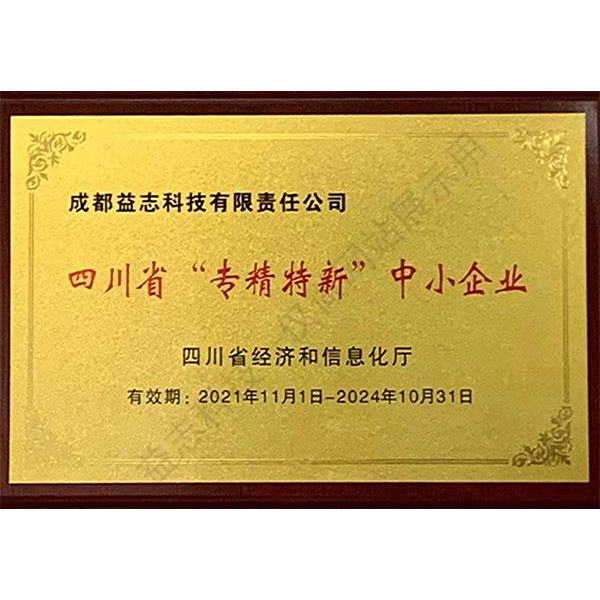
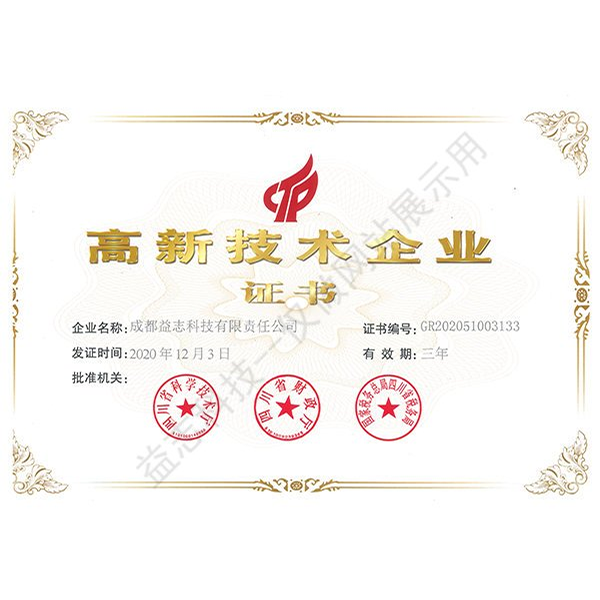
Chinese colleagues who are actively promoting their technologies have interesting experience. For example, a design instituteChengdu Yizhi Technology Co.(established by Huaxi Technology) often combines classic scrubbers with heat recovery systems and sophisticated automation in its solutions for industry, optimizing reagent consumption in real time depending on the load. On their websiteyzkjhx.ruYou can find descriptions of such complex projects. Their approach is not to pursue maximum absorption efficiency at any cost, but to seek the optimal balance point between the recovery rate and overall costs. This is a more mature and practical look.
So is the wet method effective? Final Considerations
Efficiency is a multifaceted concept. As a gas-liquid contact technology for mass transfer, the wet CO2 removal method is extremely effective and has been proven for decades. How is the finished ?boxed? technology for any enterprise is not. This is a tool that needs to be very precisely selected and configured for specific conditions.
Its main advantages are high unit power, reliability (with proper design and materials) and predictability of the process. The main disadvantages are high capital costs for corrosion-resistant materials, high operating costs for regeneration and problems with waste (liquid or sludge).
So the answer to the question in the title is: yes, the wet method is technically effective. But whether it will be effective from an economic and operational point of view for your specific facility is a matter of in-depth auditing, modeling and finding compromises. No ready-made figure from the catalog will work here. The entire life cycle must be considered: from the cost of stainless steel for the scrubber to the logistics of removing carbonate sludge. Only such a calculation will show true effectiveness.