Chinese export of butterfly valves?
2026-01-11
This is a question that constantly comes up in conversations with our partners in the CIS. Many people immediately think about the price, and this is logical, but if you dig deeper, everything turns out to be much more interesting and... confusing. A common mistake is to assume that it is “Chinese?” means ?one standard?. This is far from true. Over the past ten years, I have seen the industry go from simple copying to creating truly competitive products, but there are also more pitfalls along the way.
Not just “hardware”: what actually sells
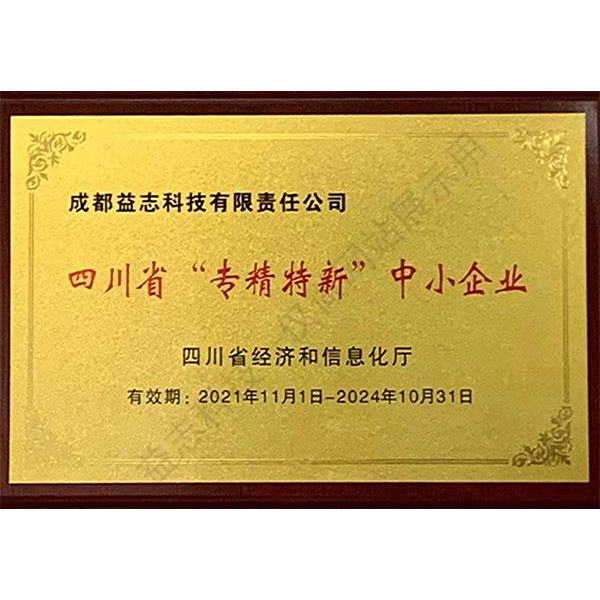
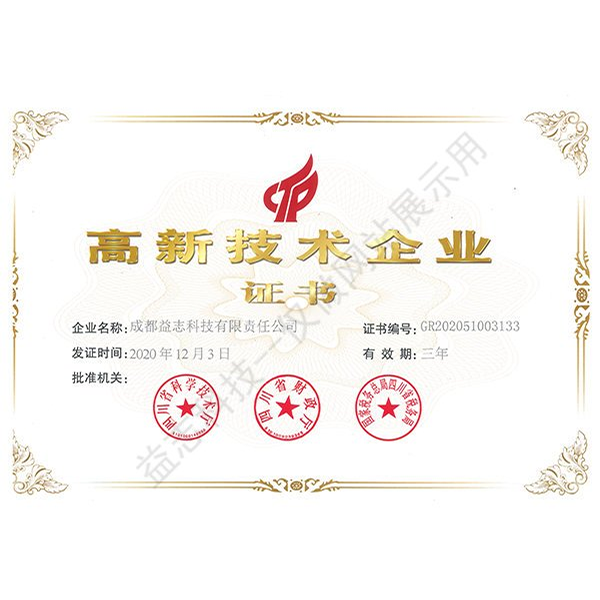
When they talk aboutbutterfly valvesfrom China, the first thing that comes to mind is the cast iron or steel body itself, the disk, the seal. But essentially, we export three things: production capacity, adaptation to standards and, increasingly, engineering solutions. Previously, the customer simply sent a drawing according to API 609 or GOST, and the plant did it “as is?” Now, especially with players likeChengdu Yizhi Technology Co., queries go deeper. Their team, being a design and engineering institute created by Huaxi Technology, often delves into the specifics of the customer’s technological line - be it a chemical plant or a thermal power plant. This is no longer trading in hardware, but selling a node to the system.
Let's take seals, for example. Standard is EPDM or NBR. But for the CIS, especially for petrochemical industries or networks with long downtime in winter, this is not enough. There was a case when a batch of valves with conventional EPDM became stuck after the first winter at a facility in Kazakhstan - they could not withstand cyclic temperature changes and aggressive environments. I had to figure it out, select a rubber composition with a low-temperature tolerance and additives for a specific environment. Now this is a separate item in the terms of reference. The price, of course, has increased, but the service life is no longer six months, but the stated 10-15 years.
Or by drives. Previously, they installed something simpler, often Chinese electric drives. But for critical areas where accuracy and reliability are needed, now more and more often there is an assembly of “Chinese valve + European drive (Auma, Rotork)”. This is a strange hybrid, but it works and suits many customers who want to save money, but are not ready to take risks at critical points. We have become a kind of integrators.
Where's the catch? Experience of unsuccessful deliveries
I won’t sugarcoat it – not everything goes smoothly. The most painful lesson is “saving on metal”. Not in the literal sense, but in certificates. Once we supplied a batch of WCB carbon steel valves. According to the documents, everything is perfect, chemical composition, fur. properties. But on site, during installation, the welders noticed strange inclusions in the seams. It turned out that in order to reduce the cost of smelting, low-quality scrap was used, and the metal contained non-metallic inclusions higher than normal. This would not have been revealed by standard hardness or pressure tests, but it was a time bomb for fatigue resistance. I had to recall the entire batch. Now we work only with factories that provide test reports not only from their quality control department, but also from independent laboratories such as SGS or TüV. Yes, this is +10-15% to the cost, but peace of mind is more expensive.
Another common pitfall is assembly and packaging. It would seem like a small thing. But I saw how an ideal valve arrived with a broken thread on the stem due to a crooked wooden sheathing that had shifted in the container. Or when they forgot to put a protective film between the flanges, and during transportation the disc scratched the seat. The client receives a “new but damaged” product. Now the inspection checklist before shipment includes not only pressure and painting, but also the condition of the packaging, marking of each unit in Russian/English, and the presence of all small parts like bolts and nuts (they like to “forget” them).
Adaptation to the CIS market: not only GOST standards
Everyone knows about the need for certification according to GOST, TR CU. But there are nuances that are not written about in the official requirements. For example, climate control. Specifications often write “from -20°C to +150°C”. But in Siberia or northern Kazakhstan, temperatures can drop to -50°C. Standard lubricant in a manual shutter gearbox or in a rack and pinion drive hardens at this point. You have to either change it to a low-temperature one (which, again, is a separate order and logistics), or recommend to the client the installation of an electric drive with a heated cabinet. This is an individual calculation.
Another point is the mentality of the service staff. Our valves sometimes require more careful handling during installation, especially with soft seats (PTFE, RPTFE). I have seen installers use flanged valves as a lever to center pipes, or tighten bolts with a torque wrench without following the tightening pattern - criss-cross. The result is a disk misalignment and a leak. Now, in the documentation package, we necessarily include not only a passport, but also simple, visual installation instructions in Russian with large pictures. Sometimes we even make short videos. This reduces the number of complaints by 30%, verified.
And of course, logistics. Delivery by sea to Vladivostok or St. Petersburg is one thing. But then ground delivery to, say, Nur-Sultan or Yekaterinburg is a separate story with risks. Now many major suppliers, includingChengdu Yizhi Technology Co., offer the option "turnkey delivery" with tracking at all stages and our own customs clearance agent at the ports of arrival. This is not free, but it saves the client from headaches with documents and delays at the border.
Case: from price request to working node
I would like to give an example, not ideal, but real. A customer from a thermal power plant from Uzbekistan contacted us. Were neededbutterfly valvesDN300, PN16 for cooling system. The first request was typical: “price for 10 pieces?”. We provided a commercial offer for a standard product. But their engineer sent clarifying questions: what exactly is the medium (it turned out not just water, but with admixtures of reagents and high abrasiveness), how often will the “open-close” cycle be, is there any vibration from the pumps.
After this dialogue, we involved the technical department of our partner plant, the same Chengdu Yizhi. They came up with an unconventional solution: a WCB body, but a nickel-plated alloy disc for abrasion resistance, and a hybrid fluoroelastomer (FKM) seal with improved wear resistance rather than EPDM. And most importantly, they proposed a reinforced design of the rod and bearing assembly, since vibration is the main killer of gearboxes.
The price has increased almost 1.8 times from the original one. The client thought for a long time. In the end, I agreed to a trial batch of 3 pieces. They were installed on the most problematic area. After a year of operation - not a single leak, a routine inspection showed minimal wear. After that they ordered the remaining 7 and more for other lines. Moral: often the client does not need the cheapest, but the most adequate solution to his problem, even if he himself has not fully formulated it. Our job is to ask the right questions.
Looking forward: trends and personal observations
I see several clear trends now. First, a request for "smart" gates are growing, even in the CIS. We are not necessarily talking about a full-fledged IoT, but at least about position sensors and limit switches with a 4-20 mA output for integration into a general automated process control system. Chinese manufacturers quickly picked up this trend and offer such options at reasonable prices.
Secondly, ecology and energy efficiency. People are increasingly asking about “zero external leakage”. (double block and bleed), especially for oil and gas. And about materials approved for drinking water (certificates WRAS, ACS). This is no longer a niche demand, but a massive one.
And thirdly, consolidation. There are strong players on the market with a full cycle, from casting and machining to their own design bureau and logistics service. Small workshops that assembled valves from purchased parts are gradually leaving. For the importer, this is, on the one hand, good - there are fewer quality risks. On the other hand, there is less room for maneuver in price. The future, it seems to me, belongs to such integrated supplier-engineering companies as the mentioned Chengdu Yizhi Technology, which is not just a trading company, but a design and engineering institute with a registered capital of 120 million yuan. Their strength lies in the ability to dive deeply into a project and offer not just a product, but a calculation and a guarantee.
So, getting back to the title question...China export butterfly valves- this is no longer a story about a cheap product. This is a story about a complex, segmented market, where those who survive are those who understand that they are not selling steel and cast iron, but reliability, compliance and the solution to a specific engineering problem. And sometimes, to understand this, you need to burn several games on your own mistakes.