Chinese export of NHD technologies?
2026-01-11
When you hear “Chinese NHD exports?”, the first thing that comes to mind for many is simply selling licenses or ready-made turnkey projects. In reality, everything is much more complex and interesting; it often depends not on the technology itself, but on its adaptation and what stands behind it - the experience of specific engineering teams. The term itselfNHD technologiesIn recent years, it has become a kind of marker in conversations about the modernization of gas purification, especially in the CIS.
What really lies behind the ?technology?
Marketing aside, export usually means the full package: basic design, detailed engineering, key equipment (absorbers, regenerators, heat exchangers) and, critically, commissioning and personnel training. Chinese companies here have moved beyond the role of simple suppliers. They have learned to offer solutions that have already been tested on dozens of their own installations. But here's the caveat: China's NHD is not one set pattern. There are variations for different raw materials (natural gas, synthesis gas, coke oven gas), for different pressures and requirements for product purity. Therefore, in a technical-commercial proposal, you always need to dig deeper: in which plant and in which flow was this specific figure for H2S and CO2 removal proven? Without this connection to a real object, the conversation loses its meaning.
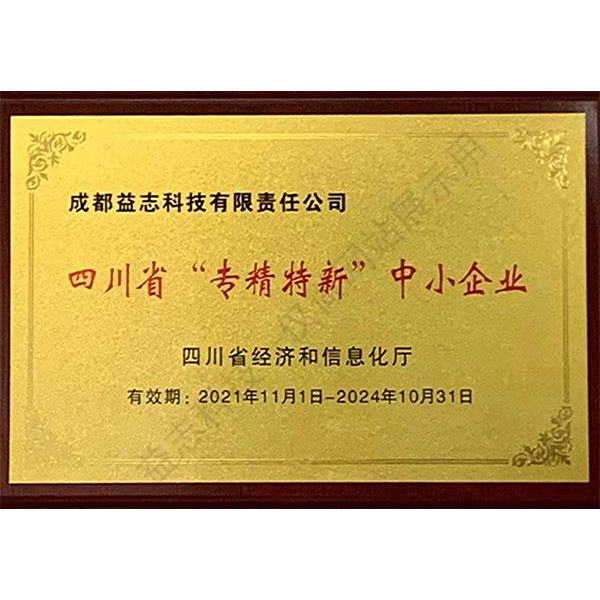
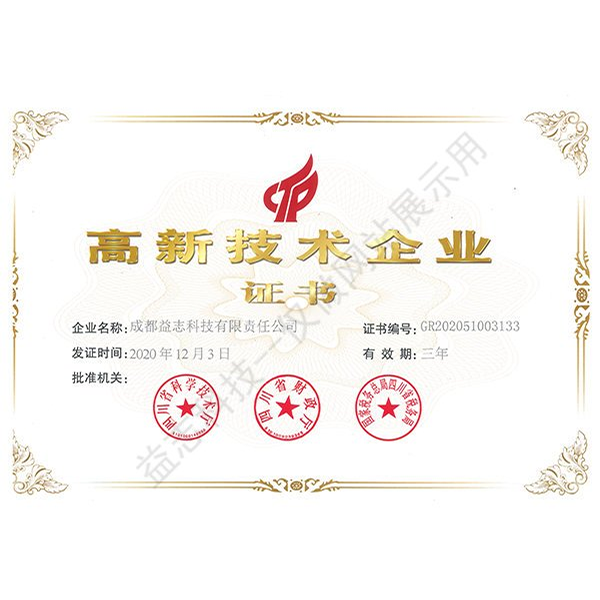
Take Chengdu Yizhi Technology Co., for example. (https://www.yzkjhx.ru). This is not just a trading company. It is a design institute established based on Chengdu Huaxi Chemical Technology Co., Ltd. with a significant authorized capital. Their website is not a catalog, but rather a portfolio. And this is an important detail. When a company positions itself as an engineering center, it changes perceptions. The client (let’s say, in the post-Soviet space) understands that he is not dealing with a reseller, but with an organization that can lead the project from FEED to commissioning. Their experience inN.H.D.and other gas purification technologies - this is exactly what they are buying: the ability to transfer a proven scheme to a new site, taking into account local regulations and, what is often more difficult, the characteristics of the existing infrastructure.
A common mistake customers make is to focus only on the price of reactors or solution. In fact, up to 40% of potential problems and additional costs can be hidden in the details of the technological scheme: in the choice of materials for saturated solution pipelines (corrosion is a scourge), in the configuration of the regeneration system, in the method of disposal of waste gases. Chinese engineers here often offer more “energy efficient” but also more difficult to manage solutions. Are your operations staff ready for this? This question sometimes comes up too late.
Pitfalls of on-site adaptation
Let's say the contract is signed, the drawings are sent to the site. This is where the fun begins. The first clash is standards. Chinese GB against GOST, PB and local SNiP. It would seem that everything is stipulated in the contract. But little things always raise questions about welding, tolerances, and piping materials. Our experience has shown that successful projects always had on the supplier’s side not just a manager, but a process engineer who could quickly, right on the construction site, make decisions on replacing non-critical equipment or materials with local ones, without loss of quality. If such a specialist only sits in Chengdu and responds once a day, the deadlines immediately begin to slip.
The second point is chemicals. NHD is a solution of polyethylene glycol dimethyl ethers. It needs to be produced or purchased somewhere. Chinese partners, naturally, offer theirs. But logistics, customs, shelf life... In one of the projects in Central Asia, we were faced with the fact that a batch of solution was delayed at the border for a month. We had to urgently look for a local supplier of propylene carbonate for a temporary launch using a different, simplified scheme. It was a risk, but it worked. After this, contracts began to include alternative options for the supply of chemicals or even clauses on the localization of its production in the future.
And the third, most delicate stone is “know-how?” in operation. Chinese specialists come for commissioning. They show how to run, how to get into mode, how to react to standard deviations. But subtleties, little tricks for maintaining stability when the load or quality of raw materials fluctuates - this often remains behind the scenes. It's not because they're hiding. It’s just that this knowledge is the result of many years of routine, sometimes it’s not even in the instructions. The only way to get them is by working closely side by side with their operational engineer for weeks, asking the right questions. Without this, the installation may operate, but not at optimal parameters, with excessive energy or reagent consumption.
Case: unobvious benefits and hidden difficulties
I’ll tell you about one modernization project at a gas processing plant. The task was to replace the obsolete purification with monoethanolamine withNHD technologyfor the synthesis gas section. The key argument of the Chinese side, including from teams similar to Yizhi Technology, was not only the depth of cleaning, but a sharp reduction in energy costs for regenerating the solution. The numbers in the proposal looked convincing. But when detailed design began, it became clear that it was necessary to completely replace all capacitive and heat exchange equipment in the regeneration circuit - the pressure and temperatures were different. The budget went up.
On the other hand, an unobvious benefit emerged. The Chinese basic design provided for a more compact placement of equipment. This made it possible to free up space on the cramped site for future expansion. This is a “bonus” that was not initially calculated. The financial model thus changed: the increase in capital costs was partially offset by the preservation of space (which is a huge value in an existing production) and a future decrease in OPEX. This comprehensive assessment is the main thing in working with such technology exporters. You need to look not at the price tag of the technology, but at the Total Cost of Ownership.
The launch was not easy. The main problem arose not with the chemistry of the process, but with the automation. The Chinese control system, although it was compatible with the plant-wide SCADA, had its own characteristics in control algorithms that were unusual for local operators. The first two weeks were spent on “grinding in”. logic of PID controllers for real, not ideal operating conditions of pumps and valves. This is a typical situation that is rarely advertised.
Market and competition: not only China
Of course, when talking about exports, one cannot ignore the context. Chinese companies have entered a market long dominated by technology from Germany or the United States. Their key advantage is price and speed. Not at the expense of quality? Not always. But over the past 5-7 years, the quality gap, especially in basic design and materials of major equipment, has narrowed significantly. Now they compete not only on price, but also on a comprehensive offer: financing, training, long-term service.
However, there are niches where their promotion is difficult. For example, at facilities with very strict reliability requirements (Arctic projects) or at super-large facilities, where the risks are too high, and customers prefer to go to Western partners proven over decades. Chinese exports to the areaN.H.D.strong in the segment of medium and large projects to modernize existing production facilities, especially in Asia and the CIS countries, where cost-benefit ratio and supplier flexibility are important.
It's interesting to see how their approach changes. Previously it was “here is our technology, take it?”. Now, looking at the websites of institutes such as the aforementioned Chengdu Yizhi Technology Co., one can see a shift towards co-development and deep adaptation. They are ready to discuss hybrid schemes, combination of NHD with membrane separation or adsorption. This speaks to the accumulated depth of expertise and the desire to gain a foothold in the market not as temporary contractors, but as long-term technology partners.
Looking ahead: what happens next?
The trend is obvious: exports will shift away from “iron?” and drawings for the export of “digital twins” and service contracts. Already now, advanced suppliers offer systems for remote monitoring and optimization of operating installations. This is the next logical step. This is beneficial for the customer - he receives ongoing support and the ability to calibrate the process. For the supplier, this means stable post-sale income and invaluable data for improving the next generations of technology.
Another point is ecology. Pressure in the world is growing, requirements for sulfur utilization and reduction of CO2 emissions are becoming more stringent. Chinese technology packages are beginning to actively include blocks for the Claus process or even carbon dioxide capture. This makes the offer more comprehensive and competitive. The successful exporter will be the one who can offer not just gas purification, but a turnkey solution to the environmental problem. as part of growing carbon regulation.
And one last thing. The success of implementing any, even the most advancedNHD technologiesultimately depends on people. It depends on how deeply the knowledge is transferred to the local team. The worst failure stories I've seen weren't because of poor equipment, but because of a cultural and communication gap between the visiting engineers and the local operations staff. The future lies in projects where, from the very beginning, not just weeks of training, but long-term experience exchange programs and joint engineering teams are built in. This is perhaps the main lesson of the last decade in this sector.