Chinese butterfly valves: trends and innovations?
2026-01-21
When you hear “Chinese butterfly valves?”, many still have an image of something cheap, with a limited service life and a dubious seal. I myself thought so about ten years ago, until I had to work closely on the selection of fittings for one large project, where the budget was tight and the requirements for tightness could not be stricter. I had to dig, look, test. And you know, the picture turned out to be not black and white at all. Now Chinese manufacturers are not a monolith, but a whole spectrum: from outright consumer goods to companies that are seriously fighting for the market and implementing solutions that are worth paying attention to. The question is how to figure it out and where to look for real trends, and not marketing noise.
Evolution of quality: from quantity to materials
Previously, the main trump card was the price tag. The valves were made from anything, assembly was the responsibility of the installer, and there was no talk about testing for cycling or chemical resistance. Now the driver has moved. Large players, especially those who export to the CIS or Europe, realized that the market cannot be maintained with cheap iron. Work started onmaterials.
For example, I increasingly see the use of not just “stainless steel”, but specific brands like CF8M (analogous to 316) for disks and housings in medium-aggressive food and chemical environments. And this is not just an inscription on a nameplate - when requesting certificates for a material, many already provide it. The key change is a shift in focus from the final price to the cost of ownership. The client has become smarter, he is interested in how long the valve will last on the same hot water or weak alkaline solution.
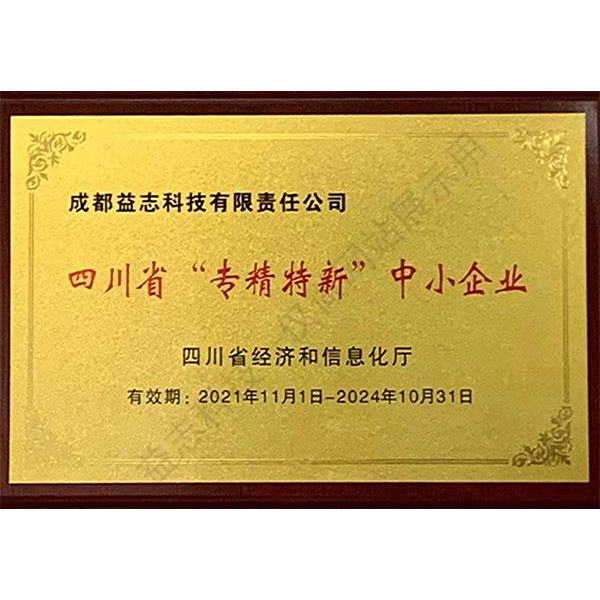
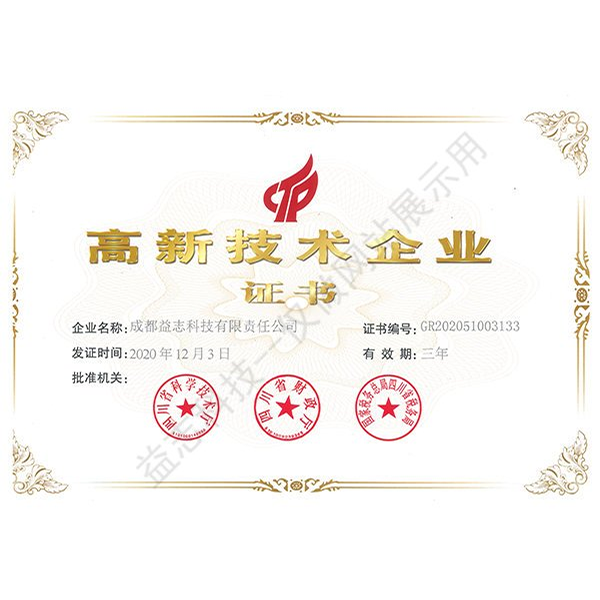
It is also worth noting the progress in casting. Shells and pores in critical areas of the saddle were a scourge. Now in factoriesChengdu Yizhi Technology Co.(by the way, it’s useful to look at their website:https://www.yzkjhx.ru- it is clear that they are positioning themselves as a design institute with a serious authorized capital, and not just a trading office) they are introducing casting control using X-rays or ultrasound for critical batches. This is not a widespread practice for everyone, but a trend among those who want to gain a foothold in the above-average segment.
Innovation or adaptation? Seal design
The heart of any shutter is the sealing unit. Here, Chinese engineers are not so much reinventing the wheel as they are very competently adapting it and sometimes combining it. European patterns are being closely monitored.
The main trend is a move away from simple rubber saddles mounted on a disc to more complex designs. Becoming more and more popularelastomeric insertsinto the housing, and not only EPDM or NBR, but also Viton (FKM) for high temperatures. I have seen interesting solutions where a metal seat is combined in one valve (for partial cut-off of abrasives) with subsequent compression of the elastomer for complete tightness. I won’t say that this is a revolution, but for a number of environments it is very practical.
A separate story is the so-called “double” or ?triple? sealing systems. It's often marketing, but when done well it works. For example, a main fluoroplastic ring plus an additional rubber one as insurance in case the first one wears out. In practice, in conditions where there is a risk of crystallization of the medium or small suspensions, such insurance saved against rapid failure. But there is a catch here: sometimes such a design only masks the poor quality of the surface finish of the main seal.
Drives and Control: Where Automation is Heading
Previously, a Chinese butterfly valve often meant “manual control or a cheap electric drive of dubious reliability.” Now the situation is changing. The demand for automation even from small boiler houses or wastewater treatment plants in Kazakhstan or Belarus forces manufacturers to pay attention to compatibility.
Many proposals have appeared with already pre-installed or perfectly mated electric drives. And not only our own, but also adapted for popular brands like AUMA or Bernard. This is an important step. As integrators, we appreciate not having to invent adapter flanges or rack our brains over mounting position sensors.
There is interest in compact geared hand drives for large diameters. The Chinese have learned to make them quite well, with acceptable effort on the flywheel. But with pneumatic actuators for hazardous areas, not everything is going smoothly - often the full package of ATEX certificates is missing, although the cylinders themselves are already quite good.
Case: a failure that taught
I would like to give an example from practice so that it does not seem that everything is perfect. About three years ago, we supplied a batch of DN300 valves with Teflon-coated disk and body for the lime slurry transportation line. The manufacturer praised the adhesion of the coating. In fact, after 4 months, chips appeared and intense corrosion began. It turned out that the surface preparation (sandblasting, activation) was carried out poorly. Conclusion: innovative coating is nothing without impeccable preparation. Now I always request not only a certificate for the material, but also technological regulations for applying protective coatings from the manufacturer.
Digitalization and “smart” opportunities: more promises so far
The trend towards IoT and the industrial Internet has not bypassed this area. Increasingly, catalogs show valves with the ability to install position sensors, gland seal temperature, and torque sensors. Sounds impressive.
But in fact, in 80% of cases this is still only an option for very specific projects. The main demand is still for reliable mechanics. However, the very possibility of such an option indicates the development of the production base. For example, a companyChengdu Yizhi Technology Co., Ltd., positioning itself as a design institute, clearly relies on integrated solutions, where the fittings are part of the system. This is the right path, but it will not become widespread soon.
I consider an improved “open-closed” position indication system to be a much more popular innovation in practice. and the possibility of simple mechanical locking in a certain position for the safety of operating personnel. This is what Chinese manufacturers have begun to do really well and in a variety of ways.
Market and niches: where Chinese valves are really competitive
So, to summarize informally. You shouldn’t expect miracles from a Chinese product in critical high-pressure oil and gas pipelines - they have their own standards and brands that have been verified over the years. But in the segment of housing and communal services, general industrial chemistry, ventilation, irrigation, and various auxiliary lines - their positions are very strong.
Their strength lies in the optimal price-functionality ratio for a specific, often not the most complex, task. I see a trend in further segmentation: even more openly budget lines for non-critical applications will appear and, in parallel, premium brands will strengthen, such as subsidiary projects of large holdings (like the same Yizhi from Huaxi Technology), which will be getting closer in quality and trust to second-tier European manufacturers. The emphasis will be not on copying, but on adaptation to the requirements and price expectations of the markets of the CIS, Asia, and the Middle East. And this, perhaps, is their main innovation - flexibility.