Chinese cast iron valves: innovation?
2026-01-22
When you hear “Chinese cast iron valves?”, the first thing that comes to mind for most is mass, cheapness and... doubts. Many still live by the stereotypes of ten years ago, presenting rough castings of dubious quality. But the reality that I have encountered in recent years is much more complex and interesting. The question of innovation here is not an idle one - it depends on specific projects, budgets and, most importantly, an understanding of what “innovation” is. in this seemingly conservative area. This is not about nanotechnology, but about how to make an old, proven cast iron work longer, more reliably and under more severe conditions than originally intended. And then Chinese manufacturers began to show very interesting approaches, sometimes unexpected.
From stereotype to specification: what they actually offer
Previously, the main argument was the price tag. Nowadays, technical documentation increasingly contains details that force you to take a closer look. We are not talking about marketing leaflets, but about actual drawings and test reports. For example, tightness class. Many suppliers, especially from provinces associated with heavy industry such as Hebei or Liaoning, now standardly declare ?A? according to GOST 9544-2015 for valves DN300 and higher. Previously, such a statement was most often verified only upon the arrival of the shipment, but now some factories are ready to provide videos of tests at the bench. This, of course, is not a guarantee, but it is already a shift.
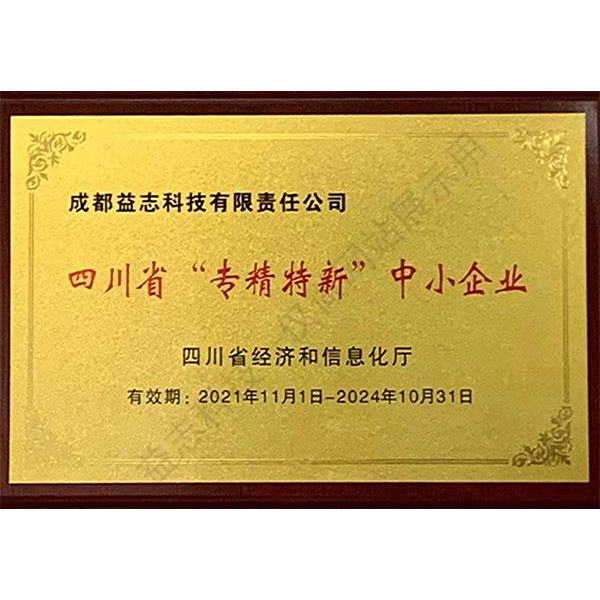
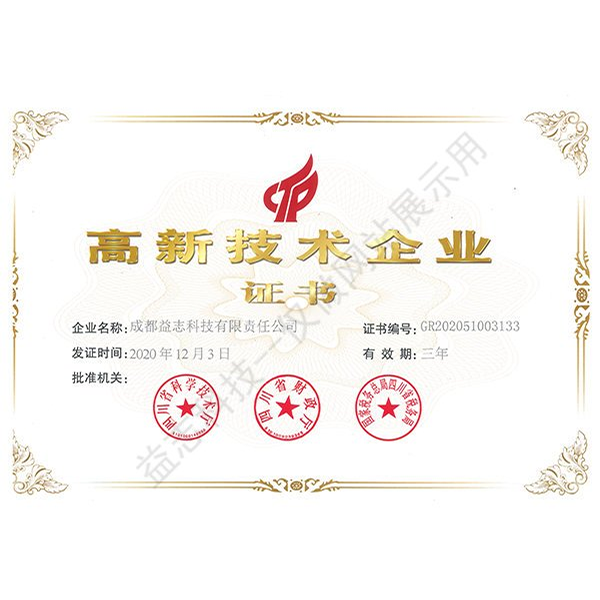
The key change is in the approach to the material. Not just “cast iron”, but a specific brand - VChShG (high-strength cast iron with nodular graphite). And this is where the fun begins. The problem of many local manufacturers was the instability of the casting: somewhere the metal structure “floated”, somewhere micro-shells appeared. Now at the leading enterprises with which we have worked, not only hardness control has been introduced, but also ultrasonic control of critical sections of the body and disk. This is not everywhere, of course, but the trend is noticeable. Chengdu Yizhi Technology Co., for example, in its projects for the chemical industry (their profile is the design institute at Huaxi Technology) places special emphasis on this, because their clients value predictability in aggressive environments.
But is this innovation? Rather, it is the refinement and implementation of standard, but previously ignored control procedures. However, for a market where chaos reigned, this is already a step forward. The real “innovation”, in my opinion, began with issues of seals and flanges.
Sealing and ?eternal? wear problem
The heart of any valve is the sealing surfaces. The classics are fluorine rubber (FKM) or EPDM. Chinese manufacturers have long tried to save money here by supplying materials of dubious origin, which tanned in the cold or “floated”. from oils. The situation is changing. More and more often in the specifications you see not just “rubber”, but specific brands of foreign manufacturers like DuPont or local, but certified analogues. Moreover, metal-to-metal seal options have emerged for specific environments where previously steel or stainless steel valves were automatically installed.
One of the practical cases that I remember: a valve was needed for a pipeline with an abrasive suspension at a thermal power plant. Steel is expensive, regular cast iron with rubber will wear out in a season. A Chinese supplier (I won’t name it, not an advertisement) offered an option with a wear-resistant alloy layer fused onto the disk and body using the PTA surfacing method. It looked impressive on the samples. The price was one and a half times higher than the standard cast iron, but three times lower than the steel counterpart. They took risks, put them to the test. The result is that it has been running for three years, with minimal wear and tear. This is what I consider a practical innovation: they didn’t reinvent the wheel, but they applied known technology where it had not been used before because of the stereotype “cast iron means simple and cheap.”
But there were also failures. We tried to somehow save money on one project and took valves with “innovative” ones. a composite seal based on some modified polymer. The manufacturer swore by its resistance to hydrocarbons. In fact, after six months of contact with diesel fuel, the seal swelled and the valve stopped closing completely. We had to change the entire line. Conclusion: any innovation in materials does not require a certificate on beautiful paper, but real, preferably long-term, tests under conditions close to operational ones.
Flanges, geometry and ?hidden? improvements
An often overlooked point is the quality of flange processing and the geometry of the flow path. Previously, it happened that the holes for the studs were misaligned or the mating plane was not processed properly, which led to misalignment and leaks. Now, looking at products from more or less well-known factories, it is clear that CNC machines have become the norm. The geometry has become more precise, which directly affects load distribution and durability.
Another detail is the coating. Standard epoxy powder coating is gradually giving way to more durable systems like polyurethane-based coatings for outdoor applications in harsh weather conditions. This is not noticeable, but it extends the life of the product for years, protecting the cast iron itself, which is quite vulnerable without protection, from corrosion. On the websiteChengdu Yizhi Technology Co. (yzkjhx.ru), by the way, in the description of their design solutions they emphasize an integrated approach to equipment protection, which indirectly speaks of their requirements for suppliers of components, including valves.
To the ?hidden? I would also include working on weight as an improvement. It would seem that cast iron is cast iron. But optimizing the design of the stiffeners using computer modeling makes it possible to reduce the weight of the gate by 10-15% without loss of strength. This is important for installation and for the load on the pipeline. I have seen such models from manufacturers who work closely with European engineering companies.
Casting and logistics: where innovation falls short
With all the improvements, most of the problems still lie in the foundation - in the casting process. Batch quality control, pouring temperature, cooling rate - here innovations are introduced slowly, because they require re-equipment of workshops and retraining of personnel. Many mid-level factories still rely on the experience of the foreman rather than sensor data. This creates risks of party marriage.
Logistics and packaging are a separate pain. It would seem like a small thing. But how many times have we received valves with a perfect casting, but with damaged spindle threads or nicks on the flanges due to terrible packaging in cheap corrugated cardboard without proper fixings. Innovative thought, unfortunately, hardly works here. This is a question of production culture and attitude towards the product leaving the factory. There is progress, but it is spotty.
And the main thing is the timing. Chinese manufacturers have learned to do it well, but often cannot do it equally well and quickly in large quantities. The quality bar has risen, and meeting it for an order of 500 pieces is already a serious task. This leads to missed deadlines, which negates all cost advantages. This is where innovation is needed in production and supply chain management.
Bottom line: innovation as a response to demand
So is there any innovation in Chinese cast iron valves? If we mean revolutionary breakthroughs by this, then no. If we talk about the consistent, sometimes jerky, improvement of traditional technologies, the introduction of modern control and the adaptation of well-known solutions (like surfacing or improved coatings) to the needs of a specific, often very demanding market - then yes, of course.
The driver of these changes was not an internal impulse, but a strict demand from both international projects and such local but demanding players as design institutes and technology companies. When the customer seemsChengdu Yizhi Technology Co.(and this is an institute with a registered capital of 120 million yuan, created for complex projects in chemistry) requires not just a valve, but a comprehensive solution with guaranteed parameters, the manufacturer, willy-nilly, has to catch up.
Therefore, today the choice of a Chinese cast-iron valve is no longer a lottery, but conscious work with technical documentation, a factory audit and, preferably, prototype testing. There are innovations, but they are selective, and the key to success is the ability to find and verify them in a sea of standard proposals. And this is not a task for the supplier, but for the engineer who selects these valves.