Chinese desulfurization technologies: products and applications?
2026-02-07
When they talk about Chinese desulfurization technologies, many immediately imagine just huge absorbers at thermal power plants. But in reality, if you dig deeper, the range of solutions and the nuances of their application is much wider and more interesting. A common mistake is to assume that everything depends only on the purchase of reagents, such as limestone, and the rest is a matter of technology. In reality, from the choice of a specific circuit to the intricacies of on-site operation, there are a lot of details that determine whether the installation will work like a charm or become a headache for years. I will share some observations based on practice.
From theory to “dirt”: the evolution of approaches
Historically, China has placed great emphasis on wet limestone-gypsum methods, which have been something of a gold standard for large power generation units. It would seem that the technology has been tested around the world. But local characteristics of the fuel, requirements for the by-product - gypsum, and, critically, issues of water consumption and wastewater forced engineers to constantly refine the schemes. You can’t just take and copy a German or Japanese project. For example, when coal has a high ash content or a specific ash composition, a standard hydrocyclone system could clog more often than expected. It was necessary to experiment with pre-flushing the flue gases or modifying the spray nozzles.
Another approach, semi-dry and dry methods, gradually began to gain weight, especially for smaller industrial boilers or for retrofits where there was no room for bulky wastewater treatment systems. Here, Chinese manufacturers, relying on experience, began to offer quite elegant solutions with a circulating fluidized bed (CFB) and injection of hydrated lime. The efficiency is slightly lower, but it is easier to operate and there are no problems with liquid waste. But this also has its own “rake”: the fineness of grinding of the sorbent, the uniformity of gas distribution in the reactor, the fight against sticking in the apparatus - all this required fine tuning on site.
An interesting case that comes to mind: they tried to adapt a standard dry scheme at one of the cement kilns. The calculated indicators were good, but in practice the efficiency of desulfurization jumped. It turned out that the culprit was significant fluctuations in the temperature and volume of gases leaving the furnace, for which the original design did not make sufficient allowances. We had to modify the dosing system on the fly and introduce an additional temperature control circuit in front of the reactor. This is a typical example when theory encounters non-ideal conditions of real production.
Key products and “hardware”: what is behind the abbreviations
When talking about products, we cannot limit ourselves only to chemical reagents. This is always a complex: a technological license, a basic design, key equipment and, of course, the sorbents themselves. Among the reagents, in addition to the classic calcium carbonate, calcium hydroxide is increasingly used for dry methods and, in special cases, sodium bicarbonate. The latter gives very high efficiency, but the price is different. The solution is always a compromise.
As for equipment, Chinese engineering companies have made great progress here. We are talking not only about the absorbers or CFB reactors themselves, but also about auxiliary systems. For example, systems for the preparation and injection of limestone suspension. The quality and reliability of hydraulic mixer pumps, the wear resistance of spray nozzles - the stability of the entire installation depends on these seemingly trifles. I have seen situations where they saved money on injectors, and after six months of operation, the efficiency dropped by 15% due to uneven spray and erosion.
Separately, it is worth highlighting the monitoring and control systems. Modern Chinese projects almost always include fairly advanced automated process control systems that not only read data, but also allow optimizing reagent consumption depending on the current gas parameters (SO2, O2, temperature). But implementing such a system is only half the battle. It is important that on-site personnel understand the logic of its operation and not just blindly follow instructions. It happened that operators turned off automatic flow correction, preferring manual mode “by feel?”, which negated all potential savings.
Scope of application: outside energy
Although the energy sector is the main consumer, desulfurization technologies are actively moving into other industries. Metallurgy, especially sinter plants and blast furnaces, is a more serious challenge. The composition of gases is more complex, the temperature is higher, and the dust load is higher. Hybrid solutions are often used here. For example, first a dry or semi-dry method for primary cleaning and cooling, and then additional cleaning using a more subtle method. Chinese contractors have accumulated considerable experience in such combination schemes.
The cement industry is a special story. Here, not only SO2 is often in focus, but also mercaptans and other acid gases. An interesting application of the technology is in kilns, where alkaline components of the raw materials themselves (for example, certain clays) can be used to bind sulfur. This requires a deep understanding of the underlying manufacturing technology itself. Successful projects are always carried out in close cooperation with plant technologists.
A less obvious but growing area is incinerators and biomass boilers. The volumes of gases are smaller, but the composition can be very variable. For such facilities, compact modular solutions based on dry sorbents with bag filters are often chosen. The key point here is the correct selection of filter fabric that is resistant to conditions, and an accurate sorbent dosing system that can quickly respond to surges in SO2 concentration.
Practical challenges and lessons
No project is complete without overlays. One of the common problems that is rarely written about in brochures is the quality of water for preparing the suspension. High hardness or chloride content can lead to deposits in lines and clogged injectors. At one of the facilities in Central Asia, it was necessary to urgently install an additional water softening system, which was not provided for in the original contract.
Another painful point is the disposal of desulfurization products. Gypsum from wet systems must meet standards in order to be sold. If something went wrong in the process (for example, sulfite oxidation was incomplete due to poor performance of the aeration system), then the resulting material was of low quality, which no processor would accept. It had to be scrapped, which killed the entire economics of the project. Therefore, now more and more attention is paid not only to the main installation, but also to the processing and purification units of the by-product.
Operating culture is perhaps the most non-technical but critical factor. The most advanced installation can be ruined in six months if regular monitoring is not carried out, pumps are not prevented, and sensors are not calibrated. I saw how at one plant, due to untimely replacement of seals on a suspension pump, a leak occurred that corroded the foundation slab. Repairing the equipment cost pennies compared to restoring the foundation and downtime.
A look from the inside: an example of a specialized institute
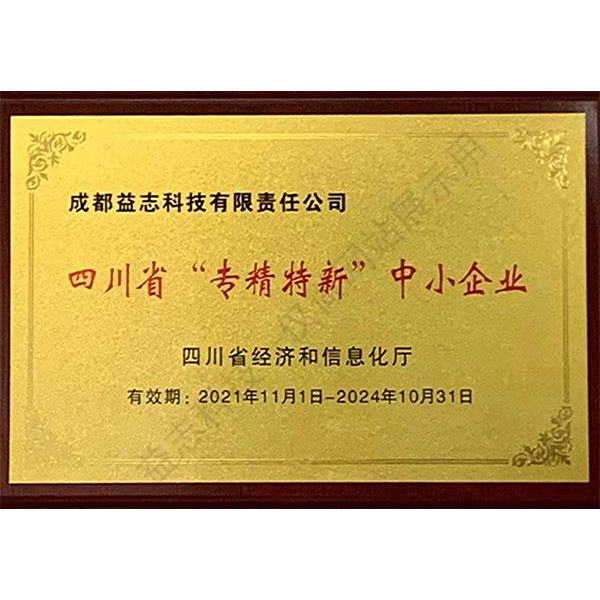
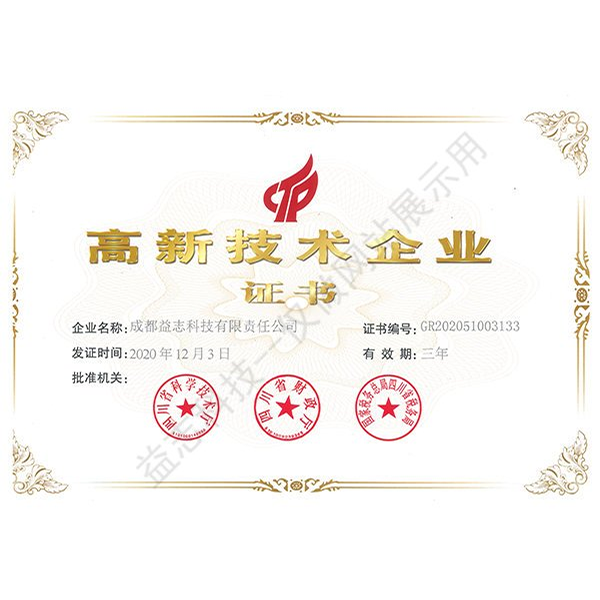
To be more specific, we can take as an exampleChengdu Yizhi Technology Co.(their website ishttps://www.yzkjhx.ru). This is not just a seller of equipment, but a design institute created on the basisChengdu Huaxi Chemical Technology Co.With a registered capital of 120 million yuan, they have been dedicated to providing comprehensive solutions since 2013. Their work clearly shows the evolution of the approach: from the supply of individual components to the full cycle - from laboratory research and pilot testing to design, delivery, installation and commissioning.
From their practice, projects for steel mills where combined methods were used are interesting. For example, their development was used at the sinter plant - a system of injection of dry sorbent into the gas duct followed by filtration, but with preliminary cooling and humidification of the gas in a special chamber. This made it possible to achieve a stable output beyond the basic 90% efficiency even with an unstable charge composition. It is important that they did not just install the installation, but carried out preliminary tests on a pilot installation, selecting the optimal type and granulometry of the sorbent specifically for this raw material.
Another significant point from such companies is working with by-products. In some of his projects for wet systemsChengdu Yizhi Technologyfocuses not only on producing commercial gypsum, but is also considering options for producing sulfuric acid or elemental sulfur from concentrated SO2 streams. This is the next level, which indicates the depth of development of the technological chain. Of course, such decisions are not always economically justified and require a thorough feasibility study, but the very fact of such expertise is important.
Which way is the wind blowing? A few final thoughts
Looking to the future, the trend is flexibility and integration. Simple ?boxed? decisions become a thing of the past. There are more and more requests for systems that can operate over a wide range of loads (which is important for renewable energy sources), be remotely monitored and diagnosed, and, importantly, be prepared for tightening standards not only for SO2, but also for associated emissions such as heavy metals or NOx.
Work on sorbents continues. This includes increasing the reactivity of lime materials due to special processing, and the development of multifunctional sorbents capable of simultaneously capturing several pollutants. But any innovation must prove its economics not in the laboratory, but in the conditions of a real, often far from ideal, industrial flow.
So, going back to the beginning, Chinese desulphurization technologies are no longer a matter of “buy and deliver”. This is about comprehensive engineering, deep adaptation to customer conditions and, ultimately, the ability to solve practical problems that always arise at the intersection of beautiful theory and harsh production reality. And the experience, including negative ones, accumulated over the years of implementing projects both inside and outside China, is perhaps the most valuable asset here.