China: vinyl chloride recycling technologies for exporters?
2026-02-07
When you hear about “vinyl chloride recycling technologies from China,” a picture immediately pops up in your head: huge factories, cheap equipment, standard turnkey solutions. Many customers, especially from the CIS, are still caught in this. But reality, as usual, is more complex and interesting. Not ?technology? in a vacuum, and specific engineering approaches to specific waste - polyvinyl chloride films, pipes, cable insulation, linoleum. And here the nuances begin that are not written about in glossy brochures.
Where legs come from: not recycling, but recycling
The first thing you encounter is terminological confusion. Often the request is for “recycling”, but in fact the client needs deep processing (recycling) to obtain secondary raw materials. Just burning or burying is not about modern Chinese technology suppliers. The focus has shifted to the recovery of PVC compounds, the release of plasticizers, and even the production of hydrogen chloride. But, to be honest, there are almost no ready-made packaged solutions. Each project is an adaptation to the waste morphology. I remember one customer from Kazakhstan brought samples of cable waste - there was copper, aluminum, PVC insulation of varying degrees of aging. A standard granulation line would not have worked here; we had to combine methods: mechanical separation, then washing, then extrusion with modifier additives. The key link is preliminary sorting and analysis. Without this, any, even the most advanced, line will work in vain.
And this is where projects often fail. A delegation arrives, looks at the beautiful operating installations at the manufacturing plant in China, and signs a contract. And when equipment arrives and starts up using local raw materials, the product yield is lower, the quality is unstable, and the wear of components is higher. Why? Because the demo lines are ?sharpened? for ideal, prepared raw materials. But in life there is sand, moisture, metallic inclusions, mixtures of different types of PVC. This is not a lack of technology, it is a lack of preparation of the project. Real development companies now always insist on lengthy testing of customer waste samples in their laboratories. If this step does not exist, this is a red flag.
Another point is environmental standards. Chinese technologies are now designed with strict compliance with emission standards, especially dioxins (this is critical when processing chlorine-containing plastics). But these norms are tied to Chinese or European standards. When exporting to countries where the legislation is softer, there is a temptation to supply a “lighter” one. version of the gas cleaning system. Responsible engineers don't do this because it's a reputation. But there are also those on the market who follow the lead of the customer who wants to save money. Then problems arise with local residents and supervisory authorities. Therefore, the contract needs to strictly define the output parameters, and not just list the equipment.
Case: unobvious difficulties with PVC film
Let’s take a seemingly simple stream—waste agricultural PVC film. It seems that there is recycling there? Grinded, washed, re-granulated. In practice it's hell. Firstly, pollution: soil, organic matter, pesticides. Can't be cleaned with regular caustic washing. It is necessary to install a multi-stage system with flotation and special washing agents. This immediately increases the cost of the line by 30-40%. Secondly, polymer degradation under UV radiation. After a season of use, the molecular chain “breaks” and the properties decrease. The resulting regranule cannot simply be applied to a new film - a careful formulation with stabilizers and impact strength modifiers is needed.
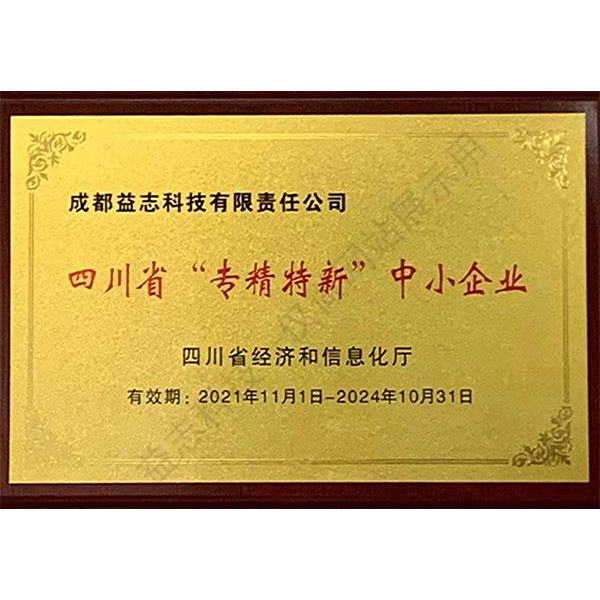
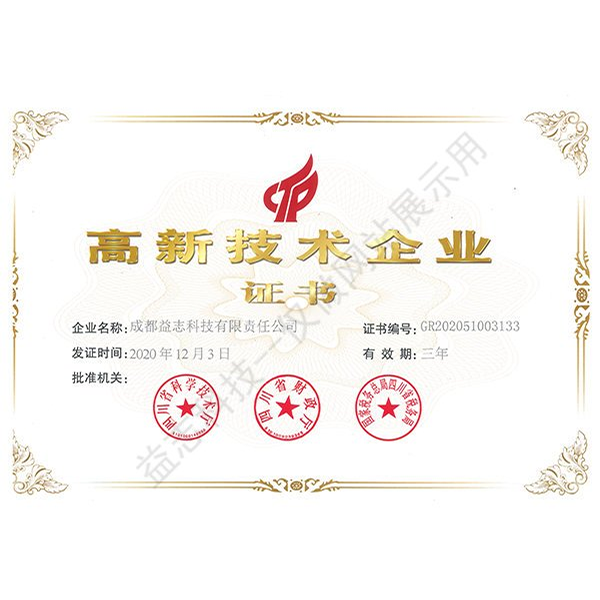
We once worked on a project for a greenhouse complex in Uzbekistan. We set a baseline. We were faced with the fact that the film was not pure PVC, but a mixture with EVA (ethylene vinyl acetate). The on-site separation did not work; we had to urgently modify the technological map and add an additional module for separation. Conclusion: without a full chemical analysis of raw materials (IR spectroscopy, for example), you shouldn’t even start talking about the supply of equipment. Many Chinese institutions now understand this. For example,Chengdu Yizhi Technology Co.(their website ishttps://www.yzkjhx.ru) is just a design institute created by a chemical technology company. They don't just sell machines, but do research first. Their profile is complex solutions, where recycling is part of a broader technological cycle. But even such players have misfires when faced with a completely new type of waste.
The most difficult thing in such projects is not the technology, but the “human factor”. on the customer's side. Training of personnel who are accustomed to working with primary raw materials, understanding the importance of maintaining temperature conditions and cleanliness at the production site. Equipment often breaks down not because of defects, but because a wrench got into the shredder or the filter mesh in the extruder was not replaced in time. Therefore, contracts now necessarily include a long period of installation supervision and training, sometimes up to six months.
What's trending: pyrolysis and chemical recycling
If we talk about real innovation, and not about the modernization of mechanics, then all eyes are now turned to pyrolysis and, in particular, to the chemical recycling of vinyl chloride. Mechanical processing has a limit - with each cycle the properties of the polymer deteriorate. Chemical methods can break down PVC into monomers or other valuable chemicals. In China, this is actively done at universities and large state-owned companies. But ready-made commercial installations ?on the shelf? so far few - mostly pilot projects.
PVC pyrolysis is not a new technology, but it was previously shunned due to problems with reactor corrosion (that same chlorine) and the formation of toxic by-products. Now there are new materials for lining, more accurate temperature control systems. This produces pyrolysis oil and a solid residue (mostly carbonaceous material). But the economics of the process are still shaky. The price of oil, the cost of installation, the need for deep purification of products - all this makes such projects risky for small and medium-sized businesses. They are more interesting as part of government waste management programs.
The direction of solvolysis looks more promising - dissolving PVC in special reagents for the purpose of isolation. This allows you to separate the polymer from additives, plasticizers, and stabilizers. The technology is energy-intensive, requires a closed cycle of reagents, but the output is a product close to the primary one. It's expensive for now. But several Chinese exporters, including the one mentionedChengdu Yizhi Technology Co., Ltd.(the registered capital of 120 million yuan indicates serious intentions), they are already offering not just equipment, but a license for such processes. This is a level of a different order, requiring the customer to have its own chemical technologists.
Regional features and pitfalls
Exporting technology is always about adaptation. Equipment that works perfectly in the damp climate of southern China can jam in the harsh winter of Siberia due to the brittleness of plastic parts in the cold. Or an aspiration system designed for one dust density will not cope with another. Trifle? No, these are future downtimes and contract failures.
One of the most painful pitfalls is the logistics of spare parts. Chinese manufacturers often use bearings, gearboxes, and controls of their own, local brands. When such a part fails thousands of kilometers away, you can wait months for its delivery from China. Savvy buyers are now demanding either the use of international branded components (Siemens, SKF, etc.) or stocking of critical parts on site from start-up. This adds to the cost but saves the business.
There is also a cultural moment in communication. Chinese engineers can be terse in reports, and in correspondence, important details are sometimes lost in translation. The most effective way is to have a technologist on your side who speaks Chinese or hire an independent Russian-speaking consulting engineer living in China to monitor the manufacturing and testing phase. Is this mistrust? No, this is a professional approach. I've seen such measures save projects from fatal build errors.
Conclusions for those who are searching
So what's the bottom line? Vinyl chloride recycling technologies from China are not a magic pill, but a complex engineering product. They cannot be purchased from a catalogue. A successful project begins not with asking for a price, but with sending 200-300 kg of actual waste to the potential supplier's laboratory. You need to look not at pretty pictures, but at the list of completed projects, preferably in similar climatic and raw material conditions.
The key trend is the transition from selling equipment to selling technological solutions and services. Pay attention to structures such as design institutes (Chengdu Yizhi Technology Co.- a typical example), who have a scientific base and experience in complex design. Their website is worth exploring not only for contacts, but also to understand their philosophy: they position themselves as part ofChengdu Huaxi Chemical Technology Co., Ltd., which indicates deep integration into the chemical industry, and not just mechanical engineering.
And lastly: include in your budget and timing not only the cost of the line, but also the costs of adaptation, training, and inventory creation. The most advanced recycling technology is broken due to poor logistics of raw materials or human carelessness. Chinese partners now understand this well and are ready for a long and detailed dialogue. Your job is to be an equally prepared and thoughtful customer. Only then ?technology? will become a working and profitable business on your site.