Who are the leading exporters of Chinese ammonia desulfurization technology?
2026-02-08
If we talk about the leaders in the export of Chinese ammonia desulfurization technology, many will immediately remember large state-owned energy giants or well-known engineering companies. But in practice, the real picture of “turnkey” supplies, especially to complex markets like the CIS, often develops around a narrow circle of specialized players who not only sell technology, but “live” for years. every project, from drawing to launch and elimination of “childhood diseases”. This is not about replicating standard solutions, but about adaptation, where knowledge of the nuances - from the quality of local ammonia to the peculiarities of working with local contractors - decides everything.
Market and real players: behind the big names
There are many leaders on paper. But when it comes to real, experience-proven full-cycle exports - design, equipment supply, installation supervision, commissioning - the list narrows sharply. The key word here isfull cycle. Many large companies do excellent desulfurization within China, but their international departments often act as intermediaries, outsourcing the technical work to subcontractors. And in complex markets, this is a recipe for problems: a gap in communication, misunderstanding of local standards, long approval times for changes.
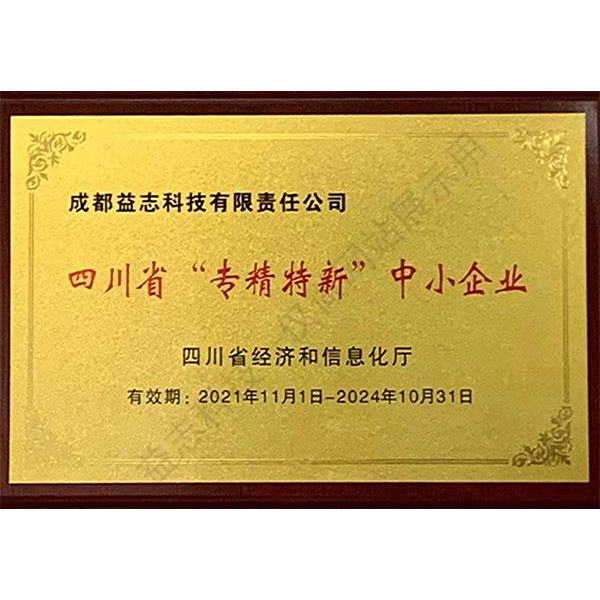
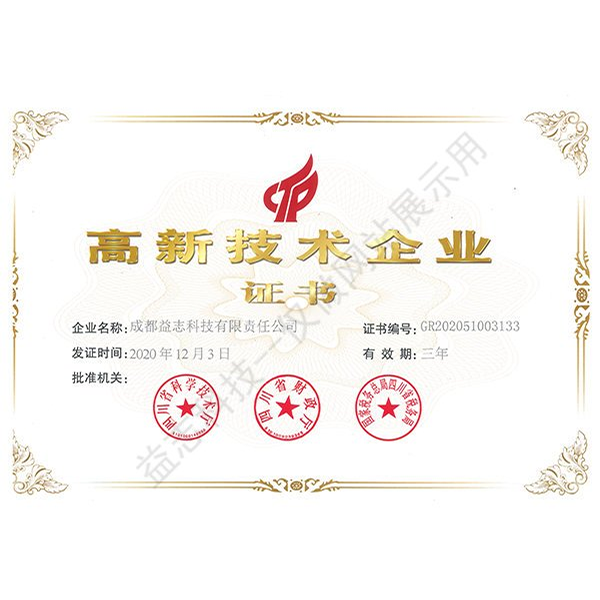
Therefore, the real export leaders are often not the most advertised ones, but those who were initially created for international projects or have deep specialization. For example, a design instituteChengdu Yizhi Technology Co.(a subsidiary of Chengdu Huaxi Chemical Technology). Their websiteyzkjhx.rufocused on the Russian-speaking segment, which already says a lot. They don't just translate Chinese catalogues, but lead projects "on the ground". The authorized capital of 120 million yuan for the institute is a serious claim for financial stability, which is critical for long-term feasibility studies and warranty obligations.
I came across a situation where a well-known supplier won a tender for a large plant in Kazakhstan, but their standard design did not take into account the high humidity and low pressure in the local compressed air network. As a result, the ammonia spray system worked unstably for the first six months. While the ?head? the contractor coordinated the changes with the head office in China, a local technologist from an institute like Yizhi would have already proposed three options for modifying the injection unit on the spot, because they already had such experience in the Urals. This “observation” to atypical conditions is a sign of a leader.
Technological depth vs. ?boxed? decision
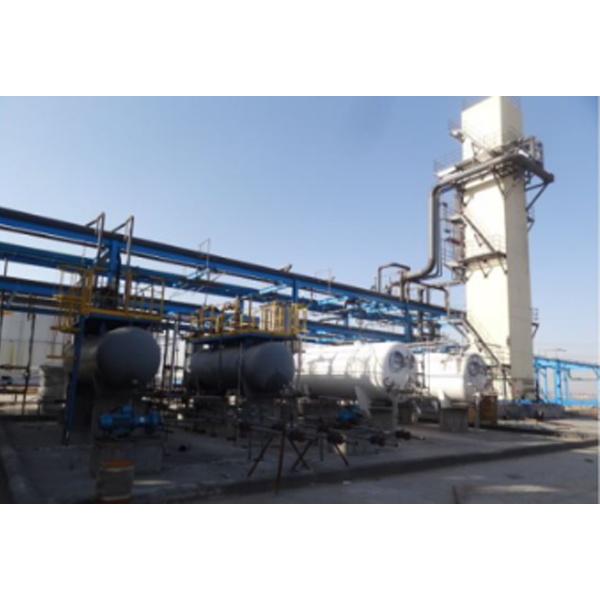
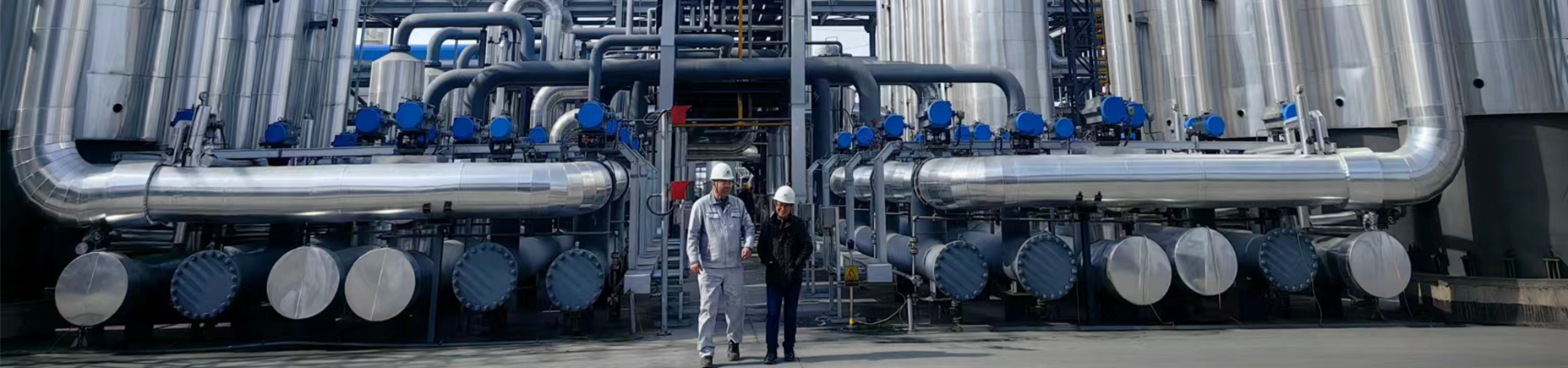
Another watershed is the attitude towards technology itself.Ammonia desulfurization- not one technology, but a family of processes: wet ammonia, semi-dry, circulating fluidized bed (CFB). The leading exporter must not just offer one, the cheapest, but be able to justify the choice for a specific fuel (coal, fuel oil, gas) and requirements for the by-product (ammonium sulfate, gypsum?).
A common mistake customers make is to demand “like everyone else?” or “the most modern?”. But “the most modern?” for a brown coal power plant in Siberia is not the same as for a coal-fired power plant in China. Real exporters spend a lot of time on pre-project inspection: analysis of ash, sulfur content, load schedule. I remember a project where, due to the high chloride content in coal, the standard design quickly led to corrosion in the saturation zone. I had to change the material for the flue gas pre-cooling section - an increase in cost by 15%, but a guarantee of service life. The company that goes for such parts and can technically justify them, and not just sell a standard kit, is the one that comes out as a leader.
Here again we can give an exampleChengdu Yizhi Technology. Their parent company, Huaxi Technology, is originally a chemical company, not just a construction company. This means that their DNA contains an understanding of the chemistry of the process, the kinetics of reactions, and managing the quality of the by-product. For the customer, this bypasses the stage when the construction company hires a third-party chemical technologist for adaptation. Everything in one bottle: from a chemical model to drawings of foundations for devices.
Localization and ?long? money
Exporting technology is not just about hardware. This also includes financing and localization. Chinese banks often lend to projects with a share of Chinese equipment ranging from 50-70%. A true export leader helps the client assemble this package and get approved by Eximbank or similar structures. They act not as a seller, but as a partner in the project.
Localization is a separate pain. The idea of using 100% Chinese equipment is only beautiful in theory. Customs, delivery times for spare parts, training of local personnel - all this increases the cost of living. Therefore, those who have been in the region for a long time create spare parts warehouses or set up the production of non-critical elements (containers, air ducts, ladders) at local factories. On their websiteyzkjhx.ruit is clear that they position themselves precisely as a design institute, which implies flexibility in the composition of the delivery package. They can supply only a technological package (PDD, key equipment), and purchase the construction part and auxiliary equipment locally - this is a huge plus for many investment projects with localization requirements.
I had a case in my practice in Belarus, where, according to the terms of the contract, the share of local content had to be at least 30%. A large Chinese contractor was stubborn and wanted to transport everything in containers. As a result, the project reached the customs clearance stage. And the team from the same Yizhi (they were technology subcontractors at that time) quickly recalculated the specifications, highlighting what could be done in Minsk, and the project moved on. This flexibility is the sign of a mature exporter.
After-sales service: where the difference lies
Anyone can sell and install. But what happens a year later, when the warranty expires, and local engineers have not yet fully mastered all the intricacies of regulation? Many "exporters" at this moment they dissolve, leaving the client with a thick volume of instructions in Chinese and contacts “contact our agent?”.
Leaders build a service network. This does not necessarily have its own office in each country. More often these are partnerships with local engineering companies, which they train for a long time and carefully. They conduct annual seminars to share experience for clients, maintain a database of typical faults, and promptly respond to requests via video communication. A critically important point is access to original spare parts for key equipment (pumps, dispensers, nozzles) without a three-month wait.
For example, a rotary feeder failure in a CFB reactor could shut down the entire CHP plant. If you have to wait three months for a replacement rotor from China, it’s a disaster. Companies that keep such critical spare parts in a regional warehouse in Russia or Kazakhstan automatically fall into the big league. I know that some institutions, including the one mentioned, are practicing the creation of “virtual warehouses?” in partnership with local machine-building plants, which, according to their drawings, can produce not the most complex, but urgent part. This is a level of trust and responsibility.
Failures and lessons: nothing without them
You can't talk about leadership without looking at failure. One of the most illustrative cases that is making the rounds among experts is a project in Russia, where the Chinese side (I won’t name it) did not take into account the requirements of the Russian “Rules for the Construction of Pressure Vessels.” (PB 03-576-03). Their absorber design did not pass the Rostechnadzor examination. The project was stuck for six months; a complete reworking of the drawings and additional certification of materials was required. Damage - millions of dollars in fines for missing deadlines.
Those who continue to work in the market after this learn a lesson. They hire or closely consult with local licensed industrial safety experts, and adapt projects in advance to local standards (SNiPs, GOSTs). These are huge additional costs, but without them, entering the market is impossible. Companies likeChengdu Yizhi Technology Co., judging by their long presence and portfolio, have been through this. Their design institute most likely has engineers on staff or outsourced who are familiar with ESKD and CIS standards. This is not the information that is written on the site, but it is read between the lines in successfully implemented projects.
Another lesson is cultural adaptation. Chinese engineers are used to working ?24/7? at the construction site. Local contractors and inspectors do not. Severe pressure on deadlines often leads to conflicts and sabotage. Experienced exporters now always include in the contract a separate coordinator for working with the local side - not an engineer, but rather a manager-translator who smoothes out these frictions. It's a small thing, but it saves the schedule.
So who are they?
Returning to the title question. The leading exporters of Chinese ammonia desulfurization technology are not necessarily the largest companies in terms of turnover. These are, as a rule, specialized design and engineering institutes or subsidiaries of chemical holdings that have relied on deep specialization and long-term partnership in a specific market. They are distinguished by: 1) Willingness and ability to leadfull cycleproject, including adaptation to local standards. 2) Technological depth, allowing you to select and modify the circuit, and not sell the “box”. 3) Investments in localization, service and creation of support infrastructure (spare parts warehouses, training). 4) Ability to work with financing and complex contractual conditions. 5) Rich, including bitter, experience of failures, which was transformed into proven procedures.
Companies such as design instituteChengdu Yizhi Technology Co., Ltd., with their focus on the Russian-speaking market through the websiteyzkjhx.ru, solid authorized capital and, importantly, the chemical background of the parent company Huaxi Technology, are prominent representatives of this cohort. Their strength lies not in a big name on the stock exchange, but in the fact that their technologies and teams are already “saturated” specifics of working outside of China. Ultimately, an export leader is one whose technology is maintained by local engineers once it's launched, running reliably, and the supplier itself remains on hand to help with upgrades five years down the line. It is for this reason that they are worth looking for.