Chinese LNG liquefaction technologies: a breakthrough for Russia?
2026-02-13
This is a question that has recently come up more and more often on the sidelines of industry conferences and in work chats. Many, especially those who are not immersed in technical details, see Chinese equipment and projects as simply a cheaper alternative to Western ones. But this is superficial. The real story is about something else: about the rapid transition from the import of ready-made solutions to the creation of our own, sometimes non-standard, technological chains that can ideally suit Russian specifics. Or don't lie down. Let's understand it without gloss.
From ?iron? to the process: where the real value lies
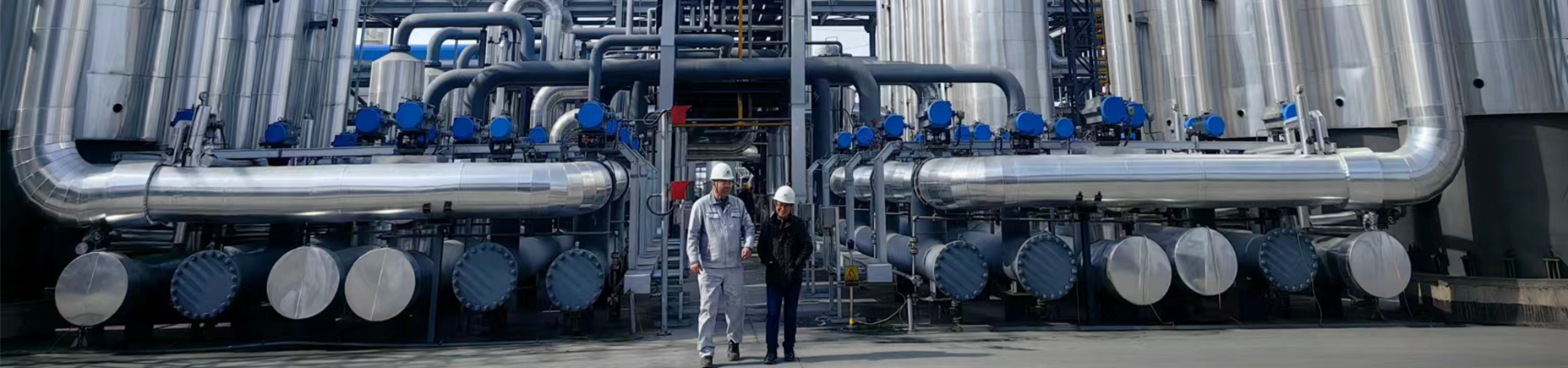
When they talk about Chinese technology inLNG liquefaction, the first thing that comes to mind is, of course, heat exchangers, turboexpanders, cryogenic pumps. Yes, Chinese manufacturers such as Zhangjiagang CIMC or Sichuan Air Separation are no longer artisans. Their equipment is being tested at dozens of facilities inside China. But the key is not in a separate device. The value lies in the comprehensive design of the entire technological cycle, from the preparation of raw materials to loading into a tanker. And this is where Chinese engineering companies, which grew from contractors for the domestic market, have accumulated enormous experience.
Take, for example, small and medium-sized liquefaction plants. For remote fields or gas filling stations (GNS), this direction in Russia is only gaining momentum. Over the past 10 years, the Chinese seem to have built more of them than anyone else in the world. They have learned to optimize such projects for a specific gas composition, often imperfect, under harsh climatic conditions (although their north is not our north, I agree). Their solutions for, say, nitrogen or mixed refrigerant cycles for small capacities have become very refined and, importantly, quickly implemented.
But there is a nuance that is rarely written about in presentations. This "sharpness" sometimes borders on rigid standardization. A Chinese contractor may offer a proven solution that worked perfectly in Sichuan, but for gas with a high content of, say, nitrogen or CO2 in our field it will require serious adaptation. And here the most interesting part begins - negotiations on the depth of technology transfer and the Chinese side’s readiness for improvements. Not everyone goes for it.
Case study: when specificity breaks the pattern
I’ll tell you about one project that I came across indirectly. We were talking about a modular liquefaction plant for associated petroleum gas (APG) with a capacity of about 100 thousand tons per year. A Chinese contractor with a good portfolio was considered. Their technologyLNG liquefactionwas based on a propane-ethane mixed refrigerant. Everything looked perfect on paper until we got to a detailed analysis of the gas composition.
It turned out that our APG had unstable impurities of heavy hydrocarbons, the concentration of which could “float”. The standard Chinese gas treatment scheme was designed for more stable raw materials. Their engineers first insisted on their standard solution - they say, it’s worked out, it’s reliable. It took weeks of technical discussions to prove the need to strengthen the preparation front, install an additional separator and a more flexible control system. As a result, the project changed, the cost increased, but future problems with clogging of heat exchangers were avoided.
This case is an illustration of the general rule. Chinese technologies are often a very high-quality “designer”, but its assembly for a non-trivial Russian task requires the customer to have deep competence and the ability to conduct dialogue at a technical level. Otherwise, you risk getting a box that, in theory, works, but in our conditions will constantly be “capricious.”
The role of engineering: design institutes as a bridge
Here it is worth highlighting a separate layer of players - Chinese design institutes. These aren't just offices with draftsmen. These are structures that accumulate the experience of hundreds of projects. They often become that “translator” between finished equipment and the specifics of the customer’s site.
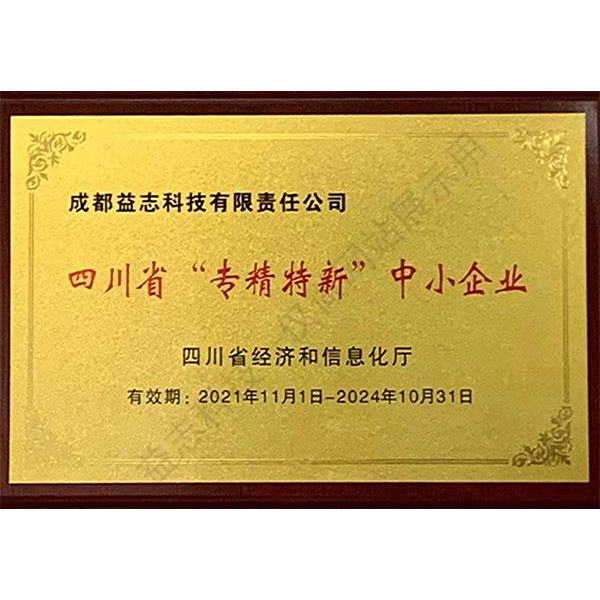
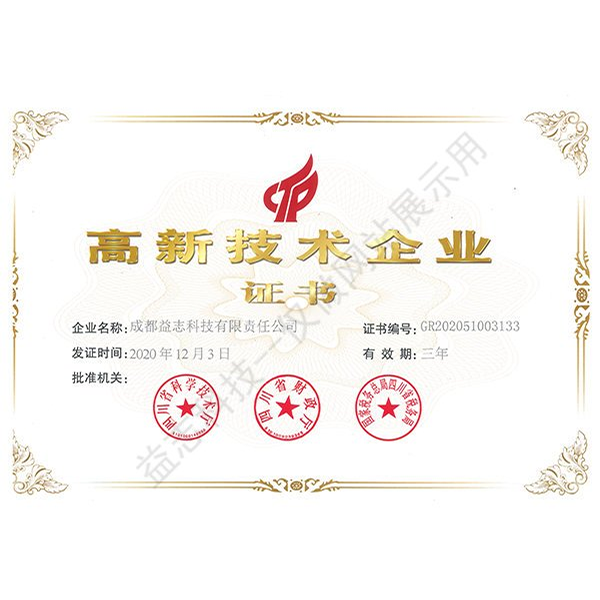
Here, for example,Chengdu Yizhi Technology Co.(their website isyzkjhx.ru). This is just such a design institute created on the basis of a technology company. Their description states that they were founded by Chengdu Huaxi Chemical Technology Co. back in 2013. What does this mean in practice? Such companies usually have access to a wide pool of technological solutions, can combine equipment from different manufacturers and, critically, are responsible for the entire cycle - from the FEED stage to commissioning. For a Russian customer, working with such an institute may be less risky than directly purchasing hardware. at the manufacturer.
But there are pitfalls here too. Their expertise is focused on Chinese standards and regulations (GB, HG). Integration of these solutions into the field of Russian industrial safety regulations, SNiPs and Rostekhnadzor requirements is a separate huge work. They often offer “turnkey”, but the price may not include a full package of documents for Russian examination. This point must be worked out in the contract most carefully, otherwise the project will hit the approval stage.
Not only successes: lessons from failures and bottlenecks.
In order for the picture to be objective, problems cannot be ignored. One of the main ones is logistics and service. Yes, Chinese companies have begun to offer longer warranties. But what happens when a specific valve or sensor fails at a remote site in Siberia? Waiting for a specialist or a spare part from China is time-consuming and downtime. Western network players in this regard often have a more developed service infrastructure in Russia, albeit with different prices.
Another lesson from a number of failed attempts is underestimating the climate. I know the story when Chinese cryogenic tanks were supplied for one of the first pilot gas stations. According to the passport, everything could withstand -40°C. But they did not take into account cyclic loads, wind pressure in our region and the duration of the period of such temperatures. After two seasons, microcracks appeared along the welds. The problem was solved, but required additional strengthening of the structures and revision of operating regulations. After this incident, the Chinese finalized their calculations for northern supplies.
And the third point is “number”. Control systems and automated process control systems supplied as a set sometimes turn out to be a “black box?” with an interface in Chinese/English only and limited access rights for local staff. Reprogramming something to suit local needs can be extremely difficult. This is a matter of negotiation, but is often addressed too late.
So is this a breakthrough? Looking forward
Returning to the title question. Is this definitely a breakthrough? No, it is rather a powerful and very pragmatic alternative that covers a number of niches, especially in the small and medium capacity segment, where capital expenditure requirements are critical. Chinese technologyLNG liquefaction- these are no longer copies, but independent, viable developments.
Their main trump card is speed and scalability. They have learned to make reliable, working solutions quickly and at reasonable prices. For Russia, especially in light of current geopolitical changes in supply chains, this opens up new opportunities for the development of its own gas infrastructure, especially on the periphery of the pipeline network.
But success will depend not on blind borrowing, but on competent hybridization. From the ability of Russian engineering companies and customers to take the best Chinese developments and “graft” them. them to our security standards and operational practices, and it is imperative to insist on deep service localization and adaptation. Only then will cooperation become truly strategic, and not just a one-time purchase of equipment. So far we are in the middle of this journey, and it is full of both discoveries and complex technical problems that still need to be solved.