China: new methods for liquefying LNG?
2026-02-13
When you hear this question, the first thought is - what kind of “new” things are there, everything was invented a long time ago. But this is the main misconception. Many, especially in the West, still believe that China is only replicating ready-made technologies. In fact, market pressure, the specificity of local raw material sources and stringent efficiency requirements force engineers here to constantly look for workarounds, essentially creating hybrid or completely new approaches. We are not always talking about a breakthrough in fundamental science, but rather about radical adaptation and integration of processes under specific, often non-ideal, conditions.
Where do these “new methods” come from?
It all started with gas, which we call “complex” here. Not the ideal methane from fields like the Silk Road. More often it is associated petroleum gas with a high content of N2, CO2 or even ethane, or gas from coal seams with an unstable composition. Standardliquefaction methods, say, a classic cascade cycle or even AP-X, for such raw materials becomes economically unprofitable or completely impossible. The equipment becomes clogged, efficiency drops.
I remember one project in Xinjiang, where they were just trying to apply a ready-made solution for high-nitrogen gas. The contract was with a European contractor. Everything is according to textbooks. And the result is constant problems with heat exchangers and wild energy consumption. The project almost stopped. It was precisely such failures that became the catalyst. It became clear: we need our own developments, our own engineering solutions, and not just buying a license.
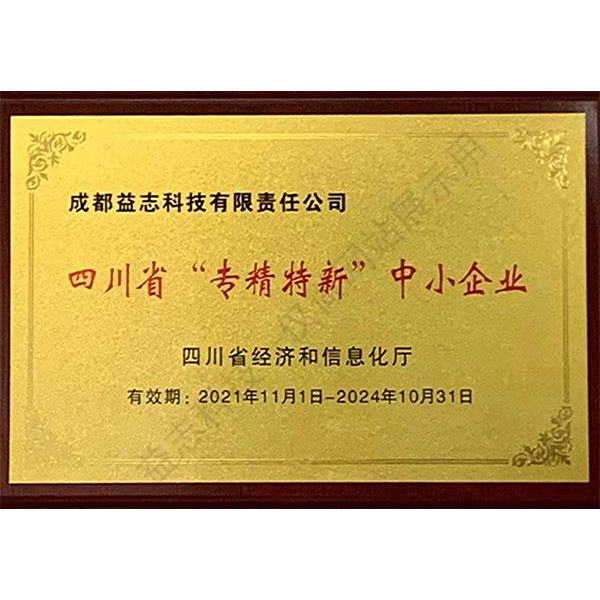
This is where companies likeChengdu Yizhi Technology Co.— their websiteyzkjhx.rureflects this trend well. These are not just equipment sellers, but a design institute that grew out of a chemical technology company. Their capital of 120 million yuan is an investment in R&D for specific Chinese tasks. They, like many other local players, began with a deep modification of pre-treatment processes (pre-fractionation, pressure adsorption), which was the first step towards new schemesLNG liquefaction.
Focus on hybridization and energy efficiency
To summarize, the main vector is hybrid cycles. We don’t reinvent the wheel from scratch, but combine it. For example, work is actively underway on integrationmixed refrigerants(MRC) with throttling cycles or even magnetic cooling elements in the final stages. The goal is to squeeze the maximum out of every kilowatt, especially when the plant is not located near the sea, but in the interior of the continent, where there is no access to cheap water cooling.
In practice, this looks like a constant balancing act. If you add a propane pre-cooling stage, you reduce the load on the main MRC loop. But then the question arises about the complexity of management and security. We have to write new algorithms for automated process control systems, because standard libraries cannot cope with the nonlinearity of such a hybrid process. This is the same “dirty work” that is not visible in patents.
Case study of a low power plant in Sichuan Province. They just used a hybrid scheme from a local developer. Energy consumption was reduced by 15% compared to the basic design, but the first six months were spent debugging the operation of valves and sensors in transient modes. The engineers lived practically on the site. This "run-in" in the field - and is the main source of knowledge for the following projects.
The role of modular and mobile solutions
Another driver for new methods is the request for modularity. Large coastal plants are one thing. But China has a huge number of dispersed gas sources: small fields, landfill gas, biogas from agricultural complexes. It is unprofitable to carry a main pipeline to them. We need compact, almost container solutions.
And this poses new restrictions. Traditional turboexpanders may not be suitable in terms of dimensions. We have to experiment with screw expansion machines or even piston expanders, which seem to be a thing of the past. Their efficiency is lower, but they are simpler, cheaper and repairable in the field.LNG liquefactionin this format is always a compromise between efficiency and the life cycle of an installation somewhere in the mountains or on the edge of the desert.
Here, it is often not the most technologically advanced, but the most durable solutions that get shot. I saw one such mobile installation that ran on associated gas. Her ?new method? consisted of super-intensification of heat transfer due to special nozzles in air-cooling devices, which made it possible to radically reduce their size. But the cost was high sensitivity to dust - filters had to be changed every week. Engineering choice always comes down to the question: “What is the big bad for this particular location?”
Dips as part of the journey
You can't talk about new methods without mentioning dead-end branches. We had a stage of fascination with the so-called “thermoacoustic” ones. liquefaction methods. Laboratory samples showed interesting miniaturization results. We decided to try it in a pilot project for liquefying biogas. The idea was to eliminate any moving parts in the refrigeration circuit.
In theory - great. In practice, we got unstable operation of the resonator, wild sensitivity to the composition of the gas, and noise that damaged neighboring electronics. The project was abandoned, but the data obtained later helped in the development of more efficient vortex tubes for pre-cooling. This is an important point: China is now quite tolerant of such “controlled failures” if they provide experience. R&D budgets take this into account.
Another common failure is blindly copying digital twins. We bought an expensive modeling platform, loaded the parameters of our new hybrid cycle into it, and it produces the ideal curve. You start building - and the real parameters diverge by 20-30%. Why? Because the fluid libraries in the software do not take into account our specific impurities. I had to accumulate my database of empirical corrections for years. Now this is know-how.
What's in the bottom line? Looking forward
So are there new methods? Yes, but they don't have big names. This is not a revolution, but an evolution driven by pragmatism. The main trends that I see are: further hybridization of cycles for a specific gas composition, widespread digitalization for managing these complex hybrid systems (but using our own data), and a focus on modularity for distributed energy.
The key players here are precisely engineering companies, deeply immersed in local specifics, like the one mentionedChengdu Yizhi Technology Co.. Their strength lies not in patents on a fundamental process, but in a portfolio of completed projects, each a set of unique solutions to unique problems. Their website is more of a showcase of their competencies, rather than a catalog of finished equipment.
Therefore, the next time you hear a question about “new liquefaction methods in China?”, think not about a breakthrough technology from a magazine, but about a thousand small improvements tested on real, often imperfect, sites. This is the main ?new method? — a method of continuous adaptation and engineering improvisation within a strict market framework. This is precisely what allows Chinese projects toLNG liquefactioncompete not only on price, but also on technological flexibility.