Chinese LNG technologies in Russia: prospects?
2026-02-19
When people talk about Chinese technologies in Russian LNG, they often immediately think about giant turnkey plants. or direct investment. But the reality, according to my observations, is much more subtle and interesting. It’s not just a matter of scale, but how exactly Chinese engineering and equipment are integrated into the specifics of Russian projects, especially under conditions of sanctions pressure. Many people expect a simple transfer of ready-made solutions, but in practice this is almost always adaptation, and sometimes joint development from scratch.
Beyond pipes and compressors: where the real value lies
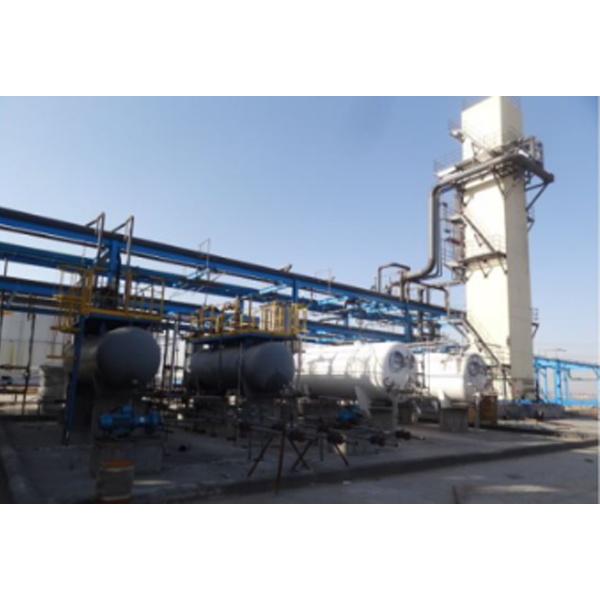
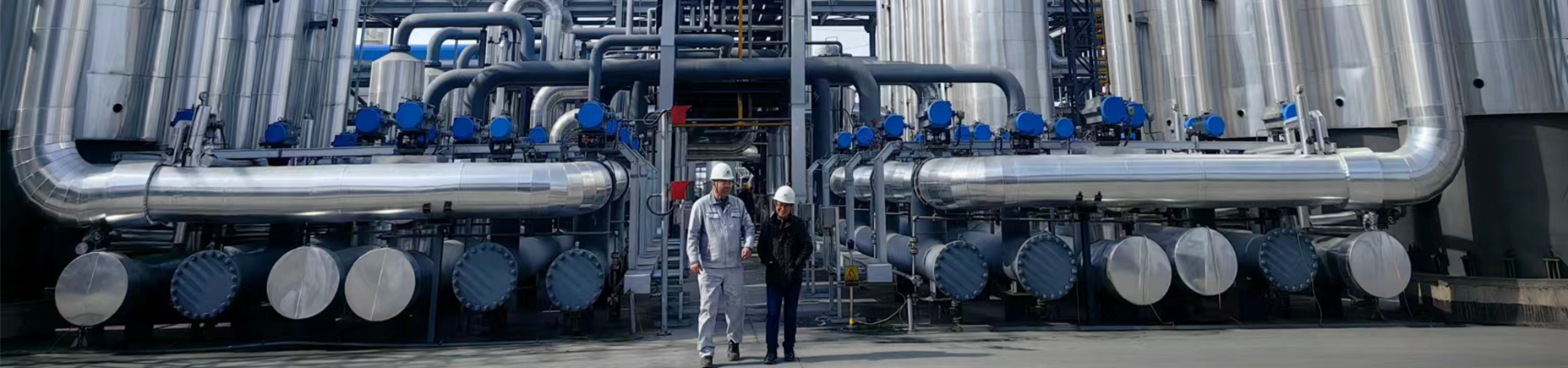
If we take the purely technical side, then Chinese companies have long ago moved beyond the stage of simple copying. Take, for example, cryogenic liquefaction equipment. Previously, the main argument was price, but now they are increasingly talking about the flexibility of technological solutions. I have seen projects where customized heat exchange schemes were proposed for the specific characteristics of the gas field and energy efficiency requirements. This is not just a catalog item.
At the same time, there are difficulties. Russian regulations, especially in terms of industrial safety and ecology, have their own deep logic and history. Direct ?import? A Chinese design solution, without taking these subtleties into account, is doomed to take a long time to get approval or even stop. I remember an incident at one of the facilities in Siberia, where the components of the gas control system had to be practically redesigned to meet the requirements of Rostekhnadzor. At first, our Chinese colleagues did not understand the depth of the changes, but after joint working sessions with Russian experts they came up with an excellent solution.
It is worth mentioning here about such a player asChengdu Yizhi Technology Co.(their website ishttps://www.yzkjhx.ru). It is not just a supplier, but a full-fledged design institute established by Huaxi Technology. Their approach is often based not on selling “hardware”, but on comprehensive design. For Russia, this may be interesting in terms of modular solutions for medium and small LNG capacities, where giants like Novatek? they don't always stop by. Their registered capital of 120 million yuan shows serious intentions, but the key is their experience as part of Huaxi's full-cycle technology chain.
Adaptation to “peculiarities”: logistics, climate, personnel
Any technology is dead without taking into account the context. The Russian context involves vast distances, the extreme climate of the Arctic and the Far East, as well as a certain shortage of highly specialized installation teams for high-tech equipment. Chinese contractors quickly realized this.
For example, deliveries. The production time for equipment in China may be attractive, but then the story begins with customs, transportation along the Trans-Siberian Railway or the Northern Sea Route. A delay in one section of the chain disrupts all editing schedules. We have to build logistics with a large margin and duplicate routes - our Chinese partners have learned this, but this, of course, increases the cost of the project.
The climate is a different matter. Electronics, sealing materials, steels for devices - everything must work at -50°C. Chinese manufacturers are now actively testing their solutions in similar conditions, for example, in the northern provinces of China, but the Russian Arctic is a challenge of a different level. I heard about pilot projects for the installation of Chinese cryogenic pumps at processing plants in Yakutia - a long trial run on frost resistance was going on there.
Financial models and risks: what besides technology?
Prospects depend not only on hardware, but also on money. The classic scheme with Western financing for LNG projects is now, to put it mildly, complicated. China can offer an alternative through its banks and funds, but this always comes with strings attached.
Often the condition is the purchase of a significant amount of Chinese equipment and the involvement of Chinese contractors. This creates a certain dependency for the entire life cycle of the project. On the one hand, this is a guarantee of service and supply of spare parts (which is critical in the current conditions). On the other hand, the question arises about the long-term technological sovereignty of the Russian industry. Will we develop our competencies or simply switch to another technology partner?
Another nuance is risk insurance. Large Chinese banks are very cautious and require complex insurance schemes for political and commercial risks in Russian realities. This lengthens and increases the cost of project preparation. Sometimes it is easier to find a solution for a single module than for an entire plant.
Small and medium LNG: a niche for targeted implementation
While everyone is talking about “Arctic LNG-2”, I see more prospects for Chinese technologies in the small and medium-sized LNG segment. These are gas filling stations for transport, supplying remote villages, and using associated petroleum gas in small fields.
Here are Chinese solutions, including from companies such asChengdu Yizhi Technology, can be very competitive. They offer fairly standardized yet flexible modular compression and liquefaction plants. They can be deployed relatively quickly and do not require giant infrastructure. In Russia, this market is just emerging, and the regulatory framework for it is still “raw”. The Chinese, having vast domestic experience in gasification, can offer not just an installation, but an entire business model.
But there are pitfalls here too. After-sales service. If a large plant has its own service team, then for dozens of small installations scattered across the country it is necessary to create a network of service centers. Are Chinese companies ready for this? So far, only pilot projects with training of local personnel are visible.
Looking forward: integration instead of substitution
So are there any prospects? My answer is yes, but with serious reservations. The prospects are not in total "takeover" market with Chinese technologies, but in their deep integration into the Russian production and engineering chain.
We are already seeing how Russian design institutes are beginning to actively work with Chinese colleagues not as simple suppliers, but as co-developers. Joint engineering teams are being created to adapt technologies. This is a long way, but it leads to the creation of truly hybrid solutions that will work specifically in our conditions.
The key issue will be the transfer of know-how and localization. If cooperation comes down only to the purchase of ready-made boxes, then the prospects are vague. If we manage to establish transfer of technology and production of critical components in Russia (even under Chinese licenses), then this could give a powerful impetus to the entire industry. So far, the movement is proceeding more according to the first scenario, but the request for the second from Russian companies is already clearly heard. And players likeChengdu Yizhi Technology Co., Ltd., with their status as a design institute, can potentially be more flexible in such matters than large state-owned giants. We'll watch.