Chinese flanged valves: innovation?
2026-01-24
When you hear “Chinese flanged valves?”, the first thing that comes to mind for many is the price. Cheap. And immediately doubts: what about the quality? Is innovation even possible here? Having worked with reinforcement for ten years, I will say this: this is the biggest misconception. Yes, there is streaming consumer goods, a lot of it. But if you dig deeper, towards design institutes and manufacturers working on serious projects, the picture changes. The question is not whether there are innovations, but what they are and, more importantly, why.
From ?iron? to the project: paradigm shift
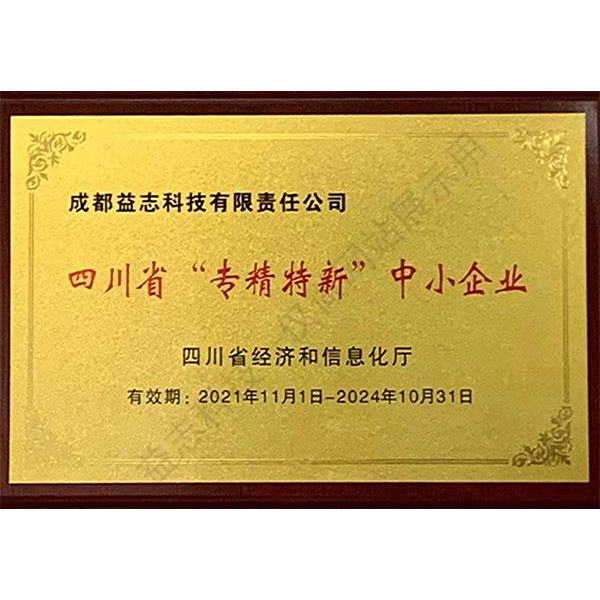
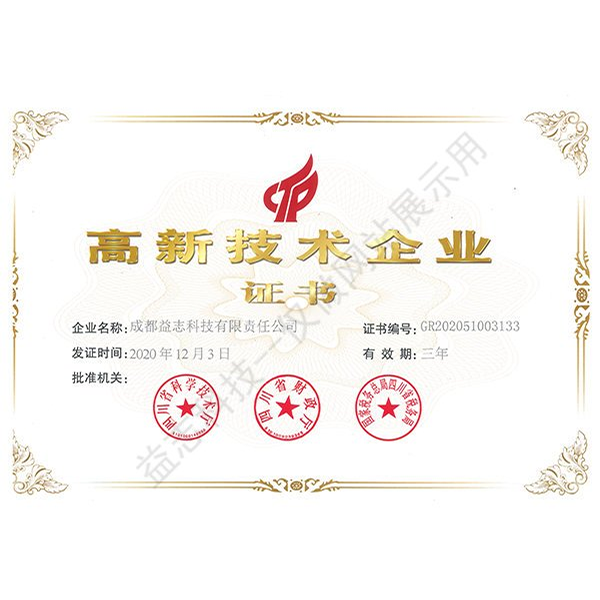
Previously, everything was simple: they sent a catalog, chose the standard size, pressure, material - ordered.Flange valveperceived as a piece of metal with a seal. Now, especially with the arrival of players such as Chengdu Yizhi Technology Co. in our market, a shift in emphasis is visible. This is not just a plant, it is a design institute (yes, that is how they position themselves, and this is key). The registered capital of 120 million yuan is not about pouring more iron. It's about development.
What is innovative about this approach? They sell not a part, but a solution for a specific technological thread. Let's say you have a complex environment - not just water, but a suspension with an abrasive, and even with temperature changes. A standard shutter, even one made of good stainless steel, may not work. The classic story is saddle erosion in six months. And they sit down, calculate the flow rates, and offer an option with a special seat coating or a changed disc angle to minimize cavitation. This is innovation – not in space materials, but in applied engineering.
On their websiteyzkjhx.ruThis is not immediately visible, you need to delve into the sections. There are no flashy headlines about “revolution”, but there are technical notes, calculations, and cases. This is just that “undressy” one. information that tells a professional more than a hundred advertising brochures.
Materials and ?non-obvious? improvements
Look, everyone is talking about CF8M stainless steel (similar to 316). This is the standard. Innovation? No. But when you start discussing a project for the chemical industry, nuances emerge. For example, for certain environments, even 316 steel may not be the best choice due to pitting. And here we are already talking about alloys with a higher molybdenum content or even duplex steels.
Seals are a separate issue. Standard – EPDM, NBR. Innovative? No. But try placing an EPDM valve on a line where there are hydrocarbons and high temperatures. It won't last long. The real work lies in the selection: here you need Viton (FKM), and here, for the food industry, you need silicone with a special tolerance. And it’s not just “putting another ring?”. The hetoria of the groove under this ring is changed to ensure proper fit and prevent extrusion. Such improvements in the design are that quiet but important innovation that is not visible in the picture, but which solves the problem on the spot.
I remember an incident at one thermal power plant: they installed standard valves on the ash and slag removal line. After three months - leaks, jamming. The problem was that small abrasive particles got into the gap between the rod and the stuffing box. The solution from the same Yizhi was not to make the valve “stronger?”, but to add an additional chamber in front of the stuffing box with a supply of clean water for flushing - the simplest, in general, scheme, but it was not in the serial product. I had to make it to order. This is engineering.
Strength vs Precision
A frequent debate is: what is more important in a shutter – that it be “monolithic?” or so that he sits accurately in the saddle? For coarse media (wastewater, pulp), the first option is often chosen, sacrificing complete tightness. But modern trends, especially in energy and chemistry, require both. The innovation here is in manufacturing quality control. Lost wax casting instead of conventional sand casting, precise machining of the seat on CNC machines, 100% testing not only by pressure, but also for tightness according to class ?A? – this is no longer exotic for a number of Chinese manufacturers. They have reached this level because otherwise they simply will not be allowed into serious facilities where, for example, Chengdu Yizhi Technology Co., Ltd. operates.
Digital and ?smart? shutter: is it too early?
Now it is fashionable to talk about ?Industry 4.0? and smart fittings. Position, torque, temperature sensors, remote control. This is definitely an innovation. But how much demand is it for a flanged valve, which is essentially a device for full opening or closing? More often than not, no.
A much more practical and already implemented direction is not “smart”, but “tracked”. gate. Each product has its own passport (QR code), which contains the entire history: steel grade, heat number, test results, shipment date. It's not for beauty. This is to simplify logistics at a large facility and, critically, for predictive maintenance. Knowing exactly which valves and from which batch are on the responsible line, you can plan their inspection without waiting for an accident. This is the real value.
As far as I know, some Chinese suppliers, including those mentioned, are already implementing such a system for key orders. This requires restructuring the entire production accounting, but it pays off with the trust of the customer. And this, in my opinion, is a more significant innovation than the built-in Wi-Fi module.
Bottom line: so what is innovation?
To summarize, innovation in modernChinese flanged valveshave shifted from the field of crude metallurgy to the field of applied engineering, precision manufacturing and service. This is not about creating something fundamentally new from scratch (the butterfly valve is an old design), but about deep adaptation to specific, increasingly complex operating conditions.
The key word here is “systematic”. Not to sell you a box of hardware, but to understand your technological scheme, offer the optimal material and design nuances, and then ensure full traceability of the product. This is what leading players like Chengdu Yizhi Technology are now building their reputation on. Their strength lies not in gigantic workshops (although that exists), but in design departments, where engineers sit who can speak the same language with you - the language of technological problems and their practical solutions.
So, to answer the question from the title: yes, there is innovation. But they have become quieter, smarter and much closer to the real needs of those who operate these fittings. And this is perhaps the most correct vector.