Chinese electric shutters: technology and market?
2026-01-24
When you hear “Chinese electric shutters?”, the first thought for many is cheap and cheerful, but they somehow forget about reliability and technology. In reality, everything is much more complicated and interesting. It's time to figure out what's really going on there, throwing away these stereotypes.
From ?iron? to the “brains”: the evolution of technology
Previously, about ten years ago, the focus was on the mechanics - making sure that the sash simply moved back and forth, and that’s all. The drives were bulky and the controls were primitive. Now everything has gone into the “stuffing”. We are no longer just talking about the engine, but about the whole control system. Microprocessors, precise encoders, soft start and stop algorithms - that's what became key. Chinese manufacturers quickly realized that it was pointless to copy old European designs; they needed to immediately jump to the level of intelligent control.
Take, for example, the moment of positioning. Previously, simple limit switches were used, now absolute encoders with feedback are used. Accuracy has increased by an order of magnitude. But there were more problems. I remember how we tested one of the first such systems from a new vendor. In theory, everything is ideal, but in practice, with sudden temperature changes in the workshop, the encoder began to “fail” and an error accumulated. I had to sit with their engineers, understand the firmware, and make adjustments. It was a valuable experience - it showed that even the most advanced hardware? dead without competent adaptation to real conditions.
Another important leap is integration with the top level. Modernelectric shutter– this is not an isolated device, but a node in the network. Support for Profibus, Modbus, EtherCAT has become almost a standard for the middle and high price segment. But here’s what’s interesting: Chinese manufacturers often offer more flexible options for communication modules that can be “hung” on. later, which is salvation for many modernized industries.
Market: layer cake and the struggle for niches
The electric shutter market in China is not a monolith, but a clearly stratified structure. Conventionally, three echelons can be distinguished. The first is the giants who work for government contracts, large chemicals, and oil and gas. Their products are often certified to international standards (SIL, ATEX), their prices are high, but their approach is serious. The second echelon consists of the most dynamic players, who form the basis of exports. They deftly balance between price, quality and technology. The third is an endless sea of small workshops that churn out the simplest models for the local market.
Our interest has always been in the second echelon. This is where interesting solutions are born. These companies are large enough to invest in R&D and flexible enough to respond quickly to demands. For example, a request for explosion-proof designs for the food industry (where there is flour dust) - they closed it faster than many European brands, simply because the client was nearby and gave a clear technical specification.
The competition is wild. Therefore, many are looking for their specialization. Some go into super-corrosion-resistant designs for chemicals, others into high-speed valves for packaging lines. There are fewer and fewer universal soldiers. This is logical - it is easier to become an expert in one area than to try to keep up with everyone.
Practice: where are the pitfalls?
Theory is one thing, but installation and operation is another. The most common problem I have encountered is a mismatch of conditions. The drive is designed for -20°C, and it is placed in an unheated hangar in Siberia. Or vice versa - for a hot shop they take a standard design, and then they wonder why the lubricant leaks and the sensors lie. Chinese manufacturers now write quite honestly in their specifications, but you need to read them carefully, and not just look at the picture.
Another point is the compatibility of flanges and seals. Chinese standards (GB) and European standards (DIN, ANSI) are often a story of “almost, but not quite?”. Especially with dimensions and tolerances. There was a story when we supplied a batch of valves to a chemical plant. The flanges seemed to fit, but when tightening the bolts, uneven tension was created, and after six months the seal started leaking. We had to develop transition kits. Now this is a mandatory item on the selection checklist.
And yes, about “intellectuality?”. Often ?smart? functions - diagnostics, wear warning - are implemented at a basic level. That is, the system will say “error?”, but will not always explain what exactly happened. This is a headache for on-site service engineers. Good vendors understand this and are developing diagnostic utilities to make them more user-friendly. Bad ones - they simply check the box that the function exists.
Case: from a chemical institute to real production
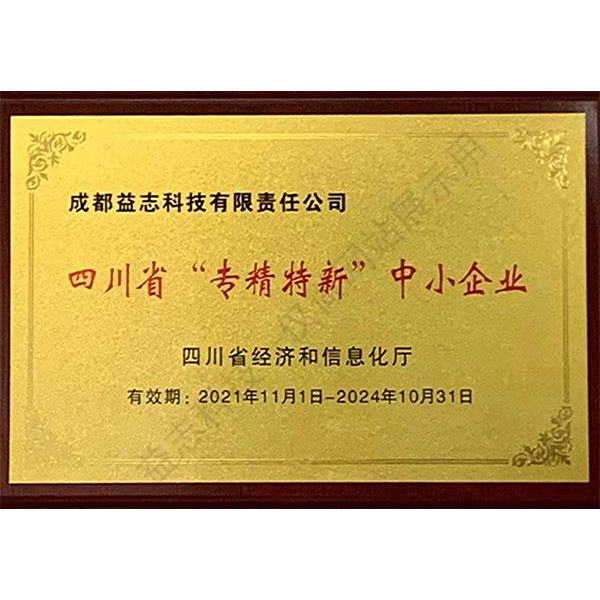
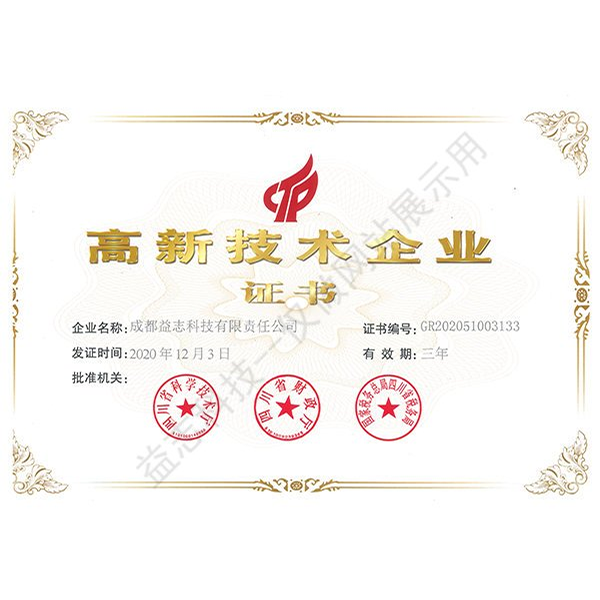
Here it is appropriate to rememberChengdu Yizhi Technology Co.. This is not just another plant, but a design institute created on the basis of chemical technology. This explains a lot about their approach. When I first saw their products about five years ago, what struck me was their understanding of technological processes. They don't just sell a valve, they understand what flow, medium, and pressure it will work for.
On their websiteyzkjhx.ruit is clear that the emphasis is on solutions for complex environments - aggressive, abrasive, high-temperature. This is their niche. The registered capital of 120 million yuan is a serious bid for the long game, not a temporary office. At one time, we considered their drives for a project involving the transportation of a suspension with solid particles. Standard seals failed within months. They offered a custom solution with a multi-level seal system and a reinforced shaft. It worked. But the path was not fast - there were a lot of approvals and test samples.
This is a typical story for a quality Chinese supplier. They are ready to delve into the problem, but they also demand clarity from the client. If you give them a vague technical specification, the result will be average. If you work closely, you can get equipment that is in no way inferior to its European counterparts, and at a lower price. But you need to be prepared for such a process of complicity.
The future: trends and personal forecasts
Where is everything going? The first is total “digitization”.Electric shutterwill be not just an actuator, but a data source. Sensors of torque, temperature, vibration, cycle counter - all this will flow into the system and be used for predictive maintenance. In China, this trend is spurred by the government strategy “Industry 4.0”.
The second is energy efficiency. We are talking not only about engine efficiency, but also about operating algorithms. For example, adaptive power control depending on the actual load, so as not to waste energy. They are actively working on this now.
And third, in my opinion, is modularity and rapid customization. A platform on which, as a designer, you can install the desired type of engine, gearbox, control unit with the required interfaces. This will reduce the delivery time for non-standard solutions. Already, some advanced manufacturers, including the one mentionedChengdu Yizhi Technology, are moving in this direction.
As a result, the Chinese market for electric shutters is no longer a source of just cheap copies. It has become a laboratory where new, sometimes very pragmatic, solutions are quickly tested and implemented. Working with him has become more difficult - you need to understand deeply, ask the right questions, and be ready for dialogue. But the return can be significantly higher than from ordering “boxed”. product from a well-promoted global brand. The main thing is not to expect a miracle for pennies, but to invest time in choosing the right partner and working out the details.