Chinese flanged valves: innovation?
2026-01-22
When you hear “Chinese flanged valves?”, the first thought for many is cheap and cheerful. And, probably, ten years ago this was close to the truth. But now the situation is changing, and changing quickly. The issue of innovation is not idle here. This is not about sticking a “smart” sticker on an old product. or ?next gen?. We are talking about real changes in materials, design and, importantly, in the approach to design for specific, complex tasks. About five years ago, I myself was skeptical about this, until I came across several projects where equipment from Europe simply did not meet the conditions in terms of price and timing, but Chinese analogues worked. But not all, of course. This is the most interesting point - where is innovation, and where is just successful copying?
From ?iron? to engineering: a paradigm shift
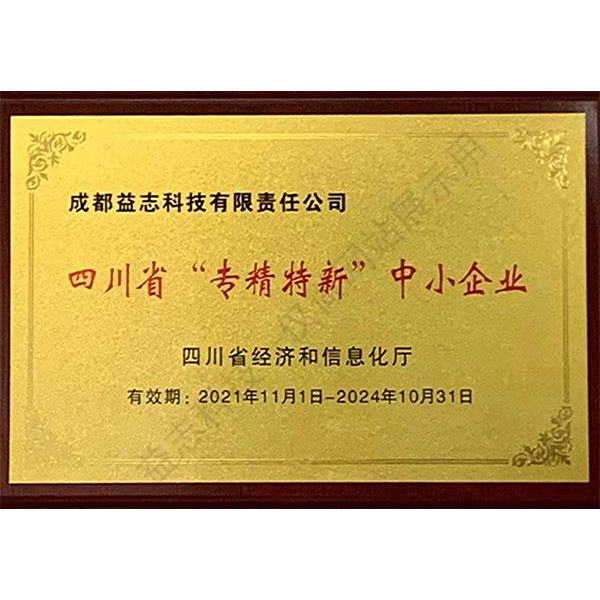
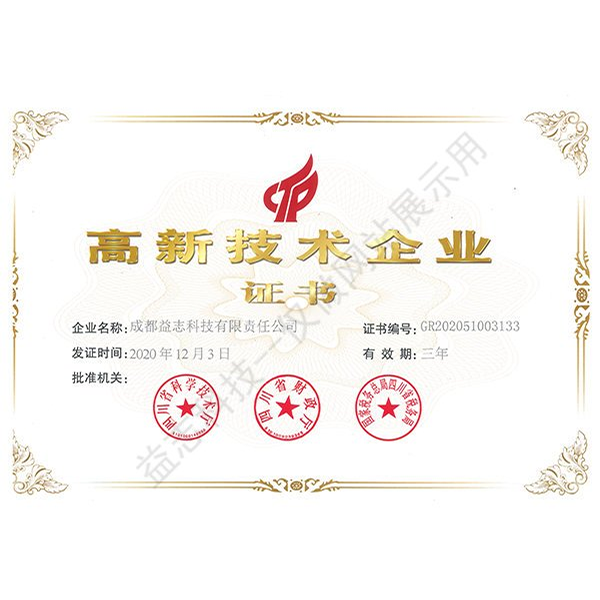
Previously, a Chinese manufacturer often worked according to the following scheme: there is a drawing (no matter where it comes from), there is metal, let’s do it. Now, especially strong players, have their own design institutes. This is the key point. Let's take for exampleChengdu Yizhi Technology Co.. This is not just a factory, it is a design institute created by Huaxi Technology. When a company has such a resource behind it and an authorized capital of 120 million yuan, this indicates serious investments in R&D. Their websiteyzkjhx.ruis no longer just a catalog, but a portal with technical documentation, calculations, and descriptions of materials science solutions.
How does this translate in practice? It's not that they invented a new type of steel. And the fact is that they have learned to very accurately select a steel grade or alloy for a specific environment - not just “for acid?”, but for a mixture of sulfuric acid with chlorides at a certain temperature and pressure. This requires its own laboratory and chemical engineers on staff. I saw their reports on intergranular corrosion tests for valves used at petrochemical facilities - the level of elaboration is impressive.
But the paradox is that the CIS market often does not see this or does not want to see it. The customer demands “like DeZURIK”, but at half the price. And here Chinese engineers are beginning to show flexibility. They do not copy blindly, but adapt. For example, seals. Europeans often use proprietary formulations. The Chinese can offer several options: an analogue, their own design, or, more often, a combination - an imported seal in their housing design. This is pragmatic innovation at the intersection of cost and reliability.
Design solutions: where the devil in the details lies
If we talk about flanged valves, especially slide valves, the main pain is tightness and the moment of resistance. The classic problem is ?biting? gate during long-term operation in polluted environments. European manufacturers solve this with precision processing and expensive coatings.
What have I observed from a number of Chinese suppliers, including those Yizhi Technology has worked with? They took the path of modifying the guide grooves and the sealing system around the perimeter of the disk. Instead of a simple rectangular groove, there is a complex geometry with grooves for removing sludge. This seems like a trifle, but at a thermal power plant, where slurry lines contain abrasive, such a trifle increases the service life significantly. This is not a patent technology, it is an engineering refinement born from feedback from real operators.
Another point is casting. The quality of the casting of the case is the basis. Previously, there was the biggest spread here. Leading manufacturers are now investing in vacuum film molding (V-process) for critical castings. This gives a dense, homogeneous metal structure without cavities. When you pick up such a flanged valve, the difference in weight and “ringing” is noticeable. Compared to ordinary casting, it is immediately noticeable. But the price, of course, is different. Therefore, when they say “Chinese shutter?”, you must immediately clarify which one and why.
Case study: when innovation turned out to be unnecessary
I had an experience about seven years ago. A factory from China, I won’t name it, offered us a “revolutionary” product. solution for an oil pipeline - a valve with a telemetry system and pressure sensors on the seat. The idea is brilliant in theory: real-time wear monitoring. In fact, it was a pile of electronics, which, in field conditions, at -40, failed in the first month. And the cost was the same as two ordinary shutters. The project failed. This is a lesson: innovation for the sake of innovation, without understanding the operating conditions, is dead. Now the approach has become smarter. The same sensors, but as an option and only for specific objects such as instrumentation and control systems at modern refineries, where there is infrastructure to service them.
Logistics and customization: a hidden competitive advantage
Innovation is not just about metal and blueprints. It's about speed and flexibility. A European manufacturer often works according to a catalog and long production cycles. The standard period is 20-24 weeks. Chinese institutes like Yizhi have learned to shorten this cycle to 8-12 weeks for custom products. How? Through vertical integration and digitalization of design.
Upon receiving the technical specifications, their engineers quickly produce a 3D model and strength calculations (often according to ASME or EN standards, which is critical). Production departments receive data directly. This allows you to quickly create, for example, valves with flanges according to DIN, but with a wall thickness according to ASME, or vice versa. This hybridization of standards is a common requirement for modernizing older facilities.
But there is also a downside. Speed sometimes affects the quality of control. I have encountered situations where, in pursuit of deadlines for assembly, seals were installed from a batch that had not passed the full cycle of chemical resistance tests. The result is a leak in six months. Now responsible suppliers have realized this problem and are implementing tracking systems for every part, right down to the steel melt number for the body. On the same website yzkjhx.ru you can request certificates for materials for a specific batch - this is already a serious level.
The future: digital, ecology and new materials
Where is everything going? Global trends. The first is digital twins. Not just a 3D model, but a full-fledged model for calculating the resource. Some leading Chinese manufacturers already offer a “passport” for large projects (such as gas pipelines). products with a QR code leading to a cloud resource with data on production, materials and recommended maintenance. These are still pilot projects, but the direction is obvious.
The second is ecology and energy efficiency. We are talking about reducing emissions through improved seals (zero leakage) and the use of lighter and stronger alloys, reducing the overall weight of the structure and, as a result, the load on the piping. Here, Chinese companies actively cooperate with scientific institutions, including Russian ones.
And third, the most mundane - working in extreme conditions. Arctic, shelf, deep-sea fields. This requires special steels, special coatings and special tests. This is where design institutes like Chengdu Yizhi Technology Co. can show themselves. Their advantage is their ability to quickly concentrate resources on a specific complex task, without being constrained by the gigantic corporate procedures of large Western vendors.
Conclusions: innovation as a process, not a label
So is there any innovation in Chinese flanged valves? Yes, but these are not explosive, but evolutionary, pragmatic innovations. They are not born in a vacuum, but in close, sometimes harsh, interaction with the requirements of the market, which wants “European” level reliability, but for adequate money and in a short time.
This led to a shift from the ?hardware manufacturer? to the “engineering partner” model. The key role here is played by structures such asChengdu Yizhi Technology Co.— design institutes with serious capital and research base. Their strength lies in adaptability, speed and deep understanding of materials science.
But blind trust, blind trust, is unacceptable here. The innovative approach of one supplier does not eliminate the presence of a lot of outright junk on the market. You need to work only with those who are ready to provide a complete transaction history of materials, test reports and have experience for a specific task. Innovation is not about words, but about documents and real cases. And in this regard, the Chinese segment of the fittings market has become much more mature and interesting than is commonly thought.