Chinese electric shutters: innovation and reliability?
2026-01-22
A question that is often asked with slight skepticism. Many people still imagine Chinese products as cheap and short-lived. But over the past 5-7 years the situation has changed dramatically. About ten years ago I myself belonged to themelectric shutterswith caution until I had to look into it in detail on one modernization project. Now I will say this: if you put aside prejudices and know what exactly to choose, you can find solutions that, in terms of price, functionality and that same reliability, will give a head start to many familiar brands. But there are nuances that are rarely written about in catalogs.
Where did this leap in quality come from?
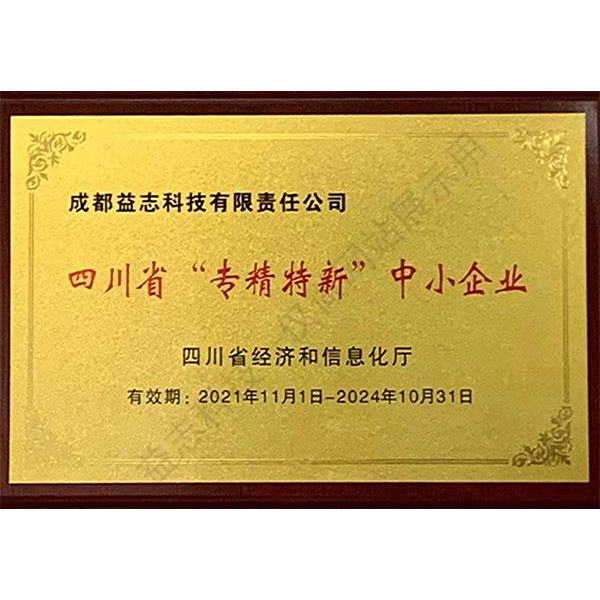
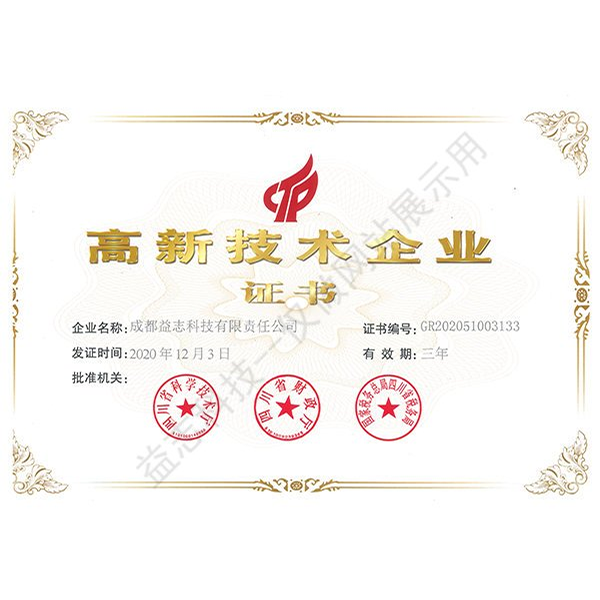
Everything is simple and complex at the same time. Chinese manufacturers have stopped simply copying. They began to invest in their own R&D centers and attract engineers with experience in the international market. Take, for example,Chengdu Yizhi Technology Co.(their website isyzkjhx.ru). This is not just a plant, but a design institute created on the basis of a chemical technology company. The registered capital of 120 million yuan is a serious request. Why is this important? Because such companies initially understand the requirements of the processes, and do not just assemble hardware. Their engineers are not thinking about how to make a valve, but how it will work on a line with an abrasive suspension at 90 degrees. This is a fundamentally different approach.
Previously, the main problem was assembly on the assembly line. Now the same quality control standards as in Europe have been implemented in advanced production facilities. I saw workshops where each assembledelectric driveundergoes a series of tests on a stand that simulates real loads, and not just an open-close test. The key word is on the front lines. Because the market is still full and cheap. The difference between the Tier-1 and Tier-3 products of the plant is like between heaven and earth.
What exactly has changed in the hardware? Materials. Stainless steels began to use higher grades (say, 316L instead of 304 for critical environments), improved casting quality, and practically eliminated the problem with cheap stuffing box seals, switching en masse to bellows units for critical applications. Drives... this is where the progress is most noticeable. Previously, they installed the simplest motors with a gearbox, which became loose after a month. Nowadays you can often see integrated smart drives with a controller, overload protection, and interfaces for integration into automated process control systems. Not all, but the option is there.
Innovation: what does it mean locally?
For a European, innovation is often a fundamentally new patented technology. In the Chinese context, especially in the valve segment, innovation is more about adaptation, integration and optimization to market demands. And this is their strength.
The simplest example is modularity. Many manufacturers offer a valve on which you can install 5-7 different types of actuators (electric, pneumatic) and 3-4 types of positioners, including their own or third-party ones (such as AUMA, Rotork). You can assemble the desired configuration from cubes very quickly. For the designer, this is flexibility. For us, installers, sometimes it’s a headache because one flange model can come with three different sets of fasteners for different drives, and if you lose the box, there will be a hitch.
Another point is the willingness to do non-standard executions. Do you need a valve with DIN flanges, but with ANSI mounting dimensions? Or a special coating for sea water? Or a remote control panel with non-standard wiring? At Chinese factories this is often solved faster and cheaper than sending a request to the German head office and waiting a month for a response. I ordered fromChengdu Yizhi Technologya batch of valves with an extended stem for installation in an insulated box was completed in two weeks, without any questions and with a 200% markup.
But there is also a downside. This flexibility sometimes leads to the fact that in the pursuit of functionality, the thoughtfulness of little things suffers. For example, the cable entry into the drive may be located inconveniently for maintenance, or the position sensor is mounted in such a way that it is easy to touch during installation. This is not critical, but it indicates that operating experience has not yet been fully accumulated.
Reliability: how to evaluate it before purchasing?
The word is a mystery. For some, reliability means 20 years of operation without a single breakdown. For others - so that maintainability is high and spare parts are available. In the case of Chinese fittings, I would divide reliability into two levels: reliability of design and reliability of execution.
Structurally, modern Chinese valves are often not inferior: the same bellows, the same SKF or NSK bearings, the same operating principle. The problem is in the execution: the quality of polishing of the internal cavities, the uniformity of the seat material, the calibration of the springs in the drive. This is where the line between a good and a bad supplier lies.
My practical advice is to always request Factory Acceptance Test (FAT) reports. A serious factory, such as the mentioned Yizhi, will always provide them. Look not at pretty pictures, but at the numbers: opening-closing cycles under pressure, tightness data (leakage class), torque parameters. It’s better to see a product being tested online via video call once than to read about its high quality ten times.
And one more point from personal experience - the weak link. Most often, problems arise not with the metal of the shutter itself, but with the drive electronics or the mechanics of the gearbox. Therefore, now I prefer schemes where the shutter is Chinese, and the drive is from a proven European or at least Chinese Tier-1 manufacturer with a global service network. Or vice versa - if the drive is from the same Yizhi, then it should be their key competency, and not purchased from the OEM.
Failures and lessons: what is not written about in brochures
Without this, the conversation will not be honest. I had a project in a food industry - they installed Chinese valves on a CIP washing line. Medium – hot alkaline and acidic solutions. The valves are from an unknown supplier, purchased through third parties on the principle that they are the cheapest. Three months later, problems began: the bellows seals developed microcracks and drops appeared. We took it apart and it turned out that the bellows material did not correspond to what was declared. The situation was saved only by a total replacement of the seal units with better ones, but this was a blow to money and reputation.
Another case, more positive. At the chemical facility, stainless steel valves with electric drives fromChengdu Yizhi Technology Co., Ltd.to switch resin flows. The environment is non-aggressive, but positioning accuracy and the number of cycles are important. We've been working for four years now, no complaints. Moreover, when one drive failed due to moisture getting into the terminal box (the fault of the installers), the service documentation was so detailed that our electrician sorted out the repair in a day, and spare parts arrived upon request within two weeks. This is an indicator of the supplier's maturity.
The conclusion from these stories is simple: you cannot say Chinese are reliable or Chinese are unreliable. It all depends on the specific manufacturer, the transparency of its origin and your ability as a customer to correctly formulate the terms of reference and check its implementation. Random selection based on price leads to failure. A conscious choice regarding technical conditions and plant audit is a recipe for success.
Results: what to watch today?
So, after all, innovation and reliability? Yes, they exist, but this is not a given, but an option that needs to be activated with the right approach to choice.
Look at the company's history. A design institute like Yizhi is always a plus. They think systemically. Study a portfolio of completed projects, especially in your industry. Do not hesitate to request contacts of technical customers to receive feedback (normal manufacturers provide them).
Pay attention to certificates. Not only CE (which has now become almost a commodity), but industry-specific: for oil and gas, chemistry, food industry. They are harder to get and they mean something.
And most importantly, stop perceiving China as a monolith. This is a huge and stratified market. There are handicraft workshops, and there are high-tech enterprisesChengdu Yizhi Technology, which successfully compete not on price, but on engineering solutions and the predictability of their products. Your task is to find the latter. Then the question in the title will disappear by itself, giving way to specific technical discussions about which design is best for your specific line.