Chinese butterfly valve exporters: trends?
2026-01-22
When talking about trends in the export of butterfly valves from China, many immediately imagine growth and decline graphs, lists of the largest manufacturers, or tariff analysis. But real trends are often hidden not in numbers, but in details that are visible only when you yourself have been negotiating for years, receiving defective samples, looking for alternatives to steel mills and trying to explain to technologists in the Urals why flanges according to GOST and ANSI are not just approximately the same. The main trend of recent years is not so much volume asparadigm shift. The market is already saturated with iron; now those who supply not just a shutter, but a solution for a specific, often unobvious, problem are valued.
From cheap and cheerful to complex specifications
Previously, the main argument was the price tag. Now it's working worse and worse. Yes, basic models DN100-DN300 made of carbon steel with EPDM seals are still shipped in batches to the CIS countries, but the margins there are scanty. The real growth is in requests for specific materials. For example, they are increasingly asking for valves with coatings for sea water, not just stainless steel, but specific brands - Duplex 2205, Super Duplex. Or requests for full compliance with the requirements of oil giants like Shell or ExxonMobil, which implies not only certificates, but also full traceability of each casting.
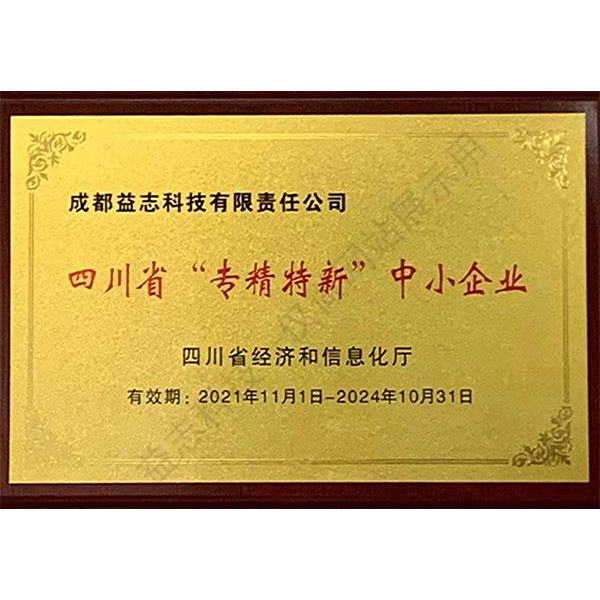
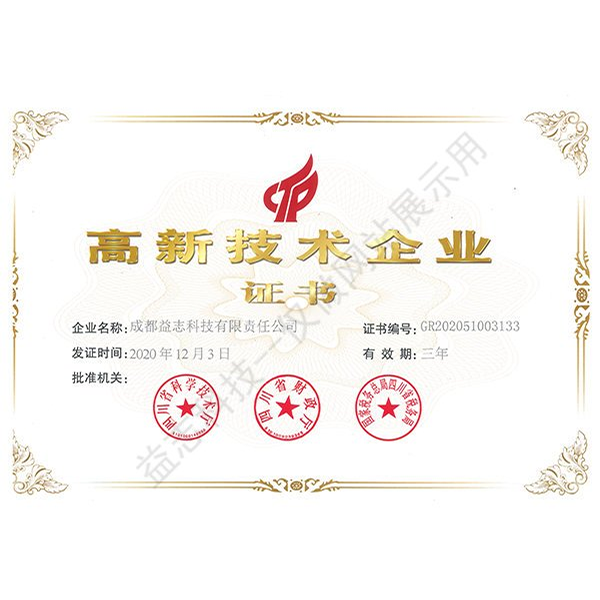
I remember in 2018 we lost a large tender in Kazakhstan precisely because of traceability. They offered a high-quality shutter from a trusted factory, all the documents were there. But the competitor (not Chinese) had a unique number for each case, by which you could see the whole history: what batch of steel, who the operator of the CNC machine was, even what the temperature was in the furnace during heat treatment. Our plant then just shrugged - why do this, the product is good. Now such systems are being implemented by many serious players, for example,Chengdu Yizhi Technology Co.(their website isyzkjhx.ru), which originally grew out of a chemical engineering project, so strict process control is built into their DNA. They are not just salespeople, but an engineering company, which is critically important now.
And here is an important nuance. Many importers still look for a manufacturing plant, thinking that this is a guarantee of price and control. But the trend is to work with design institutes like Yizhi. Why? Because modernbutterfly valve- This is often a custom product. The plant focuses on casting and machining, and the exporting company with an engineering department takes on the selection of materials for aggressive environments, stress calculations, selection of seals (not just EPDM, but, say, HNBR or Viton with a certain composition), coordination of drawings and, what is critical, post-sales support. The plant will not do this in the required volume for one container.
The role of digitalization: not only a business card website
Everyone has a website in Russian. But the trend is in functionality. Previously, a catalog in PDF was sufficient. Nowadays, they increasingly require 3D models for downloading (STEP, IGS), interactive dimensional tables that can be integrated into their systems. The client, an engineer in Nizhnevartovsk, wants not to write a letter and wait a day for a response, but to download the model and insert it into an assembly in Compass or SolidWorks right now. This speeds up decision making significantly.
But digitalization is also a headache. We somehow automated the calculation of weight and price on the website based on key parameters (DN, pressure, material). It would seem convenient. Requests poured in: Why is there only steel in your calculator for DN600 and a pressure of 16 bar, but I need cast iron with nickel coating? Your site is not working!. We had to complicate the logic and make it more flexible. And this is only for standard positions. But most of the interesting orders are non-standard.
Here again, companies with deep expertise win. Look at the siteyzkjhx.ru— it is clear that the content was created not by copywriters, but by technologists. Descriptions of materials, application diagrams, emphasis on design solutions for the fuel and energy sector and chemistry. This is the digitalization of content, and not just a beautiful shell. They position themselves not as a warehouse, but asdesign institute, which immediately cuts off those who are simply looking for cheap, and attracts those who need it reliably and for the task.
Logistics and last mile
The container crisis in 2021-2022 has taught everyone. The trend now is the diversification of logistics routes and, more importantly, the availability of spare parts warehouses and the most popular positions in the importing country. Saying a production time of 45 days is no longer enough. It is expected that key standard sizes will be available at a warehouse in Moscow, Almaty or Minsk.
But the warehouse is frozen money. An error in forecasting demand can lead to a dozen heavy DN400 valves gathering dust for years, taking up space. We got burned by this, brought in a batch for a burning project, which we then froze. I had to sell at a discount, wiping out the entire margin. The trend now is closer coordination with distributors and even large end customers to create forecasts. Or work according to a made-to-order scheme, but with clearly defined and realistic deadlines, which is only possible with well-established relationships with factories.
Another point is packaging. It would seem like a small thing. But how many cases have there been when an ideal shutter arrived with a bent rod or a scratched seat due to a flimsy wooden frame that could not withstand three overloads in the ports. Now the trend is professional, almost military packaging: rigid frame, individual sockets for each part (drive, if supplied separately), desiccant absorbers. This is also part of the product. When a client receives such a box, he understands that he is dealing with professionals who care about the details.
Price pressure and hidden competitors
Chinese prices are no longer the lowest. Vietnamese and Indian manufacturers are entering, sometimes offering 15-20% cheaper. Their quality is often unpredictable, but for some market segments this is acceptable. Therefore, the trend for Chinese exporters is to move up from the segment of the cheapest iron.
But competition also comes from the other side. Russian and Belarusian factories, enjoying government support, are actively developing import substitution. Their argument is fast delivery, absence of customs risks and their own, dear. Their weak point is often a limited range and higher costs. The strategy here is not to compete head-on, but to offer what they don’t have: exotic alloys, large diameters (DN800 and above), a complete set with high-quality drives (not just electric, but explosion-proof or with a modulation function).
An interesting case: we once supplied a batch of Teflon-coated valves with fluorine rubber seals for transporting methanol at -40°C. The Russian competitor offered a standard stainless steel + EPDM option, which would quickly fail under such conditions. Our price was higher, but the total cost of moisture (taking into account the service life) was lower. We had to conduct a whole seminar for the client on the chemical resistance of materials. This is the current job - not to sell, but to advise.
Ecology and energy efficiency - a new frontier
It seems abstract for a metal flap, but the trend is gaining momentum. This is not only about ISO 14001 certificates. Increasingly, requirements forenergy efficiencydrive (class IE3, IE4), where possible using materials with a lower carbon footprint (recycled steel, environmentally friendly coatings). In Europe this is already the norm, in Russia and the CIS so far only for projects related to international financing.
But the most interesting thing is the requests for tightness. Not just class A according to GOST, but real, ultra-low leakage rates, confirmed by test reports not at the factory, but in an independent laboratory. This is due to tightening control over emissions of volatile compounds at petrochemical and gas terminals. A bolt that leaks just a little becomes unacceptable. This is where Chinese manufacturers who have invested in modern seat grinding machines and precision castings have an advantage.
Take, for example, the same Chengdu Yizhi Technology. With roots in chemical technology (their parent company is Huaxi Chemical Technology), they inherently understand the importance of absolute integrity in chemical processes. Their proposals often focus not on the valve in general, but on the valve for a specific environment - chlorine, caustic soda, hydrocarbons. This is the answer to the trend: deep specialization instead of a wide but superficial assortment.
Bottom line: which way is the wind blowing?
So where is the market heading? To summarize, the trend is consolidation around experts, and not around price tags. Those who will survive and grow will not be those who have the longest price list, but those who can solve a complex, non-standard problem: select a material for a mixture of hydrogen sulfide and CO2, ensure delivery with double certification (Russian and international), provide a complete package of documentation in Russian without errors, promptly supply a rare spare part.
The future lies with exporters who are an extension of their client's engineering department. Those who likeChengdu Yizhi Technology Co., position themselves as a design and technology partner. The volume of iron exports may fluctuate, but the demand for intelligence, deep knowledge of materials science and processes, and the ability to work with complex documentation will only grow. The main trend is the transition from trading in products to trading in competence and reliability. Everything else is tactics.