Chinese VDAD exporters: innovation and ecology?
2026-02-02
- From ?iron? to solutions: how the essence of export is changing
- Ecology not as a cost, but as a competitive advantage
- Case study: transition from standard to customization
- Innovation: where are they real and where are they just words?
- Problems on the ground: logistics, standards and the “mental gap?”
- What's the result? The future belongs to hybrid models
When people talk about Chinese VDAD exporters, many immediately imagine cheap consumer goods. This is, of course, a stereotype, and a rather outdated one. In fact, in the last five to seven years the picture has changed dramatically. Yes, price pressure has not gone away; this is the basis of competition. But now the key request, especially from European and responsible Russian buyers, is precisely thisinnovationandecology. Not just as a marketing shortcut, but as a real engineering and technological challenge. And this is where the fun begins, because not all factories and suppliers survived this transition. Many remained in the “cheap and cheerful” paradigm, and those who integrated into the new trend often went through a serious internal restructuring.
From ?iron? to solutions: how the essence of export is changing
Previously, everything was simpler: here is the specification, here is the price per ton or per piece, here is the delivery time. Nowadays, the buyer increasingly comes not for hardware, but for a solution to a specific problem. For example, not just a “container for chemicals?”, but a “container for transporting such and such a reagent with such and such parameters of aggressiveness, with a pressure control system and trace heating, meeting ADR standards and having a certificate of environmental safety of production?”. This is a different level of dialogue.
This is where the main challenge for exporters lies. It is necessary not only to produce, but to design, calculate, select materials, and ensure document flow. It requires its own serious engineering base. I have seen how companies that were previously proud of sales volumes lost contracts precisely because they could not provide not a price proposal, but a technical-commercial proposal, with detailed calculations and modeling. The consumer has become tech savvy.
Take, for example, the field of chemical equipment. Previously, the main thing was compliance with GOST or Chinese standards. Now this is just the first step. We also need to think about the energy efficiency of the installation, the possibility of recycling waste from the production of this equipment, and reducing the carbon footprint at the logistics stage. This is no longer a question of marketing, but a question of survival in certain markets.
Ecology not as a cost, but as a competitive advantage
There is one big misperception associated with ecology. Many local producers (and I've been through this myself) have long believed that "green"? technology is purely an additional cost that can only be offset through premium pricing. But in reality everything is different. Yes, the initial investment in upgrading wastewater treatment plants, in water recycling systems, or in replacing materials is significant.
However, there are significant benefits in the long run. First, it is direct access to highly regulated markets. Without the appropriate certificates (such as ISO 14001), you simply will not be allowed to participate in the tender. Secondly, it saves resources. The same recycling of water or recovery of heat from reactions means a reduction in operating costs. On one of the projects to install a closed water cycle system, we achieved payback in 3 years only due to savings on water consumption and payments for discharges.
But there are also pitfalls. The most important one is “green camouflage?” (greenwashing). Some factories receive a certificate for one production, and use it to sell products from three other, dirty ones. Buyers learn to track this, request audits and detailed reports. Trust built on real deeds is now valued above all else. Just stick the label ?eco? no longer works.
Case study: transition from standard to customization
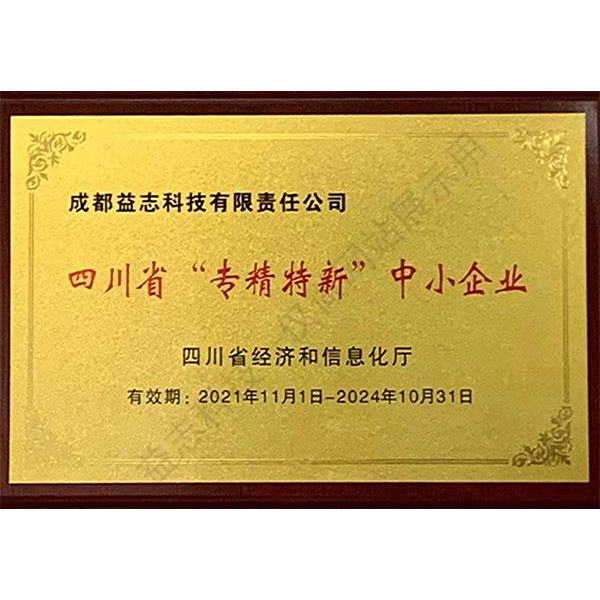
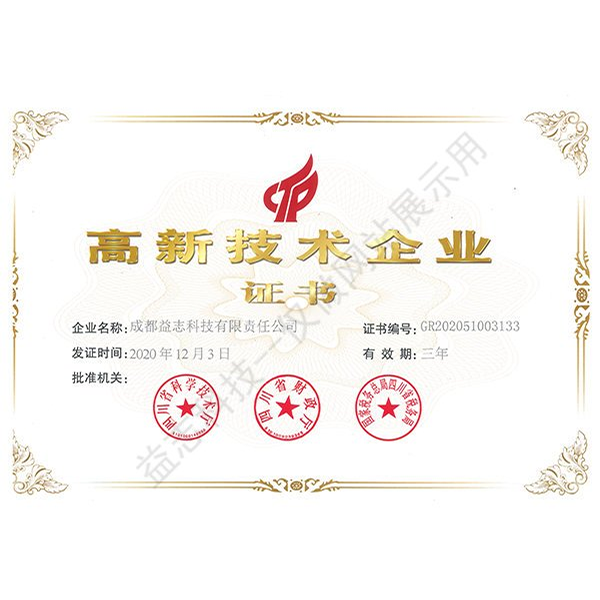
This transition is well illustrated by a story with one of our partners -Chengdu Yizhi Technology Co.. This is a design institute created on the basis of a chemical technology company. Their websiteyzkjhx.rufocused on the Russian-speaking market, which already speaks about the strategy. Previously, they, like many others, worked from ready-made catalogs. But several years ago they relied on custom design, especially in the segment of complex chemical and pharmaceutical equipment.
There was a specific episode with an order from Kazakhstan for a reactor system for the synthesis of new polymers. The customer needed not just a container with a stirrer, but a complex with precise temperature control in different zones, a dosing system for high-viscosity components and built-in analytics. There were no standard solutions. TeamChengdu Yizhi Technologyspent about two months on joint online meetings, 3D modeling, and selection of alloys resistant to specific environments. The key issue was environmental friendliness: the system had to minimize vapor emissions and ensure complete purification of the wash water.
As a result, they did not just sell the equipment, but actually handed over a ready-made technological solution. And this included not only hardware, but also management software and operating recommendations. For them, this was a transition from the “supplier” category. in the “technology partner” category. And this approach, although it requires more time and resources at the start, creates much stronger connections with the client and protects against price wars.
Innovation: where are they real and where are they just words?
It's the same story with innovation in the VDAD sector. Often presentations are full of the words “innovative development”, “breakthrough technology?”. In fact, you need to look at the essence. For me, innovation in this context is not necessarily the invention of a new physical principle. More often it is the adaptation of known technologies to new, more stringent requirements for efficiency and environmental friendliness.
For example, the widespread introduction of automatic dosing and mixing systems based on real-time sensor data. This reduces the scrap rate, saves raw materials and, as a result, reduces the amount of waste. Or the use of composite materials instead of traditional steel for the same containers - they are lighter (reducing logistics costs and transport emissions), more corrosion resistant and often have a longer service life.
But there is a trap for the exporter. Sometimes the engineering department gets carried away and creates something really fancy. a solution that is, however, too complex for the customer to maintain on site. I remember a case when we installed an installation with a bunch of sensors and automation, but the customer simply did not have the personnel capable of working with it. We had to organize lengthy training and simplify the management interface. Innovation should not be for the sake of innovation, but for the sake of solving a client’s problem with an eye to his capabilities.
Problems on the ground: logistics, standards and the “mental gap?”
All these beautiful concepts run into the harsh reality of workshops, ports and customs. Even if you have created the perfect, innovative and environmentally friendly equipment, it still needs to be delivered. And here questions arise about packaging (again, environmentally friendly and protective), logistics carbon footprint, and compliance with transport standards.
One of the biggest headaches is diverging standards. Chinese GB, Russian GOST/TR TS, European EN, American ASME... Sometimes, in order to sell one installation to different markets, you actually need to make three different modifications. These are enormous costs for certification and design. Companies that want to be global are forced to maintain entire departments for standardization and permitting documentation.
And there is another, less obvious barrier - the “mental gap”. Sometimes a technologist at a Chinese factory and a chief engineer at a customer’s plant think in completely different categories. It is important for our technologist to comply with all the parameters according to the drawing, and for their engineer - so that the equipment can be easily integrated into the existing chain, which he knows like the back of his hand. Poor communication at the design stage then results in months of on-site rework. Experienced exporters now make sure to include managers on their project teams who not only speak the client’s language, but also understand their technological culture.
What's the result? The future belongs to hybrid models
So, to summarize my experience and observations, the future of Chinese VDAD exports is seen not in the giants that do everything, and not in the small workshops that do just anything. The future belongs to companies with a hybrid model. On the one hand, it must be a strong engineering and design school, capable of deep customization and the introduction of real, not paper,innovation. Like the sameChengdu Yizhi Technology Co., with its registered capital of 120 million yuan and the status of a design institute - such resources make it possible not just to copy, but to develop.
On the other hand, there must remain an understanding of market economics and the ability to work within the framework of rigid costs. And third, integral, is the integration of principlesecologynot as a burden, but as part of the engineering calculation and long-term economics of the project. This is when the choice of material, process and logistics design is initially assessed in terms of overall environmental impact and product life cycle.
Such companies are no longer simply “Chinese exporters”. They are becoming international technology providers that are simply geographically located in China. Their competitive advantage is not in cheap labor, but in the speed of adaptation, flexibility of design solutions and the increasingly high quality of engineering, where ecology is one of the key drivers of this very idea. And this transition, although painful for many, is irreversible.