?China: innovation in electromagnetic butterfly valves??
2026-02-02
China: innovation in electromagnetic butterfly valves?
When you hear about innovations in electromagnetic butterfly valves from China, the first reaction of many colleagues is skepticism. They say they are chasing cheapness, not reliability. But over the past five to seven years the picture has changed a lot. We are no longer talking about simple copying, but about real, albeit not always smooth, attempts to rethink the design for specific, often very tough, technological processes. I went through this myself, trying to integrate such valves into abrasive powder transportation lines. It turned out that the key challenge is not even in the electromagnetic coil itself, but in ensuring the tightness and wear resistance of the seals under cyclic loads. Many Chinese manufacturers stumbled on this very point in the beginning.
From copying to adaptation: evolution of the approach
The early examples encountered were exact replicas of older European models. And all their weak points were repeated one after another: overheating of the coil when held for a long time, sensitivity of the spring return mechanism to contamination. But somewhere after 2018, products began to appear that had their own engineering thought. For example, they began to use composite materials for disks more often, and not just stainless steel. This reduced inertia and load on the drive, which is a huge plus for frequent actuation cycles.
One of the projects that I remember well was related to the search for a valve for a cement packaging line. What was needed was speed and the ability to work in a constantly dusty environment. Standard solutions raised the price to the skies. The glance fell on several Chinese manufacturers, includingChengdu Yizhi Technology Co.. On their websiteyzkjhx.ruAt that time there was not such detailed information yet, but in the technical documentation for their EDM series (apparently, Electromagnetic Disk Mortar) an interesting idea was already visible - a remote control unit with the ability to adjust the strength of the electromagnetic field and, as a result, the pressing force of the disk. This made it possible to flexibly adjust the device to the density and abrasiveness of the medium.
True, it was not without problems. The first tests on the bench showed that the declared response speed of 0.3 seconds is achievable only in an ideally clean environment. With cement dust penetrating the gap between the rod and the seal, the response time began to float, and after a couple of thousand cycles, jamming appeared. I had to correspond with their engineers for a long time and send videos from tests. Interestingly, they did not refuse, but sent a modified seal assembly with an additional labyrinth groove and a lubricant pocket. This was a clear step forward, although not an ideal solution.
Materials and ?non-obvious? nodes
It is in the details that progress now lies. Where once the focus was on magnet power, engineers now seem to have realized that the system works like a chain: the weakest link makes all the difference. Seals are a separate big topic. Chinese suppliers have begun experimenting more actively with different grades of polyurethane and PTFE composites, trying to find a balance between friction coefficient, wear resistance and price.
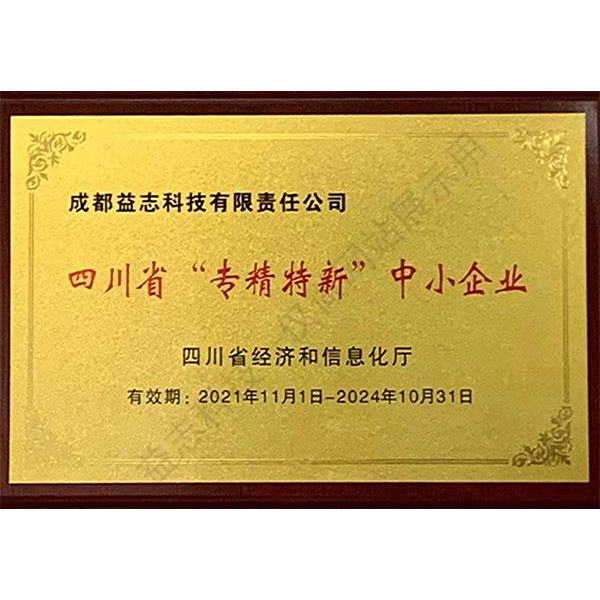
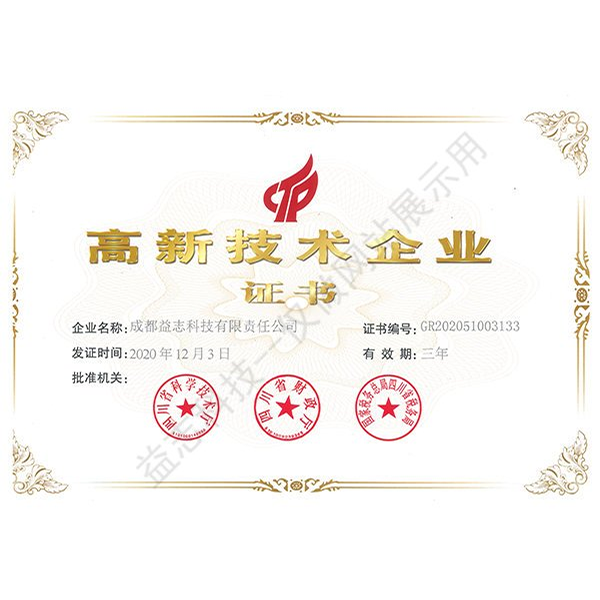
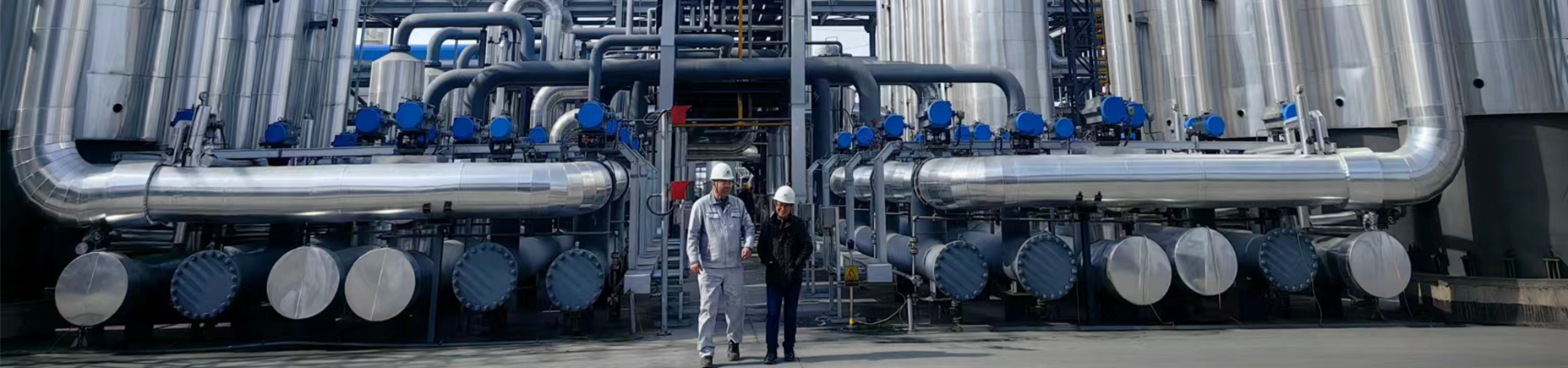
Take, for example, the sameChengdu Yizhi Technology Co., Ltd.is a design institute established by Chengdu Huaxi Chemical Technology Co., Ltd. in 2013. Their profile is chemical technology, and you can feel it. They approach the valve not as an isolated mechanical device, but as an element of a process line that must live in an aggressive chemical or abrasive environment. A clear gradation by type of media appeared in their catalogs: for dry bulk materials, for powders with high fluidity, for media with moderate aggressiveness. Each type has its own recommendations on the material of the disk, body and, critically, the material and configuration of the sealing surfaces.
At one of the exhibitions in Shanghai, their technician talked about a common mistake during installation: excessive tightening of flange connections, which deforms the body and disrupts the plane of contact of the disk. In response, they began supplying some models with pre-installed pressure washers and a clear torque indication. Trifle? From the end user's point of view, preventing downtime due to a leak is not at all.
Integration and management: where is smart going? shutter
The next layer of innovation that is gradually gaining momentum is embedded diagnostics. We are not talking about exotic things, but about simple position sensors (limit switches) with increased dust and moisture protection and the ability to transfer status to a general control system. Here, Chinese manufacturers are actively using the developments of their own electronics industry. A control unit that used to be just a box with an on/off button now often has a Modbus RTU interface or even an Ethernet port.
But there are also pitfalls. The desire to make the device “smart” sometimes reliability takes precedence. I came across a situation where the control board, located directly on the valve body in the vibration zone, failed after a few months. Feedback from the factory led to the emergence of an option with a remote control cabinet. This is more conservative, but reliable. This flexibility - the ability to quickly offer alternative configurations - is now one of the key advantages.
Another trend is attempts to create valves with adjustable disk stroke for dosed feeding. It's no longer just "open/closed". I saw a prototype where a stepper motor paired with an electromagnetic fixation made it possible to position the disk with an accuracy of 0.5 mm. It’s still a bit crude for difficult conditions, but the direction of thought is indicative. They are trying to expand the functionality of the device beyond traditional shut-off valves.
Field tests: theory vs. practice
All laboratory tests are one thing. But actual operation at, say, a coal-fired thermal power plant or in a mineral fertilizer production workshop is completely different. The most valuable experience comes from here. One of the deliveries of the same electromagnetic valves for a gypsum transport line revealed a non-obvious problem: static electricity. The fine powder, passing at high speed, accumulated a charge on the disk and body. This led to "sticking" particles to the sealing surfaces and gradual loss of tightness.
The solution that they eventually found together with the manufacturing plant’s engineers was elegant in its simplicity: they applied a conductive coating to the working edge of the disk and the seat and brought out the contact to the housing for grounding. The problem with static is gone. This case illustrates well how feedback works: field problem -> quick analysis -> design modification. Not all manufacturers are capable of this, but those who are focused on complex projects, such asChengdu Yizhi Technology, build just such a dialogue.
There were, of course, failures. An order for valves for a food grade cocoa powder line failed due to the seal material. Even certified food grade polyurethane had a specific odor that was transferred to the product. I had to look for an alternative from a European supplier. But it is important that after this, an option with seals made of special, odorless silicone appeared in their line. Mistakes, if learned from, drive innovation forward.
Looking to the future: what's next?
Where is all this going? In my opinion, the immediate focus will be on two things: increasing energy efficiency and resource efficiency. The electromagnetic drive, especially in permanent hold mode, is an energy consumer. Experiments are underway with pulsing power modes to clamp the drive, which could reduce power consumption and heat. The second is service forecasting. If now in ?smart? The function includes only signaling the end of the stroke, but in the future - monitoring the coil current, which indirectly indicates the actuation force and wear.
Chinese players are no longer just catching up. In a niche of specialized, adapted to complex environmentselectromagnetic butterfly valvesthey are beginning to set trends, especially in terms of price-functionality for non-standard tasks. Their strength lies in the flexibility of production and the speed of response to the needs of the market, which itself is incredibly diverse. The experience of recent years shows that their products can no longer be discounted as a “cheap alternative”. This is often a completely meaningful engineering product, with its own strengths and, of course, areas for growth. And observing this evolution from the outside, and even more so participating in it, is extremely interesting.