Chinese exporters of MR2000 argon purification furnaces?
2026-03-20
When you hear about Chinese exporters of MR2000 furnaces for argon purification, the first thing that comes to mind is a huge market and a lot of offers. But here’s the catch: many people immediately think that all these installations are the same, just under different brands. In fact, the difference in the approach to design and, what is critical, in understanding the actual operating conditions of the customer is colossal. I myself have encountered many times when a technical specification comes from Russia or the CIS, and the Chinese side reads it too literally, without delving into the local nuances of energy supply or requirements for the purity of the final argon. This is not a reproach, but rather an observation: exporting is not just shipping a box, but adapting a solution.
What's behind the MR2000: more than just numbers
Let's take that oneMR2000 furnace for argon purification. The number 2000 is usually the gas productivity, Nm3/h. But the question is: at what purity at the entrance and at what purity at the exit? A common story: the exporter declares the parameters achieved using a perfectly prepared laboratory mixture. But in reality, at a metallurgical plant, argon from the air separation unit can come with microimpurities of oxygen, nitrogen, and even moisture. If the oven is not designed for such a cocktail, the resource of the adsorbent or catalyst flies down, and the client then throws up his hands.
One of our friends in the Urals had just such a story with an installation from a fairly well-known supplier. They promised an output purity of 99.9995%, but did not clearly specify the acceptable initial moisture level. As a result, after six months of work, the drainage unit had to be replaced ahead of schedule - the project was on the verge of profitability. This is a classic example of the gap between catalog and practice.
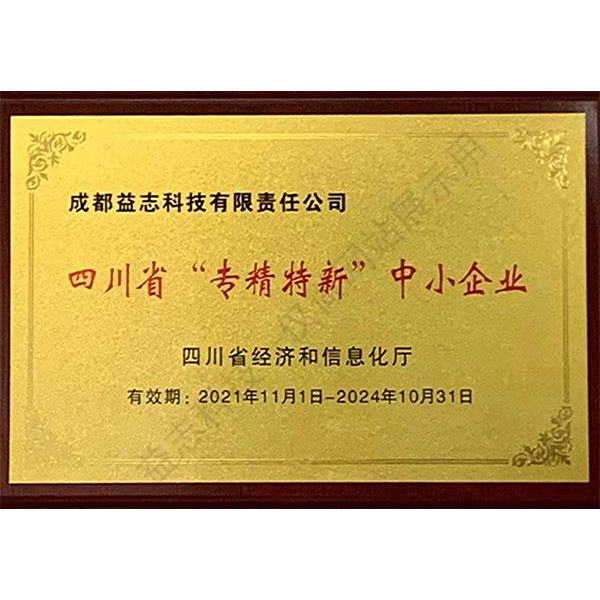
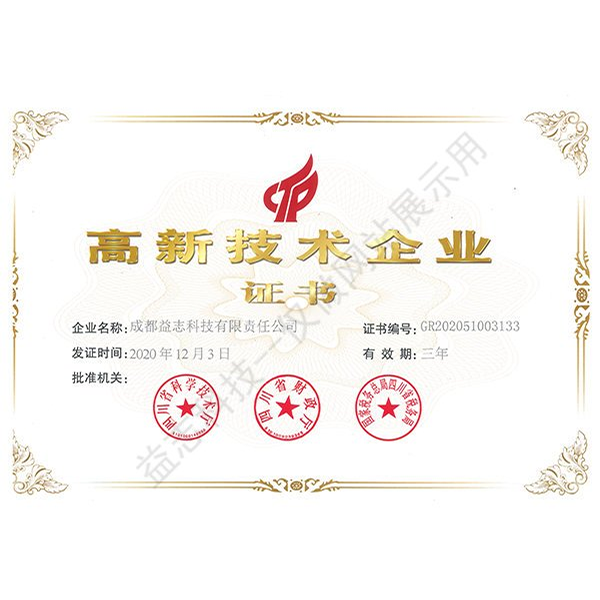
Therefore, when I now see offers, for example, fromChengdu Yizhi Technology Co.(their website ishttps://www.yzkjhx.ru), then the first thing I look at is not the beautiful graphs, but whether there are any reservations about the conditions of use in the description. This company is a design institute established by Huaxi Technology, with a registered capital of 120 million yuan. Such organizations often have a more systematic, engineering approach because they grew out of real design rather than simply selling equipment. This is important: the design institute is more likely to think about the system as a whole, and not just about selling the unit.
Key points to look at when choosing an exporter
Speaking about the quality of the stove itself, everything depends on several nodes. The first is the reactor, where the cleaning takes place. Material, wall thickness, thermocouple system to control the temperature field - all this affects durability. Chinese manufacturers now often use heat-resistant stainless steels of their own brands, and here they need to require specific certificates for the material, similar to our GOSTs or at least ASTM.
The second point is the control system. I have seen installations where there is a simple PLC with a basic logic of heating, holding, cooling. But for complex modes, especially with flow fluctuations, this is not enough. It’s a good sign when the kit comes with a SCADA system with the ability to archive data by cycle and predict the residual life of the sorbent. This is not just a supplier level, but a partner level.
And the third, often underestimated point is packaging and documentation. It would seem like a small thing. But when a container arrives at the site, and inside the control panels are simply lying on soft pads, and the electrical circuits are machine translated from Chinese into broken English - this immediately speaks of the attitude towards the end user. A serious exporter, such as Chengdu Yizhi Technology Co., Ltd., usually supplies documentation in Russian or at least in clear technical English, and all critical components are marked in two languages.
Implementation experience and pitfalls of logistics
I’ll tell you about one project in Kazakhstan. The customer neededoven MR2000to modernize the line for the production of high-purity argon. We chose a supplier, everything seemed to be discussed. But they did not take into account the transport dimensions. The installation is not dismountable, and when transporting by rail, problems arose with the size of the tunnels. We had to take a detour, which resulted in delays and additional costs. Now, when developing a contract, I always write down the transport route and size requirements as a separate clause.
Another stumbling block is installation supervision and commissioning. Many Chinese exporters include an engineer visit for 10-14 days in the contract. This is enough if all the equipment arrives intact and the local personnel are trained. But in practice, it often turns out that people need to be trained from scratch, and there are some minor inconsistencies in the wiring. It is ideal when the supplier has a Russian-speaking engineer or a trusted integrator partner in the region. On the website yzkjhx.ru, by the way, it is clear that the company positions itself as a design institute - this suggests that they can take on more comprehensive responsibility, and not just ship and forget.
And of course, the question of spare parts. Promises of quick delivery of filters, thermocouples or special seals are good. But this can only be verified by time. When concluding a contract, I recommend immediately creating a list of critical spare parts for the first purchase and stipulating their availability in a warehouse in China or, even better, at a distributor in the EAEU.
Price vs. Cost of Ownership: What You Really Need to Negotiate
The first price in a commercial proposal is just the beginning of the conversation. Smart customers now increasingly consider not the cost of equipment, but the cost of ownership over 5-10 years. This includes the energy consumption of the furnace (especially heating costs during the regeneration cycle), the cost of replacing the sorbent/catalyst, and even the cost of downtime.
One Chinese exporter had an interesting option - a furnace with waste gas heat recovery to heat the incoming argon. The installation itself was 15-20 percent more expensive than its analogues. But when we calculated the savings on natural gas for heating, the payback period for this premium was less than two years. This is the engineering approach that distinguishes just a factory from a technology partner.
Therefore, in dialogue with companies such as Chengdu Yizhi Technology, it is worth shifting the focus from how much the box costs to how we will ensure minimal operating costs. Their status as a design institute with a substantial authorized capital indicates the potential for just such deep discussions. They will most likely be able to model the technological process to suit your specific conditions and show the economics in numbers.
A look into the future: trends and what's next
Judging by the latest exhibitions and tenders, the demand is shifting. Not just neededargon purification furnace, but an element of a digitalized production chain. That is, an installation that can automatically adapt cleaning cycles to changing loads and quality of raw materials, transmit data to the overall plant control system (APCS) and predict the need for maintenance.
Chinese manufacturers feel this. Those who are in the know are already getting solutions that support industrial IoT, where you can remotely, through a secure channel, diagnose the main parameters. This is especially true for remote businesses.
The second trend is environmental friendliness. Increasing efficiency, reducing energy consumption, using more durable and safe sorbents. This is where the advantages of large design and scientific holdings like Huaxi Technology, which is backed by Chengdu Yizhi Technology Co., can be revealed. They have the R&D resources to not just copy, but improve upon classic purification schemes.
So, returning to the original question about exporters. The market is segmented. On the one hand, there are a lot of factories offering iron at a low price. On the other hand, there are engineering companies offering a technological solution with deep adaptation. The choice depends on the task. If you need to quickly and cheaply fill a need using a known, stable process, you can consider the first option. If we are talking about a new, complex or critical production, where reliability and overall economics are everything, then it is worth looking for a partner with design competence and a willingness to share responsibility for the result. And in this second segment, Chinese players with a serious scientific and technical background are becoming increasingly visible and competitive.