China: epishur argon purification, new exporters?
2026-03-20
This is a topic that comes up more and more often in conversations at exhibitions and in correspondence with customers from the CIS. Many are still convinced that Chinese equipment for argon purification is either cheap clones or something very complex and incomprehensible that they carry “with their eyes closed”. In fact, the situation has changed dramatically in the last 3-4 years, and this is not just marketing. We are talking about the emergence of players who grew up not from trading houses, but from real design institutes with experience of implementation in their own production facilities. This is a game changer.
What is hidden behind the term ?epishur? and why argon?
To begin with, it’s worth differentiating the concepts. ?Epishur? (from the English ?epi-shure? or associated with epitaxy) in our context is not just high purity, but a specific set of requirements associated with the production of semiconductors and photonics. We are talking about fractions 5N5, 6N and higher. Argon here is not just an inert gas, but a critical diluent medium, a carrier. The slightest impurities - oxygen, moisture, hydrocarbons at the ppb level - and the entire batch of silicon wafers or LED structures can be rejected.
Previously, this segment was a monopoly of several well-known European, American and Japanese brands. Chinese companies were mainly involved in simpler cleaning systems for metallurgy or welding mixtures, where the requirements for residual moisture and oxygen are orders of magnitude lower. The turning point, in my opinion, began with the rapid growth of China’s own production of solar cells and LEDs. The domestic market began to show demand, and engineers appeared who began to “sharpen” technologies for these tasks, by trial and error.
One of the key problems that they encountered and which they eventually solved was not so much the depth of purification (sorbents and catalysts are a known thing), but the stability and reproducibility of output parameters after regeneration of adsorbents. I remember in 2018 we tested one of the first Chinese installations, announced for 6N. It produced the required numbers only for the first 20-30 cycles, then a “drift” began. by moisture. It turned out that the problem was in the system for drying and heating the regeneration gas. Engineers then redesigned the heat exchanger and controller - now this is already a standard for them.
From design institutes to export: how the landscape is changing
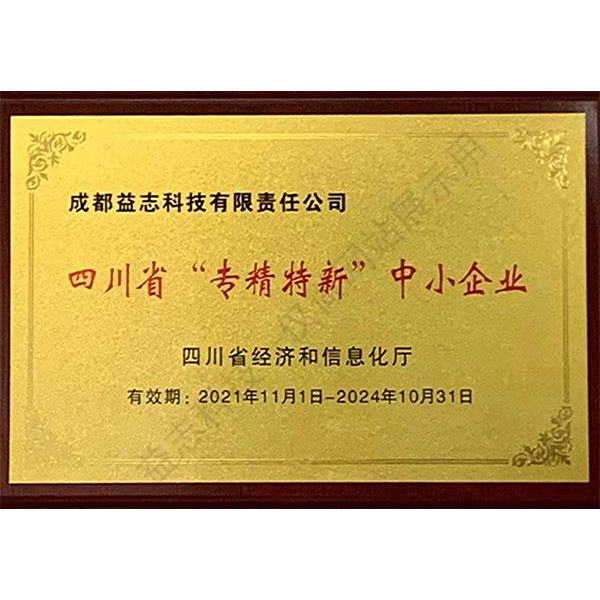
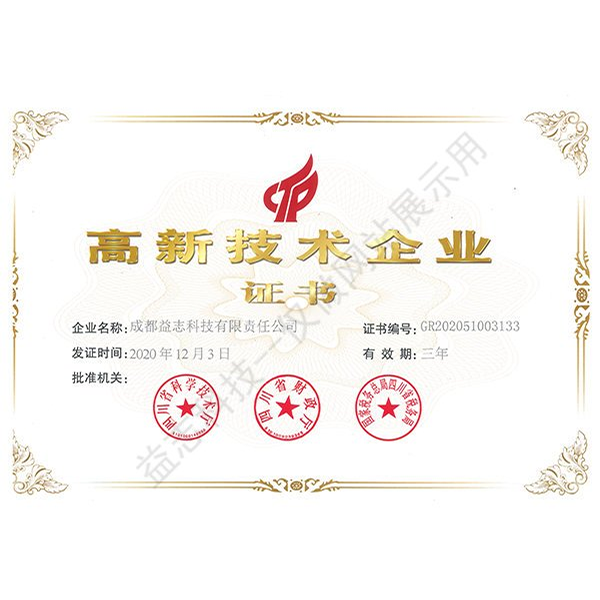
This is where the main difference between new exporters lies. These are not just assembly shops. Often these are child structures ordesign institutescreated by large chemical or gas holdings. They initially worked on internal, very demanding projects. For example,Chengdu Yizhi Technology Co.- this is just such a case. The institute was established in 2013 by the parent company Chengdu Huaxi Chemical Technology Co. with a registered capital of 120 million RMB. Their websiteyzkjhx.rufocused on the Russian-speaking market, which already speaks about the strategy.
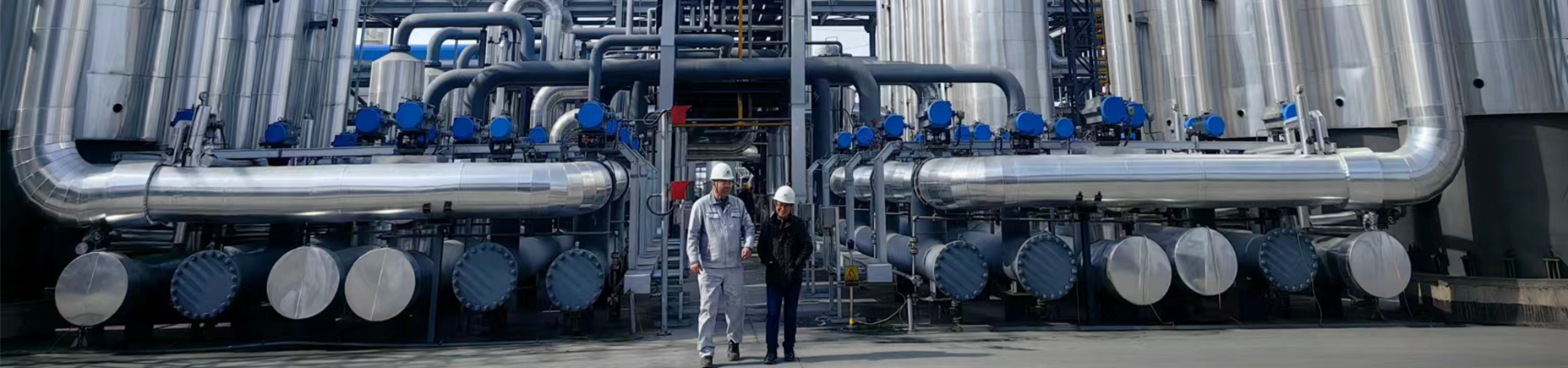
Why is this important? Because such an institute has access to real industrial sites of the holding for testing. They can “break in” technology for argon purification under conditions close to real ones, and not just in the laboratory. This gives them a huge advantage over companies that only buy components and assemble installations according to someone else’s drawings. Their engineers think not in individual columns, but in the process flow diagram as a whole: from the source of raw argon and the compressor to the final point of analysis and distribution.
In a conversation with their technologist, I heard a detail that convinced me. They do not hide the fact that for a long time they used imported palladium-based catalysts for the catalytic conversion of oxygen and hydrogen residues. But due to logistical difficulties and price hikes, we developed and implemented our own pre-adsorption purification system, which reduces the load on the catalytic unit and extends its life. It's a practical, down-to-earth solution, born out of necessity rather than the desire to write a beautiful catalogue.
Weaknesses and what to look for when choosing
Of course, not everything is perfect. The main stumbling block for new exporters is validation and service. Providing a beautiful test report from a Chinese laboratory is one thing. But providing a long-term guarantee that the installation will show the same ppb for oxygen after a year of operation in a workshop near Minsk or Yekaterinburg is completely different. This is where mistrust often arises.
My advice, based on interaction experience: you need to look not at the stated maximums (6N, 7N...), but at the guaranteed minimums throughout the entire service life of the adsorbents. Ask not “what purity?”, but “what purity will be at the output after 1000 regeneration cycles with feed pressure fluctuations of +/- 15%?”. Good suppliers like the one mentionedChengdu Yizhi, are ready to provide extended graphs and data on sorbent wear. The weak begin to speak in general phrases.
Another point is automation. Many Chinese installations offer a control panel with Russian translation, which is convenient. But dig deeper: how is the alarm implemented when one of the pressure sensors fails? How does column switching happen? Is there local saving of logs? It often turns out that the PLC is imported (Siemens, Mitsubishi), but the algorithms are written “our own”. This is not bad, but requires more detailed study. I once saw how, due to an error in the logic of switching adsorbers, the installation supplied unregenerated gas into the line for 40 minutes - the defect was colossal. Then, of course, the software was fixed.
Specific cases and where the market is heading
From real examples: I know about the delivery of an argon purification system from one such design institute to an optical glass production plant in Belarus. The task was to ensure cleanliness of moisture less than -70°C dew point and oxygen purity of less than 1 ppm for annealing furnaces. The key was not only to achieve the parameters, but also to fit into the existing gas utility unit with old compressors. Chinese engineers arrived (before the pandemic), measured pressure pulsations and suggested an additional buffer receiver at the inlet, which was not in the original design. The system has been working for more than two years, there are no complaints.
Where is everything going? In my opinion, we will see further specialization. Companies will emerge that will focus solely onargon purificationfor microelectronics, others for fiber optics, others for window insulation in the production of double-glazed windows. Already, some offer not just installation, but a “guaranteed output parameter?” as a service, including regular analysis and supply of replacement cartridges with sorbents. This is already a level of service that competes with Western vendors.
It is design institutes that have access to R&D and real production that are in an advantageous position here. They can quickly customize the plant to meet custom requirements, such as adding a stage to capture a specific VOC found in the argon of a specific steel mill supplier. Universal assemblers are not capable of this.
Conclusions for practitioners
So, to answer the question in the title: yes, new exporters from China are on the marketargon purification- this is reality. But these are not anonymous factories from Alibaba. These are most often engineering companies with a serious background, which grew out of the internal needs of high-tech industries. Their strength lies in flexibility, speed of completion and competitive price not at the expense of quality, but through optimization of design solutions and their own production base of components.
When choosing a partner, you now need to look not at the country of origin, but at the origin of the company itself. A clear plus is if you have a chemical or gas holding company behind you and have your owndesign institute, as is the case with Yizhi Technology. Be sure to request references not in China, but in countries with similar climatic and operating conditions. And most importantly, discuss the details down to the smallest detail: from the composition of the sorbent in each column to the file format in which the work logs will be provided.
The market is no longer black and white. A confident alternative has emerged that is forcing a rethink of established supply chains. And ignoring this trend means, perhaps, overpaying for the brand or missing out on the opportunity to get more sophisticated equipment. for your specific task. There are risks, but they are now manageable if you approach the choice without prejudice, but with technically competent skepticism.