Chinese food CO2 exporters: technology?
2026-01-08
When people talk about Chinese food-grade CO2, many people immediately think about volumes and prices. Technologies? Often the second point. But in vain. Because the difference between ?just gas? and what really works in a food line sometimes lies in the details that you can't see on paper. I went through this myself.
Don't just liquefy and bottle
The main misconception is that the technology for producing food-grade carbon dioxide is the same everywhere. They say that there is a source (most often from alcohol or ammonia production), there is purification, liquefaction - and you’re done. But for export, especially to markets with strict regulations (EAEU, Europe), this is “ready”? not enough. The key word here isstability of parameters. Not a one-time analysis in the laboratory, but a guarantee that each batch, each cylinder or tank will be at 99.995% and with a minimum of impurities. And this is where the fun begins.
For example, moisture control. According to the standard - about 20 mg/m3. But if there is a “weak link” somewhere in the chain? - imperfect drying, condensation in the lines - then during transportation, especially at sea, condensation may form in the tank or cylinder. For the client, this is a marriage. I know of cases when a batch was returned due to an elevated dew point, although everything was normal at the manufacturing plant. This means that technology is not only production, but also logistics and packaging preparation.
Another point is oil control. This is critical for food CO2. In older industries that use piston compressors, the risks are higher. Modern lines with screw compressors and multi-stage filtration, including carbon filters, provide a different quality. But they also cost more, of course. Many Chinese exporters have been investing in exactly this over the past 5-7 years - not so much in increasing capacity, but in fine-tuning. cleaning.
Where do the raw materials come from and why is it important?
Most of China's food CO2 is a byproduct. Main sources: ammonia/methanol production (syngas) and fermentation in the bioethanol industry. The quality of the feedstock directly affects the complexity and cost of purification.
Gas from synthesis plants is usually cleaner initially. But it has its own nuances - traces of ammonia, hydrogen sulfide, and aromatic hydrocarbons are possible. Specific adsorption is required. The gas from bioethanol plants is ?richer? for organic impurities - fusel oils, ethers, alcohols. Purification is more difficult; good catalytic oxidizers (catalytic furnaces) and adsorption columns with properly selected backfill are needed.
I worked with one supplier from Heilongjiang Province, who just used raw materials from an ethanol plant. The problem was periodic “emissions?” esters after regeneration of adsorbers. The solution was not found immediately - we had to revise the entire regeneration cycle and install an additional buffer tank after cleaning. This is a typical example when a standard flow chart does not work; adaptation to a specific source is needed.
Packaging and logistics are part of the technological chain
You can make a perfect product on the way out of the workshop, and then ruin it on the road. For export, this is probably even more important than production itself. Main forms of supply: 40L cylinders, ISO tanks (liquid phase) and sometimes dry ice.
With cylinders it’s a different story. Their preparation (drying, vacuuming) is a whole production. Chinese factories are now massively switching to automatic lines for processing cylinders, but 7-10 years ago this was a weak point. I remember how a client from Russia complained about the smell in the cylinders. It turned out that the problem was not CO2, but the remnants of old contents (some kind of inert gas) and insufficient purging. Refueling technology is also a point. It is necessary to fill by weight, with a mandatory check of the dew point at the outlet of the filling ramp. This seems obvious, but not everyone does it.
It's easier with ISO tanks, but there are pitfalls there too. Tank material (stainless steel), condition of the internal surface, transportation history. The tank must be checked and drained before loading. Some responsible exporters even carry portable analyzers with them to make a control measurement before loading onto the ship. This is the very “control technology” that is worth a lot.
A practical example: not only hardware, but also software.
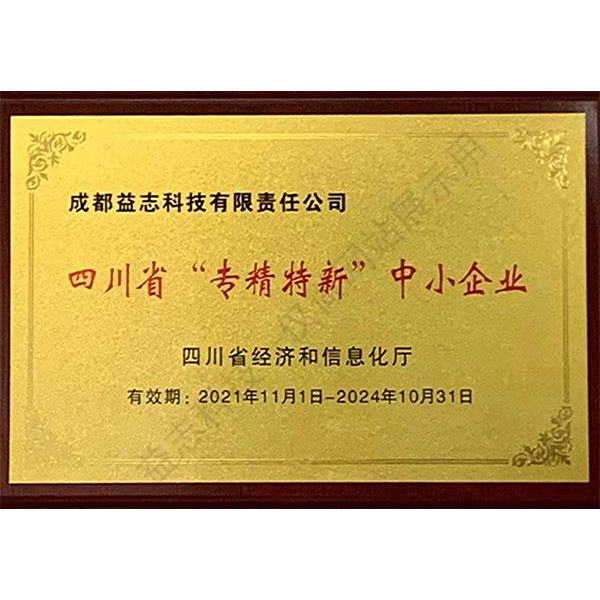
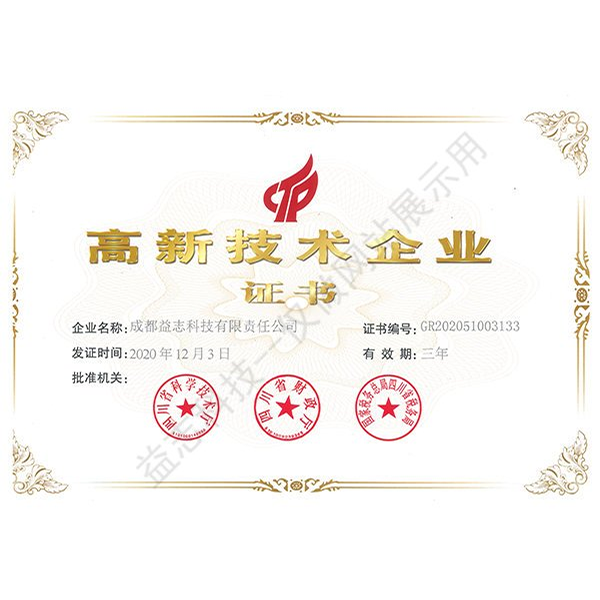
I would like to give an exampleChengdu Yizhi Technology Co. (https://www.yzkjhx.ru). This is not just a trading house, but a design institute created by a chemical company. Their approach has always been different. They don't just sell CO2, they design and build turnkey plants for its production and purification. This is an important point.
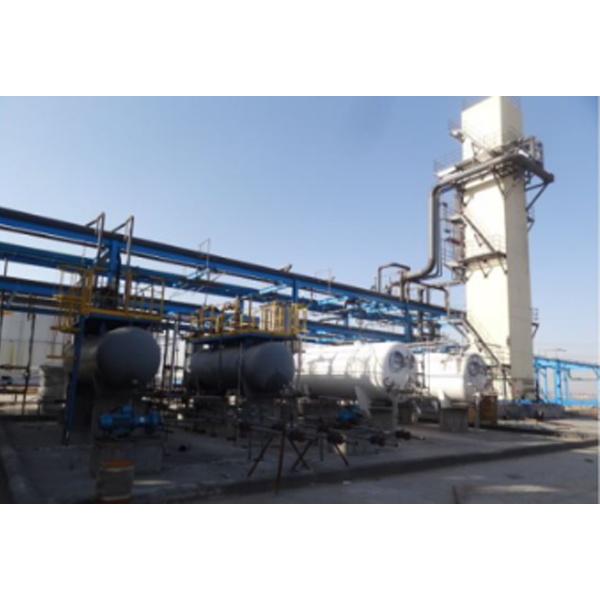
Their strength is precisely working with complex source gases. I looked at their projects for several biological ethanol production plants. A multi-stage scheme was implemented there: preliminary purification of fusel oils, compression, then catalytic oxidation of residual organics, adsorption drying and, finally, low-temperature rectification. The key thing is that they don’t supply “boxed” ones. solution, but model the process for a specific composition of raw materials, which may vary depending on the season and type of raw material for fermentation.
For an exporter, such a background is a huge plus. Because when you designed these installations yourself, you understand everything about the product, from the molecule to the valve. And you can guarantee stability, which is difficult to achieve by simply buying gas on the side and repackaging it. The registered capital of 120 million yuan, indicated in the company description, indirectly speaks of the seriousness of the approach - this is an investment in R&D and engineering, and not just in warehouses and logistics.
Where is technology heading? Unobvious trends
Now everything depends not so much on “even higher purity?” – 99.995-99.999% is more than enough for food needs, as well as energy efficiency and flexibility.
The first is energy recovery. Modern CO2 liquefaction plants try to utilize cold at different stages of the process. This reduces costs, which is critical in high competition. The second is flexibility in terms of raw materials. Source plants may shut down for repairs. Therefore, large exporters strive to have access to multiple sources of raw materials and technology that allows them to quickly reconfigure purification for different compositions.
And the third trend that is gaining momentum is “green?” CO2. That is, obtained not from fossil fuels or industrial emissions, but from biogenic sources with carbon offset. This is still a niche market, but some European buyers are already interested. In China, pilot projects are also emerging to capture CO2, for example, from biogas. Technologically, this is more difficult, but for export to premium segments it can become a serious argument in the future.
In general, to summarize. When evaluating a Chinese exporter of food CO2, you should not look at beautiful booklets with purity numbers, but at what stands behind these numbers. On the source of raw materials, on the age and type of equipment, on the control system at all stages - from gas acceptance to shipment. And the team of engineers who service all this. Because technology is not a static picture, but a living process that must be constantly kept under control. And those who understand this, as a rule, remain on the market for a long time.