Chinese acid regeneration exporters?
2026-01-08
When you hear this request, the first thing that comes to mind is a huge, blurry market. Everyone is looking for a supplier, but few people understand what is hidden behind the words “acid regeneration”. This is not just selling sulfuric acid by the barrel. We are talking about complex technological solutions: from installation and commissioning of equipment to the supply of reagents and personnel training. And the main misconception is that all Chinese companies in this market are the same. This is far from true.
What are they actually selling: equipment, chemicals or know-how?
Often clients come in with a request for “regeneration acid”, meaning simply a chemical. But the point is different. The key product is often itselftechnological solutionand equipment for its implementation. For example, ion exchange units or membrane systems. Chinese players here are strong precisely because of their combination of hardware. and chemistry. You can buy resin from one supplier, pumps from another, and a project from another. But the benefit is in the package.
I came across it from my own experience when a system for cleaning pickling solutions was selected for a plant in the CIS. The client wanted “just acid?”. After the audit, it turned out that its current losses of HCl are at 40%, and waste disposal costs a pretty penny. They sold him not a hydrochloric acid tank, but a project to modernize the line with the installation of a regeneration unit. The savings on the purchase of new acid paid for the project in a year and a half. This is the essence of exporting - selling economic efficiency packaged in equipment and chemicals.
At the same time, know-how is the most difficult component to transfer. Russian or Kazakh technologists may be skeptical of Chinese schemes. It is necessary to conduct pilot tests on site, literally showing before our eyes a decrease in the concentration of metals in the solution or the yield of regenerated acid of the required purity. Without this stage, it is almost impossible to sign a contract. Trust is earned in drops and lost in liters.
Supplier landscape: from giants to niche players
The market is segmented. There are large state holdings, for example,ChemChina. They often work on turnkey mega-projects, but can be slow for medium-sized orders. Their strength lies in the full cycle, from raw materials to complex devices.
The other pole is private technology companies, of which there are hundreds. Their profile is deep specialization. One may focus only on hydrofluoric acid recovery for the glass industry, the other on systems for plating lines. Here it is important to look not at a beautiful website, but at completed projects. I always ask for videos of working installations, preferably outside of China. If they do, that's a good sign.
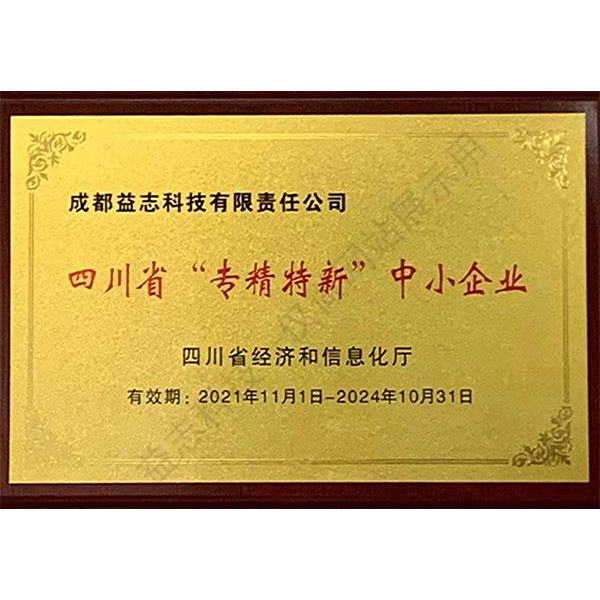
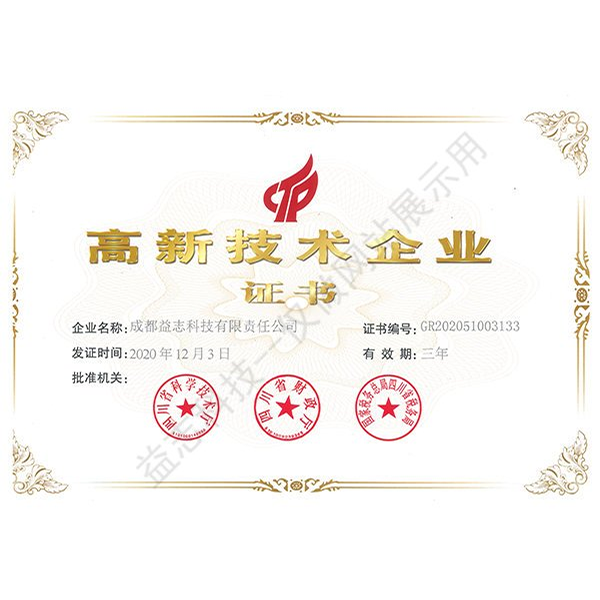
There is also an intermediate link - design institutes or engineering companies, which are often subsidiaries. large manufacturers. They act as integrators. Here, for example,Chengdu Yizhi Technology Co.- this is just such a case. An institute created by the chemical technology company Huaxi. Their capital of 120 million yuan is not just a number, it signals serious investment in R&D and the ability to take on complex projects. Such structures are often more flexible than the parent giants, while still having access to their resources and laboratories.
Pitfalls of logistics and customs
Theoretically, calculating the economics of the project is half the battle. The practice begins with shipment. Acids and resins are dangerous goods. Requirements for packaging, labeling, and transport (especially railway) are changing. There was a case when a batch of cation exchange resins was stuck at the border for a month due to a discrepancy in the packaging certificate. The client at the factory was already ready to launch the line, and we were waiting. Everyone counted losses.
Hence the conclusion: a reliable exporter must have not just a foreign trade department, but a specific logistician who has “moved in?” to the rules of transportation specifically to your country. It is better if he already has experience in supplying, say, to Kazakhstan or Russia. He will know which wording in invoices and HS codes raises fewer questions. This tacit knowledge is worth a lot.
Another point is winter deliveries. Equipment, such as heat exchangers or containers, may be supplied with antifreeze filled. But if we are talking about liquid reagents, it is necessary to either provide for heating of wagons/containers, or plan shipment for the warm season. Trifle? No. Because acid that has frozen and crystallized along the way means headaches, litigation, and financial claims.
Technical support and the cultural gap
Buying and delivering is just the beginning. Installation, commissioning, training. And this is where the gap often arises. Chinese engineers may be brilliant technicians, but their knowledge of Russian or English is limited to the technical manual. A translator who does not understand the difference between ?backwash? and “regeneration” - this is hell at the facility.
We learned how to create a package of documents with the maximum number of visuals: diagrams, photos with captions, video instructions for assembling components. Sometimes they even ordered duplication of inscriptions on equipment in Cyrillic at the manufacturer. This reduces the risk of errors during installation by local teams.
The biggest problem is not so much the language as the approach to solving emergency situations. A Chinese specialist, following a project, may insist on strict adherence to the parameters. And the local technologist knows that these parameters are unattainable with his old equipment, and adaptation is needed. It takes time for the parties to begin not to argue, but to jointly seek a working compromise. Successful exporters understand this and either send more flexible engineers or empower them to make small changes to routines "on site".
Economics vs. ecology: what really drives demand?
It is generally accepted that the main driver is tightening environmental standards. This is true, but not the whole truth. In the CIS countries, simple economic calculations often work more powerfully. When the price of new acid (especially imported) soars, and fines for waste have not yet become prohibitive, business counts money. The supplier’s task is to clearly show the payback period.
It must be shown using specific figures from the client plant. Not “savings up to 30%”, but “your current consumption is 100 tons per month, cost is X. Our installation will reduce consumption to 70 tons, its maintenance and energy costs will be Y. Payback - Z months?”. Without such a connection to reality, the proposal remains just a beautiful brochure.
An interesting trend in recent years is requests not just for regeneration, but for “zero discharge?” (zero liquid discharge, ZLD) or obtaining marketable products from waste. For example, not just cleaning the etching solution, but separating iron salts or other metals from it that can be sold. This is the next level, and here Chinese companies are actively developing technology. This is no longer just selling equipment, but creating a new business model for the customer. But the price of the issue is, of course, different.
Looking to the future: where is the market heading?
I think consolidation will continue. Small shops that simply pour acid will go away. There will be technology companies that can offer the complex. Key words -digitalizationand remote monitoring. Equipment begins to come with built-in sensors and the ability to fine-tune modes via a cloud interface. This reduces the risks and costs of service visits.
The second area is the environmental friendliness of the processes themselves. Demand for regeneration plants that consume less energy or use safer regenerants will increase. I also see potential in modular, quickly deployable “containerized” solutions. for medium and small enterprises.
And most importantly. A successful exporter in this area is no longer just a seller. This is a partner who shares risks with the client at the launch stage and demonstrates the result in his own financial statements. Therefore, when choosing, you should look not only at the price list, but also at the company’s willingness to dive into your specific technological and economic conditions. As they say, the devil is in the details, and the savior angel is in the understanding.