China zeolite adsorbent: where is it used?
2026-01-09
When you hear Chinese zeolite, the first thing that comes to mind for many is cheap cat litter. And this is perhaps the biggest stereotype. In fact, if you dig deeper into the specifications and technical data, it turns out that the range of applications - from petrochemicals to fine gas purification - is simply huge. But there is also a lot of confusion: the same name can hide products with completely different adsorption properties, and it is not always clear what to look for in the material data sheet.
Not just for cats: basic and non-obvious areas
Let's start with the banal. Yes,zeolite adsorbentFrom China, it really goes into large quantities for the production of those same granules for absorbing moisture and odors. But there is a nuance here: natural zeolites (like clinoptilolite) with minimal processing are often used for this. Their effectiveness is a matter of debate; they often act simply as a mechanical absorbent rather than as a molecular sieve. Synthetic options are much more interesting.
Here, for example, are zeolites of type A (4A, 5A) or X (13X). This is already serious. They are used for drying natural gas, air in industrial pneumatic systems, and for separating gas mixtures. I remember once they installed a compressed air drying unit at one plant - initially they tried to save money by using a universal Chinese zeolite with unclear characteristics. The result was that the dew point remained at -20°C instead of the required -40°C. I had to refill with material from a trusted supplier, where type 13X and its dynamic moisture capacity were clearly indicated. Lesson: In technical applications, zeolite is not a name, but a whole set of parameters.
Another field is the purification of liquid media. Here zeolites work as ion exchangers, say, to soften water or remove ammonia nitrogen. But it is important to understand selectivity. Not every zeolite traps calcium and ammonium ions equally well. I often see in specifications just zeolite for water purification, without indicating what capacity it is intended for. This is a sure way to short-lived filter operation.
Petrochemistry: where pore size is everything
This is perhaps the pinnacle of application. In catalytic cracking, isomerization, and hydrotreating processes, zeolites are used as a basis for catalysts. Chinese manufacturers are actively developing here. We are no longer talking about a simple adsorbent, but about a high-tech product with a given acidity and pore structure. For example, zeolites type Y and ZSM-5.
I worked on a project where they considered the possibility of replacing part of an expensive imported zeolite-containing catalyst with a Chinese analogue for a catalytic cracking unit. Laboratory tests showed comparable activity, but during pilot testing a stability problem emerged - faster coking. It turned out that the problem was the distribution of mesopores, which was not optimized for specific raw materials. This is a typical story: Chinese materials may be generally good, but for a specific, especially atypical, process they require very detailed selection and testing.
By the way, zeolites are also used to separate steam-gas mixtures, for example, to separate para-xylene. Here, the uniformity of the granules in size and abrasion resistance are critical. I found one reliable manufacturer that provides complete data on crush strength and attrition loss - this immediately separates serious players from those who sell powder in beautiful packaging.
Ecology and green technologies: a growing segment
Here the application is expanding every year.Zeolite adsorbentused to capture volatile organic compounds (VOCs) from emissions, to treat heavy metals in wastewater, and as a soil amendment to retain moisture and nutrients in agriculture.
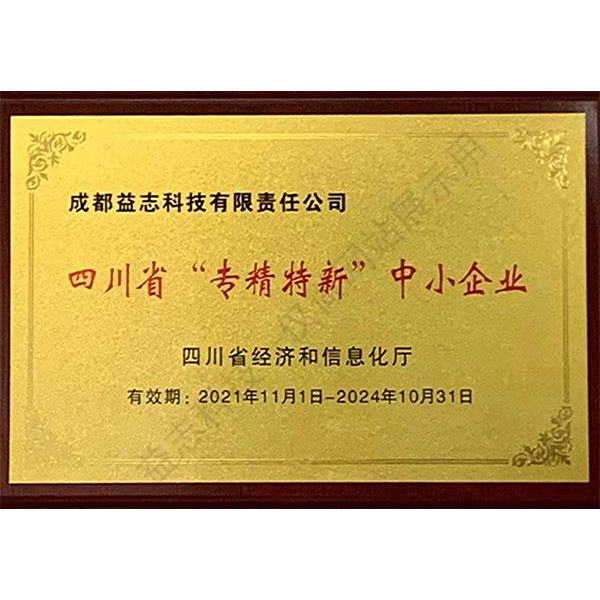
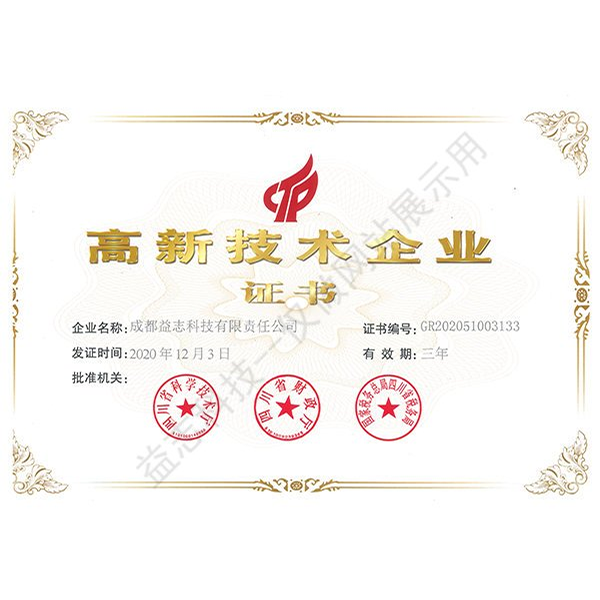
An interesting case was about cleaning up emissions from a small paint shop. It was necessary to capture solvent vapors. Activated carbon and zeolite were considered. We settled on zeolite 13X because it is easier to regenerate with hot air, and it is not as susceptible to moisture as coal. We ordered a batch from Chengdu Yizhi Technology Co. — they position themselves as a design institute with a serious research base (their website ishttps://www.yzkjhx.ru). The material worked well, but I had to tinker with setting up the adsorption/desorption cycles, since the vapor concentration fluctuated. It didn't work to just take standard parameters from the book.
In agriculture, by the way, not everything is simple either. Natural zeolite powder, which is poured into the soil, must have a certain fraction and ion exchange capacity. They often sell simply ground rock, which quickly cakes and stops working. We need to require agrochemical test protocols, but not everyone has them.
Transport and storage: nuances that are not written about in catalogs
It would seem that you bought bags and used them. But no. Zeolite is hygroscopic. If it is transported in a container by sea without proper moisture protection, it may arrive with partial loss of capacity. There was a precedent: we received a batch of zeolite 4A for refrigerant drying. When opened, the bags were intact, but the material inside did not feel the same to the touch. It turned out that during long-term storage in the supplier’s warehouse (prior to shipment), it picked up moisture from the air. It had to be reactivated in a muffle furnace, which led to additional costs.
Another point is dusting. Small fractions of zeolite, especially after several regeneration cycles, produce dust that can clog valves and sensors. This is often overlooked when designing adsorbers. It is necessary to install additional filters on the regeneration line, which is not always included in the original design.
How to choose and what to look at: subjective notes
Based on my not always smooth experience, I have developed several rules. First of all, never buy just zeolite. You need to know exactly the type (A, X, Y, mordenite, ZSM-5...), pore size, sieve composition of granules, bulk density, strength. If a supplier like the mentioned Chengdu Yizhi Technology Co., Ltd. (this design institute established by Huaxi Technology with a registered capital of 120 million yuan usually indicates such data in detail) does not provide this data - this is a reason to be wary.
Secondly, always request a sample for testing in your own conditions, as close as possible to real ones. A laboratory certificate is good, but how the material will behave in your device and under your load is a question. This is especially true for dynamic adsorption.
Thirdly, pay attention to the packaging. Multilayer kraft bags with a polyethylene liner are the de facto standard for a quality product. If the material is transported in simple paper bags, most likely it is for cat litter, and not for the technological process.
The bottom line is simple: Chinesezeolite adsorbentis a powerful and versatile tool. It has long gone beyond the scope of domestic use. But its effectiveness depends 90% on the right choice for a specific task, and not on the low price per ton. Blind use without understanding the physical and chemical principles of the process leads to disappointment and myths about low-quality material. And so - the material is working, often very competitive, if you find a common language with the manufacturer and invest in testing.