Chinese BCA exporters?
2026-01-09
This is a question that constantly comes up in conversations with new clients or partners from the CIS. Many people immediately imagine giant chemical holdings with thousands of employees. But reality, as usual, is more complex and interesting. Often behind this request is a misunderstanding of the market structure itself: they are looking for “just a supplier?”, but what is needed, in fact, is a design institute with the ability to supply key components. This is the main pitfall for those who are just starting to work with the Chinese chemical industry.
What's really behind the acronym?
When they say “BCA exporter,” they often mean a company that can provide the full cycle: from engineering and plant design to the supply of catalysts, raw materials and technological support. This is not warehouse logistics. This is a deep project business. I've seen deals fall apart many times because the customer chose the ?supplier? at the minimum price per ton, not taking into account that there is a whole technological chain behind the BCA.
Let's take butyl acetate for example. It would seem like a commercial product. But its stable production with the required parameters depends on the quality of acetic acid, butanol, and the same catalyst. Chinese ?exporter? Ideally, he should understand all these links. Otherwise, any problem at the client’s site will turn into endless correspondence about whose specific component failed.
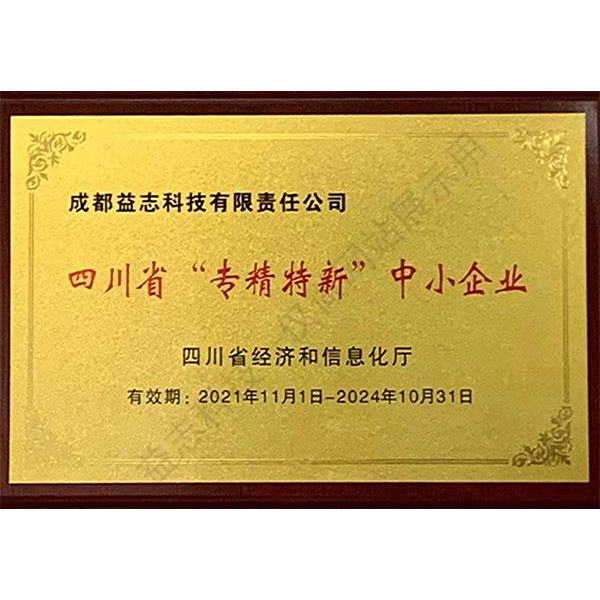
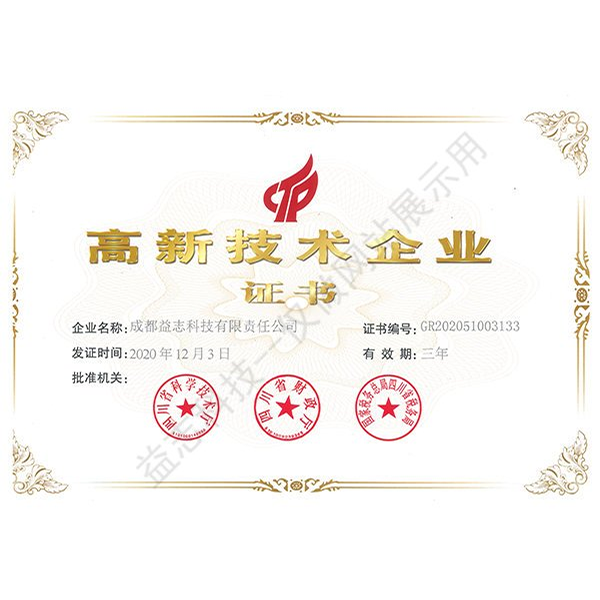
Hence my first rule: look not at the title, but at the background. The company, which was originally founded asdesign institute– this is a completely different level of dialogue. They think not in containers, but in technological schemes. For example, Chengdu Yizhi Technology Co., which was founded by Huaxi Technology. Their websiteyzkjhx.ru– this is not just a showcase of goods, it is, in fact, a portfolio of engineering solutions. The registered capital of 120 million yuan is also a signal of the seriousness of intentions and resources for full-fledged project work, and not for speculative deliveries.
Experience from practice: where it is thin, it breaks
I’ll tell you about one of our early projects for the supply of components for the installation of VSA to Kazakhstan. We then worked with a manufacturer who positioned itself as a large exporter. Everything was going well until the question arose about adjusting the catalyst parameters for local raw materials. The answer from them was standard: “The catalyst complies with GOST, the problem is on your side?” Dead end. I had to look for those who were ready to delve into the problem.
That's when we started collaborating with structures similar to Yizhi Technology. The difference was striking. The first thing their engineers did was request a full analysis of the raw materials the final plant used. Not just a quality certificate, but detailed data. The discussion was conducted at the level of technological maps and material balances. This was a dialogue between specialists, not negotiators.
As a result, a slight modification of the same catalyst formulation (literally adding one promoter) solved the selectivity problem. But for this purpose the ?exporter? must have its own serious laboratory and research base. Many trading houses are simply not capable of this - they do not have such competencies. They buy from large factories and resell. In case of difficulties, the connection is interrupted.
Logistics and documentation: unobvious difficulties
Another point that is rarely discussed at the beginning is the logistics of specialty chemicals. BSA and its components are not bulk cargo that can be loaded into any container. Special control of temperature, humidity, and compatibility of tank or canister materials is required. I remember the story with the supply of acetic anhydride, when, due to incorrectly selected gasket material, minimal but critical polymerization began on the road. The recipient filed a claim against us, and we filed a claim against the original supplier. The investigation lasted for months.
A reliable partner in China must not only ship the goods at its factory, but also have proven work schemes with proven logistics operators who understand the specifics. They must provide a full package of documents, including not only standard certificates, but also detailed recommendations for transportation and storage (MSDS, of course, but also some internal memorandums based on experience).
Websiteyzkjhx.ruin the section dedicated to Chengdu Yizhi Technology Co., Ltd., it is not for nothing that it emphasizes that this is an institute created by a technology company. Such structures usually have entire departments that deal with the development of such “non-core” ones. questions. For them it is part of the project. For a simple exporter, this is extra hassle.
Price vs. Cost of ownership
This is perhaps the main stumbling block. There are many Chinese offers on the market, and prices can vary significantly. The temptation to buy cheaper is huge. But in chemistry, especially in those where the product goes into further synthesis, cheapness at the procurement stage can result in millions of losses due to downtime, low product yield or problems with the quality of the final BSA.
I always try to convey to the client the idea of Total Cost of Ownership. Yes, you pay more to the institute company per ton of catalyst. But in return you get: 1) Technical support 24/7 in Russian/English (good institutes have such teams). 2) A guarantee that the product will have exactly the same parameters as stated. 3) Willingness to adapt the product to your conditions. 4) Responsibility that is borne not by sales agents, but by engineers whose name and reputation are behind the project.
It's always more profitable in the long run. We experienced a couple of painful lessons in the early 2010s when we were chasing low prices. Now our filter when choosingChinese exporterFirst of all, it cuts off those who cannot conduct a detailed technical consultation before signing a contract. If all communication revolves around incoterms and prepayment, this is an alarm bell.
The Future of the Market: Consolidation and Specialization
A clear trend is now visible. China's big chemical giants are increasingly working for the domestic market or entering into mega-contracts directly with state-owned corporations. And the niche of medium-sized and relatively small but technologically advanced design institutes, like Chengdu Yizhi Technology, is becoming increasingly important for the CIS markets. They are more flexible, respond faster to non-standard requests and are ready to invest in long-term partnerships rather than one-time transactions.
Their strength is in depth, not in breadth. They may not be the most famous on the market, but they know everything about specific processes, such as the production of esters or amines. Their websites often look less glamorous than those of trading houses, but the information there is more specific.
So, back to the original question. ? – these are most often not exporters in the classical sense. These are technology partners who deliver not just a product, but a solution wrapped in a product. And the search for such a partner is not a catalog search, it is rather a technical audit. You need to look at the history of the company, its parent structure (as in the case of Huaxi Technology), the presence of in-house R&D and, importantly, the willingness of their engineers to delve into your specific, rather than abstract, problems. Everything else is just resale with risks that you will ultimately have to bear.