Wet CO2 capture method: products?
2026-01-09
When people talk about the wet method, many people immediately think of amine scrubbers, and that's about it. But this is just the tip of the iceberg, and often a source of confusion. We are talking not only about the absorption process itself, but about the entire chain: from the composition of the gas at the inlet to the final product, which can be sold or disposed of. And this is where the fun begins, and often the most problematic.
What's behind the product? Not just CO2
The first and obvious product is, of course, concentrated carbon dioxide. But its purity is a different story. If we are talking about flue gases from thermal power plants, then after a typicalwet capture methodwith MEA (monoethanolamine) we obtain a stream saturated with water vapor, with traces of the amine itself, sulfur and nitrogen oxides, if the preliminary purification was imperfect. This CO2 is not suitable for making baking soda or dry ice. Additional, often very energy-intensive, cleaning and drying are required. Therefore, the product at this stage is rather a semi-finished product.
What about the absorbent itself? Waste solution is not just dirty water. After the absorption-desorption cycle, products of thermal and oxidative decomposition of amine, carbamic acid salts, and solid particles accumulate in it. Its regeneration is a constant struggle against degradation. We once tried to save on the filtration and solution purification system - as a result, over six months we lost about 15% of active MEA due to irreversible reactions, plus corrosion in the heat exchanger increased significantly. We had to urgently install an additional rectification stage. So this regeneration waste can be considered one of the by-products of the process, which also needs to be disposed of somehow.
And the third aspect is warmth. The process of desorption of CO2 from a rich solution itself requires significant heat, usually steam. The product here can be considered low-grade heat, which is often simply dissipated. At one of the installations in China, they tried to integrate it into the heating system of nearby workshops, but it turned out to be expensive due to the length of the pipelines. The issue of utilizing this heat is a constant headache for improving the overall economics of the process.
Carbonates, bicarbonates and other mineralization
This direction attracts many because it sounds solid: binding CO2 into a solid product. In practice, everything comes down to raw materials and energy. The classic is the production of soda ash (Na2CO3) using the Solvay method. They do use CO2, but the process is not cheap. More modern variations are the production of sodium bicarbonate or the precipitation of calcium carbonate.
We participated in a pilot project where we tried to combinewet capturewith the production of precipitated calcium carbonate (PCC). The idea was to feed the purified CO2 into a reactor containing a calcium hydroxide slurry. Technically it worked, but the economy was killing me. The quality of lime (CaO) must be very high to obtain PCC of the required purity and fineness for the paper or plastics industry. The cost of preparing the lime milk and then filtering the product ate up any potential benefit from selling PCC. The project stalled due to the problem of finding a cheap and high-quality source of calcium nearby.
There are also options for producing magnesium cements or neutralizing alkaline waste. But these are, as a rule, niche solutions tied to a specific production. There is no universal product here. Each case requires a separate technological audit: what kind of gas, what impurities, what is the final market for carbonates.
Experience from real projects: from pilot to hardware
Implementation is always a compromise. I remember a system modernization project at a chemical plant. There was an old scrubber there to capture CO2 from the conversion gases to make urea. The goal was to increase efficiency. In addition to replacing the absorber packing, a key change was the installation of a multi-stage heat exchanger to recover heat between the lean and rich solution. This reduced energy costs for regeneration by almost 20%. But the product of this story was not only cheaper CO2 for synthesis, but also kilometers of logistics for replacing pipes, because the new heat exchanger had to be moved to a separate site.
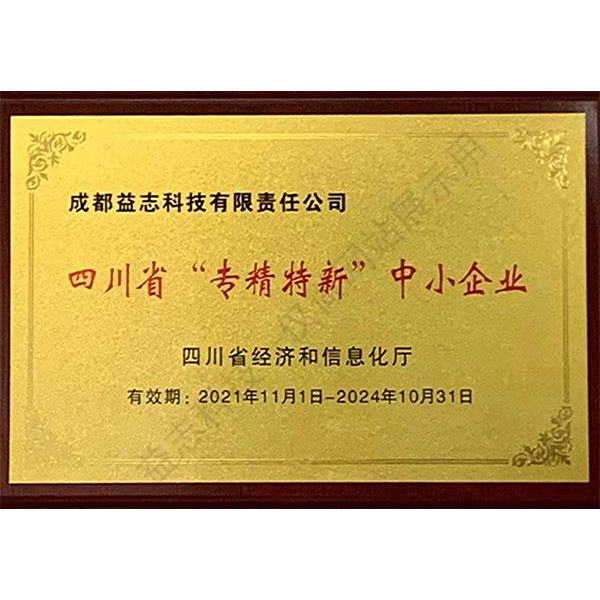
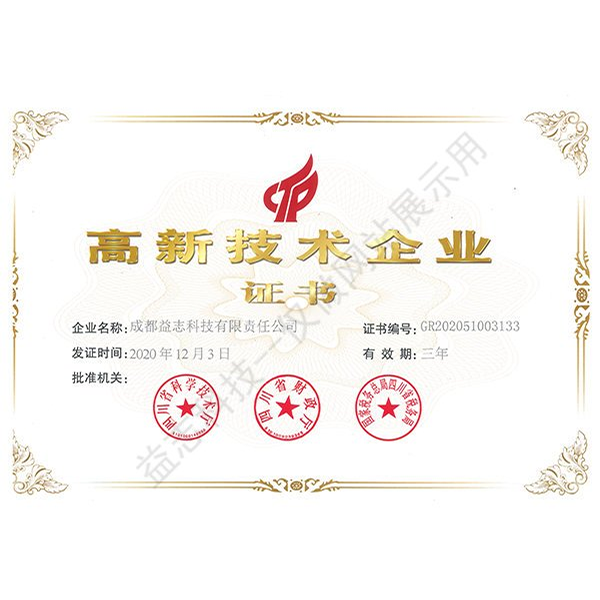
Another case is related to the companyChengdu Yizhi Technology Co.. They acted as a design institute in cooperation to supply equipment for gas purification at one of the metallurgical plants. Their approach, judging by the documentation and our negotiations, has always been quite down-to-earth: not chasing super-new technologies, but adapting proven schemeswet captureto the specific conditions of the customer - pressure, gas composition, required purity. On their websiteyzkjhx.ruyou can see that the emphasis is on full cycle engineering, from design to installation. This is valuable because in our area, a beautiful laboratory setup and one working on the shop floor are two big differences. Their experience as a subsidiary of Huaxi Technology with a solid registered capital indicates the seriousness of their intentions in the gas separation and purification sector.
Among the failures: there was an attempt to use not MEA as an absorbent, but a mixture of amines with additives of corrosion inhibitors from one German supplier. In theory, less energy consumption for regeneration, less decomposition. In practice, the additives behaved poorly when the temperature in the desorber fluctuated, precipitated and clogged the nozzles. I had to return to the classic scheme with more careful control of the parameters. Conclusion: any new reagent needs to be tested in a pilot not for a month, but at least for a full production cycle with possible stressful situations.
Economy and the future: where is the market heading?
Now the trend is not just to catch, but to find application. CCS (capture and storage) comes down to logistics and geology. CCU (capture and use) - into profitability. The most promising product, in my opinion, is methanol or synthetic fuel. But herewet method- just the first step. We also need hydrogen (preferably green), and catalytic synthesis. The technological chain is lengthening, capital costs are rising.
Therefore, in the near future, the main products will remain: 1) commercial CO2 for the food industry and welding (where the price is high), 2) CO2 for injection into oil reservoirs (EOR), which so far provides at least some economics in certain regions, and 3) use in chemical synthesis (as in the same urea production), where there is a ready-made infrastructure.
It is interesting to see the development of technologies using seawater or alkaline solutions based on waste. But this is still either very expensive or tied to the location (for example, next to a cement plant and the ocean). There is no universal solution and there probably won’t be.
Final Thoughts: Process as Product
As a result, answering the question “products?”, you come to the conclusion that the main product of modernwet CO2 capture methodis not a substance, but a service or technological process adapted to the needs of a specific enterprise. Reliability, predictability of operating costs, minimization of waste - that's what sells. And within the framework of this process, those same commodity flows are born: purified gas, heat, and sometimes carbonates.
The choice of technology is always a search for a balance between CAPEX and OPEX, between product purity and energy consumption. And here you can’t do without deep engineering, the same thing that companies like the mentioned Chengdu Yizhi Technology Co. do. Their role is to turn theoretical concepts into working pipelines, tanks and control systems. Without this step, all talk about wet capture products will remain academic discussions.
So, to summarize: yes, there are products, and their range is wider than it seems. But getting them is not an automatic result of installing a scrubber. This is a complex task where chemistry, heat engineering and economics go hand in hand. And success is determined not in the laboratory, but on the industrial site, in the daily struggle with reality.