China exports CO capture technology??
2026-01-09
China exporting CO capture technology?
When they talk about Chinese exports in this area, many people immediately think about cheap equipment or ready-made modules. This is not entirely true, and often not at all true. Real export is, first of all, the export of complex engineering solutions adapted for a specific thermal power plant or cement plant somewhere in Kazakhstan or Indonesia. And the key here is not just to sell the installation, but to transfer the know-how for its integration into the existing, often not the newest, production cycle. This is the same ?technology? in a broad sense, which China is now actively proposing.
From hardware to a package of solutions: evolution of the approach
Previously, about ten years ago, our exports were really more like the supply of “iron”. Separate absorbers, columns, high-performance pumps. The client bought it, and then he himself suffered with installation and commissioning. The results were different, often unsatisfactory. Capture efficiency dropped and energy consumption went through the roof. This created a certain reputation, which we are still cleaning up from.
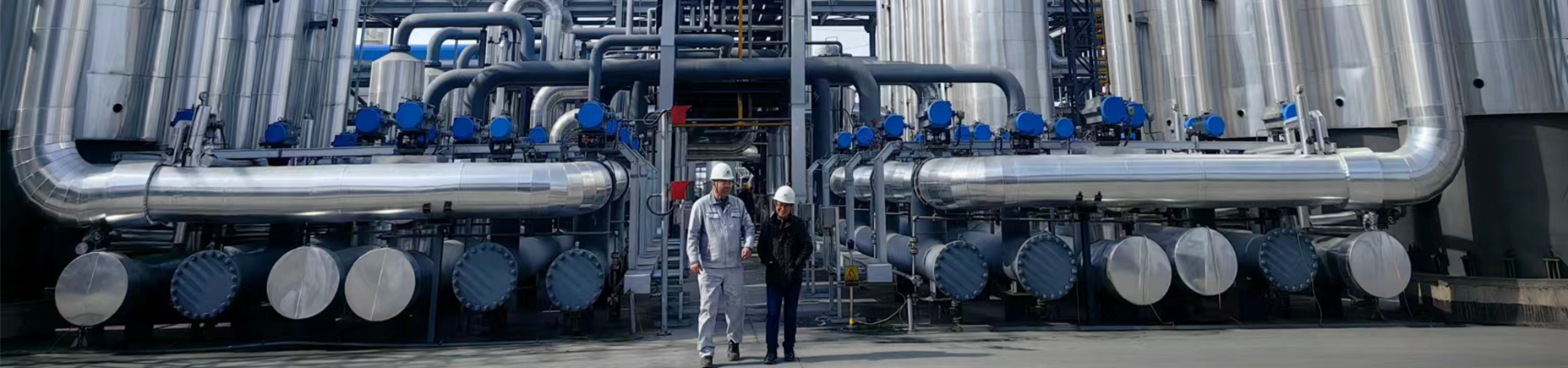
Now the emphasis has shifted to EPC contracts (engineering, procurement, construction) and even turnkey formats. with subsequent maintenance. We arrive and carry out detailed diagnostics of the customer’s flue gases - composition, pressure, temperature, dust load. Because even for the same technology, say,amine purification, the nuances in gas preparation decide everything. Chinese institutes and companies have accumulated a huge amount of data on a wide variety of fuel types and conditions, and this has become our competitive advantage.
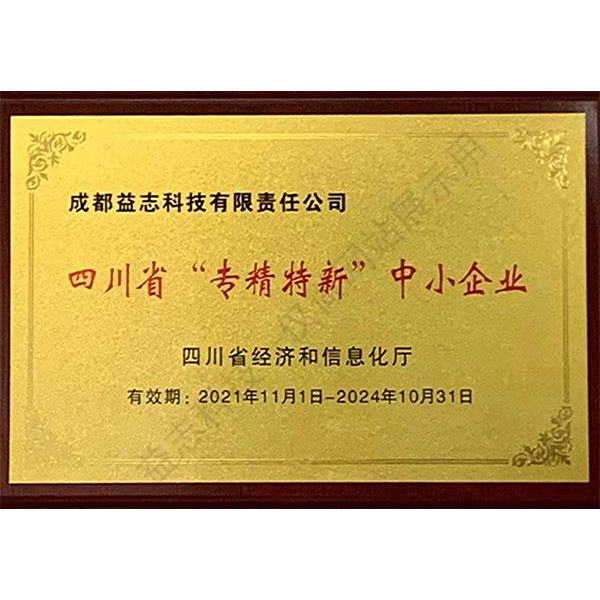
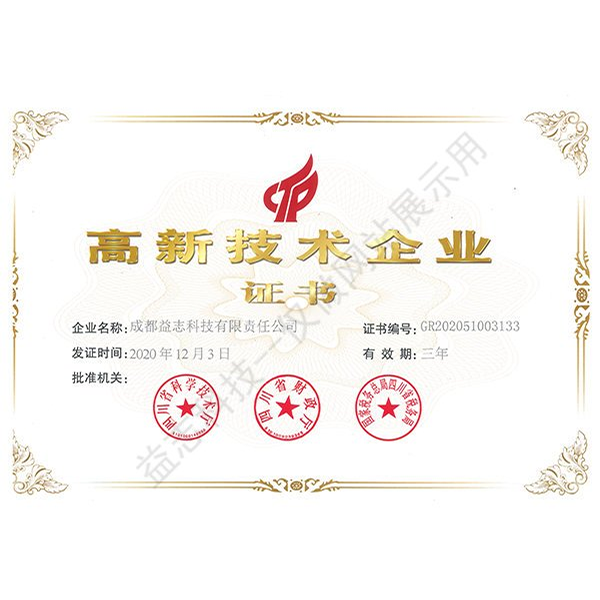
Take Chengdu Yizhi Technology Co. for example. It is a design institute established on the basis of Chengdu Huaxi Chemical Technology Co. From their website (https://www.yzkjhx.ru) it is clear that they are not just sellers, but designers and integrators. Their registered capital of 120 million yuan is not about production capacity, but about investment in engineering intelligence and R&D. They are a typical example of the new wave: their product is not an absorbent in a barrel, but a ready-made technological scheme, calculations, process modeling and responsibility for the final parameters of the installation.
Key technologies and their niches in the foreign market
There are several main directions for export. The leader, of course,post-combust capturebased on amines (MEA, MDEA, their modifications). Chinese companies have made significant progress in reducing energy costs for solution regeneration. But here it is important to understand: we often offer hybrid solutions. For example, for power plants with average power and unstable operating conditions, it may be more profitable to use a non-clean one. amine washing, and a combination with membrane preconcentration. This reduces the load on the main installation.
The second direction is technologies for the cement industry. The conditions here are different, the composition of the gas is different. Methods that use waste from production itself (for example, certain types of sludge) as sorbents are being actively promoted. This does not always provide an ultra-high degree of recovery, but it radically reduces the cost of the process for the customer. For emerging markets, this is often the deciding factor.
And third, promising -CO capture? from flue gasesfollowed by injection for enhanced oil recovery (EOR). This market is almost entirely tied to the Middle East and partly to Central Asia. Chinese contractors here compete with American and European ones, offering cheaper construction cycles and a willingness to work in the field. conditions. But the requirements for equipment reliability here are prohibitive - simple installation means downtime for oil wells.
Pitfalls and real problems on the ground
Everything looks smooth only in presentations. In practice, when implementing a project abroad, the lion's share of problems are not technological, but operational and personnel. For example, we installed an installation at a thermal power plant in Southeast Asia. The technology was proven and installed quickly. But six months later, complaints began about a drop in efficiency. When we arrive, it turns out that the local staff, in order to “save money,” shortened the absorbent regeneration cycle, did not do regular flushing to remove amine degradation products, and the quality of the water itself for preparing the solution was terrible. We had to urgently organize a two-week training right on the site and rework some components for more stringent conditions.
Another common problem is the logistics of spare parts. A critical valve or specialized pressure sensor fails. Wait a month for delivery from China - the project is stalled. We now include in our contracts the creation of a local warehouse for critical spare parts, even if this increases the initial cost. This is a lesson learned through pain.
And of course, adaptation to local norms. Our design standards (GB) are not always accepted by the customer. It is necessary to carry out parallel calculations according to ASME or European standards, which requires additional time and resources from engineers. Sometimes it’s easier and cheaper to immediately design according to international standards, although this is less common for us.
Competition and future trends
On the world market we are still perceived as “low-cost” suppliers. decisions. This is both a plus and a minus. Plus, we win tenders where cost is a decisive factor. The downside is that it’s difficult to get into high-margin projects in Europe or North America, where a premium is paid for the brand and “provenness.” technologies. Although, objectively, many Chinese installations are already operating there, but often as part of a larger project carried out by a European engineering giant.
The future, in my opinion, lies in small, modular capture systems. Not giant complexes for thermal power plants, but relatively compact installations for a steel mill, waste incineration plant or even cogeneration plant. The demand for them is growing, and here the speed of development and flexibility of Chinese companies give a head start. We can quickly make a pilot project, test it on a real site in China and offer a ready-made solution.
Another trend is digitalization. New contracts increasingly include not just the supply of a SCADA system, but a full-fledged digital twin of the installation for predicting wear, optimizing modes and remote maintenance. This is the next level of export—exporting not just technology, but the digital service around it. This is something we all still need to get used to and learn to sell.
Final Thoughts: What We Actually Export
To sum it up, I want to say that the main product that China is currently exporting in the field ofCO capture?- this is not an absorbent or a steel column. It's a comprehensive experience. Experience in rapid technology scaling, experience in integration into complex industrial chains, experience in working under strict budget constraints. This is the ability to find a non-ideal, but workable and economically feasible solution for a specific plant.
This experience is packaged in the form of detailed designs, trained teams and adaptive flow charts. Yes, sometimes we make mistakes, sometimes we overestimate the capabilities of local personnel or underestimate the aggressiveness of the environment. But each such project provides new data that makes the next decision more accurate. Exporting technology in this form is a process, not a one-time deal. And it seems that the world, especially the developing world, needs it more and more. And we, with all our accumulated baggage of trial and error, find ourselves in the right place at the right time.