Oxygen plants China: prospects?
2026-01-09
When you hear “oxygen plants China”, the first thing that comes to mind for many is the price. Cheap. And immediately followed by doubts about quality. Having worked with this segment for ten years, I can say: this is the biggest and most dangerous stereotype. Yes, the price pressure is enormous, but if you dig deeper, behind the simple formula “low price = low quality?” a much more complex and interesting picture is hidden. There are technological breakthroughs, and painful growth mistakes, and companies that really know how to make complex things on a turnkey basis, and those who only assemble from purchased modules. Understanding this is our job.
From ?iron? to systems: how the approach has changed
Previously, seven or eight years ago, Chinese suppliers often positioned themselves as equipment manufacturers. They brought you an adsorber, a compressor, and a control unit. Build like a designer. The problem was in the “dockings?” - both in the physical and technological sense. The control system is from one manufacturer, the valve is from another, and the design as a whole is not optimized for specific inlet gas parameters or outlet cleanliness requirements. The result was a working but ineffective installation. It consumed a lot of energy and required frequent maintenance.
The current trend is not selling hardware, but selling a technological solution. This is a key shift. You are asked dozens of questions not only about the required performance and pressure, but also about the composition of raw materials, load fluctuations, climatic conditions, and the availability of service engineers on site. Based on this, energy consumption and zeolite resource are calculated, and a configuration is proposed. For example, for a project in Kazakhstan, where there were serious seasonal temperature changes and dusty air, engineers from Chengdu proposed a non-standard three-stage pre-treatment system and a customized algorithm for the operation of adsorbers. It's no longer just a box of equipment.
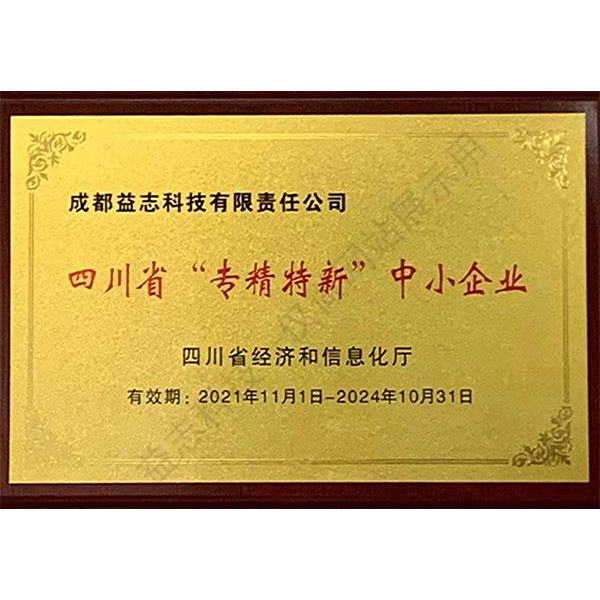
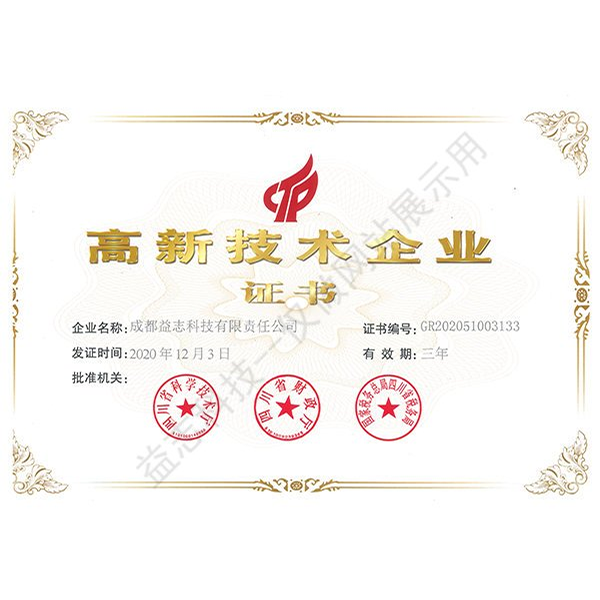
Here, by the way, the role of design institutes that began to appear at large factories is clearly visible. They are the think tanks. One example isChengdu Yizhi Technology Co. (https://www.yzkjhx.ru). This is not just a trading house. This is precisely the design institute created by the manufacturer Huaxi Technology. They have an authorized capital of 120 million yuan, and this is important - such resources allow them not just to sell, but to conduct full-fledged R&D for specific, including non-standard, tasks. Their website is more of a portfolio of completed objects, rather than just a catalog. It is clear that they are “sharpened” for the complex: from technological audit to commissioning.
Where's the catch? Experience from practice
But, of course, there is no point in idealizing. There are prospects where there is an understanding of the risks. The most common pitfall is ?forgotten? consumables and spare parts. We installed a PSA (pressure-strained adsorption) unit and it works great. And after a year and a half, replacement of valves or renewal of zeolite fillers is required. And then it turns out that a specific valve model is proprietary, that is, unique, and you can only buy it from the same supplier, at its price and with long logistics. This must be discussed and specified in the contract in advance, requiring a guarantee of spare parts supply for 5-10 years.
Another nuance is software and automation. Often the control system interface is made only in Chinese and English. Local adaptation for a Russian-speaking operator falls on the shoulders of the customer. More advanced players, however, are already supplying systems with the possibility of Russification and remote access for diagnostics. This is immediately evident from the level of the company.
I had a case with an installation for producing medical oxygen. The customer saved money at the design stage by refusing in-depth analysis of the incoming air. As a result, after several months of operation in a region with high humidity, the zeolite in the adsorbers began to quickly lose efficiency. We had to urgently change the technological scheme and add additional drying. The supplier, in principle, responded promptly, but all additional work and downtime are the customer’s losses. Moral: saving on the engineering part of the project always backfires.
Selection criteria: what to look for besides price
So, if we consider China as a source foroxygen plants, where to start? The first thing is to forget about Alibaba as the final authority. This is a platform for primary search, nothing more. Once you find a potential supplier, you need to dig deep.
Be sure to request a list of completed projects (reference list) with contacts of customers outside of China, preferably in the CIS or Eastern Europe. The conditions are similar. Call these customers, ask not only “does it work?”, but also about the quality of service, the presence of problems, and the speed of response to requests. This will provide a hundred times more information than any beautiful catalogue.
Second, ask for a detailed process flow diagram (P&ID) and specification sheet for the main components. Who is the compressor manufacturer? Atlas Copco, Ingersoll Rand or Chinese manufacturer? What brand of zeolite is used? UOP, CECA or your own development? The answers to these questions will immediately divide suppliers into categories. A company that uses recognized global brands in key components is usually more reliable, as it values its reputation.
Third, attention to detail in communication. If, in response to a technical request, you are immediately sent a commercial proposal without clarifying questions, this is a bad sign. If an engineer starts asking counter questions about your processes, this is a good signal.
Application scenarios: where Chinese solutions are especially relevant
There are niches where Chinese installations now have virtually no alternatives in terms of quality/price/functionality. One of them is mobile and container solutions. There is a need to quickly deploy oxygen production at a remote site, for example, for welding work on pipeline construction or for air enrichment at a mining and processing plant. Chinese manufacturers have learned to make very compact installations, fully equipped in a standard sea container, ready for connection. Delivery time is 3-4 months versus 8-12 for Europeans.
Another scenario is the modernization of old production facilities. Often the task is not to build from scratch, but to replace an outdated unit or improve the efficiency of an existing line. The flexibility of Chinese engineering companies plays into their hands here. They are ready to take on a non-standard task, develop transition units, and adapt their automation to the old system. For a European giant, such a small (by its standards) project is often unprofitable.
And, of course, small and medium businesses. A small metalworking plant or glass production plant does not need a 10,000 Nm3/h installation with “space” reliability. We need a simple, repairable machine with a capacity of 100-200 Nm3/h, which can be bought without multimillion-dollar loans. Here the Chinese market offers a huge selection. The main thing is not to go into a very low price segment, where outright rubbish already begins.
A look into the future: not only price, but also ?greenness?
The prospects for Chinese manufacturers, in my opinion, are now associated not with further price reductions, but with two things: energy efficiency and digitalization. Energy accounts for up to 80% of operating costs. Now in trend are installations with energy recovery, with intelligent control systems that adjust adsorption cycles to the load in real time. The Chinese are actively implementing such solutions, often in collaboration with German or Japanese component partners.
Digitalization means remote monitoring, predictive analytics, data collection for optimization. I have seen several recent projects from companies like the mentioned Yizhi Technology, where the installation comes with a full SCADA system and a cloud platform for analysis. This allows you to predict the need for maintenance and prevent accidents. For the customer, this is a shift from hardware cost to total cost of ownership (TCO).
So, to answer the question from the title: prospects? Of course there is. But the market has matured. Success will come not from those who are simply cheaper, but from those who offer deep engineering, transparency in components, reliable service support and modern, “smart” solutions. technologies. Chinese players in this field are no longer a homogeneous mass, but a whole spectrum - from assembly workshops to high-tech engineering holdings. The buyer's task is to learn to distinguish between them.