Chinese exporters of technologies for extracting methane from coal?
2026-03-07
When you hear about Chinese technologies in coalbed methane, many immediately think about cheap equipment and copying Western solutions. This is perhaps the biggest misconception. In fact, over the past ten years the approach has changed dramatically - now we are talking about complex design solutions adapted to specific geological conditions, and this is exactly what we supply to foreign markets.
From rigs to systems: the evolution of exports
Previously, about ten years ago, export really came down to shipmentdrilling equipmentand pumps. The contract was signed, shipped, shown to the installers - and that’s it. The results were... different. Especially in Eastern Europe and the CIS, where the strata are often not as thick as in Shanxi and the geology is more disturbed. The equipment worked, but the flow rates did not reach the forecast levels. It became clear that it was not the machines that needed to be sold, but the technological cycle.
Now the key product is the design of the entire chain: from exploration and drilling of wells (both vertical and horizontal) to a gas collection, drying and utilization system. Emphasis on pre-project research. Without a detailed analysis of gas content, permeability, and the stressed state of the massif, all this is simply a waste of the customer’s money. We have learned to sell it.
A striking example is our project in Kuzbass several years ago. Local experts insisted on their usual degassing scheme. We, having analyzed data on analogues from the Shaanxi province, proposed a combined grid: traditional vertical wells in depleted areas + directional wells in areas with high stress. The customer had doubts for the first six months, but when the flow rate at the pilot group of wells consistently exceeded the planned one by 25%, the conversation went differently. This was a turning point in understanding what we were selling.
Pitfalls of technology adaptation
The most common mistake is trying to apply the Chinese technological map one to one. For example, we widely use hydraulic fracturing (fracturing) to increase permeability. But in some CIS countries, environmental standards are stricter, or aquifers are located too close. It is necessary to develop gentle methods, such as pulse rupture or the use of compressed nitrogen. This increases the cost, but without this the project will not pass the examination.
Another nuance is the qualifications of local personnel. You can install the most modern reservoir pressure monitoring system, but if it is not understood and the data is not used to regulate the pumping regime, the efficiency drops significantly. Therefore, now the contract necessarily includes not just training, but a long period of technological support, sometimes up to two years. We actually "grow" a team on site that can work with the system independently.
There were also failures. One of the early projects in Southeast Asia failed precisely because of underestimation of climatic conditions. Gas drying equipment, which worked perfectly in the dry climate of Inner Mongolia, failed within six months in conditions of constant high humidity. We had to completely redesign the dehumidifiers, incurring losses. Now we have a separate line of “tropical versions” for critical nodes.
Institutions as drivers: the case of Chengdu Yizhi Technology
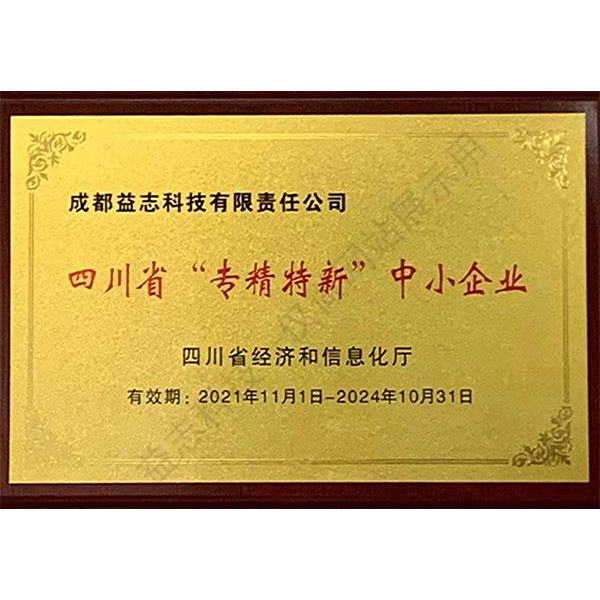
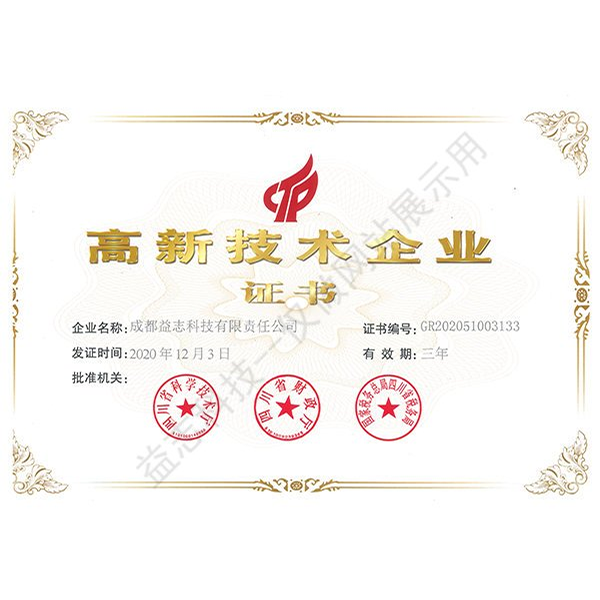
It is design institutes, and not factories, that have become the face of modern technological export. They accumulate experience from hundreds of fields throughout China. Let's take, for example,Chengdu Yizhi Technology Co.(their website isyzkjhx.ru). This is not just a seller, it is an institute built on the basis of Huaxi Technology. Their strength lies in their ability to carry out a full cycle of work: from geological modeling and calculation of methane reserves to designing the entire infrastructure and selecting specific equipment models for the task.
They have their own database of different types of coal seams, which allows them to make more accurate analogue forecasts for new deposits. Their work shows a systematic approach: they will not offer expensive drilling of horizontal wells if analysis shows that a network of cheaper vertical wells with an improved filter design will be more effective. This saves the investor money from the very beginning.
It is also important that institutes such as Chengdu Yizhi Technology often act as integrators. They can supply equipment from different Chinese manufacturers, choosing the optimal supplier for each task, and assemble it into a single working system. For the customer, this means a single point of responsibility, which is valued above all else in international projects.
Economics and safety: what really interests the customer
In conversations with clients from Russia, Kazakhstan, and Uzbekistan, the question “how much does a machine cost?” is heard less and less often. More and more often - “what is the payback period of the project?” and “how much will the methane level in the working faces decrease?” Mining safety is a powerful driver. Our technologies make it possible to reduce the concentration of methane in mine workings by 70-80% even before the start of active coal mining, which directly prevents explosions and downtime.
The economy is more complicated. The price of gas is an unstable thing. Therefore, we are now actively promoting schemes using recycled methane to generate electricity directly at the mine, for heating villages or supplying gas networks. This gives the customer several sources of income and insures the project. We show real cases where a mine fully covers its energy needs throughcoal bed methaneand also sells the surplus.
But there is also resistance. Often, mining companies perceive methane production as a burden, an additional expense item required by law. Our task is to turn this perception around and prove that this is an independent, profitable business project. Sometimes this is only possible after the pilot well begins to generate regular income. Seeing money is the best argument.
Looking ahead: where the industry is heading
Now the trend is towards digitalization and “smart” deposits. We are talking about systems that collect real-time data for each well (flow rate, pressure, gas composition) and, using algorithms, optimize the pumping mode, predict a drop in productivity, and plan repair work. This is the next stage, which we are already testing at several sites in China and preparing for export.
Another direction is working with depleted, unproductive formations. Technologiesincreasing productivitywells (Enhanced Coalbed Methane Recovery), for example, CO2 or nitrogen injection. These are already high technologies, close to oil and gas. Here the competition with Western companies is on equal terms, and sometimes we win due to greater experience in working with coal matrices.
As a result, Chinese exports in this area have ceased to be synonymous with “cheap and simple”. This is the delivery of complex, adaptive engineering solutions, supported by a huge amount of practical data. Success does not depend on the price of the catalog, but on the depth of understanding of the customer’s problem and the willingness to look for a non-standard path. Like in that story with Kuzbass - sometimes it takes six months to convince, but it is precisely this approach that ultimately creates a reputation.