Is China exporting coal mine methane technology?
2026-03-06
When you hear this question, many people immediately imagine simply selling equipment - pumps, pipes, sensors. But if you dig deeper, working at the intersection of projects in Kuzbass and Shanxi, you understand that the point is not in the “hardware”, but in adapting a whole set of solutions to the specific geology of the reservoir and, critically, to local safety regulations and economics of production. A common mistake is to assume that Chinese technology is a cheap analogue of American or Australian systems. No, this is often a different path, which grew out of its own, very harsh conditions: deep layers, complex tectonics, high methane abundance and constant pressure on production costs. And this experience, sometimes by trial and error, is now really being exported, but not everywhere and not always smoothly.
What is actually meant by ?technology? in this context?
Here we need to separate. Firstly, this is engineering - designing a degassing system, from the location of wells on the mine plan to the calculation of pumping modes. This is the basis. Chinese institutes have accumulated huge amounts of data on different basins, and their emission forecast models have become very accurate. Secondly, this is equipment, but it is specific: for example, machines for drilling long wells from underground workings (the same ones at 1000+ meters), capable of working in cramped conditions, or separators for purifying low-concentrated methane. And thirdly, what is often missed is the management of the project and the assessment of the economics, when gas production becomes not a by-product of safety, but a business in its own right.
I remember one of the early projects in Vorkuta, about ten years ago. Then they brought Chinese drilling rigs. The equipment seemed to be good, but the main problem was revealed during the process: the engineering protocols and operating logic were “sharpened?” under a completely different organization of labor at the mine. We had to redraw schedules and methods for months, essentially creating a hybrid system. This was an important lesson: exporting technology is always exporting part of the industrial culture.
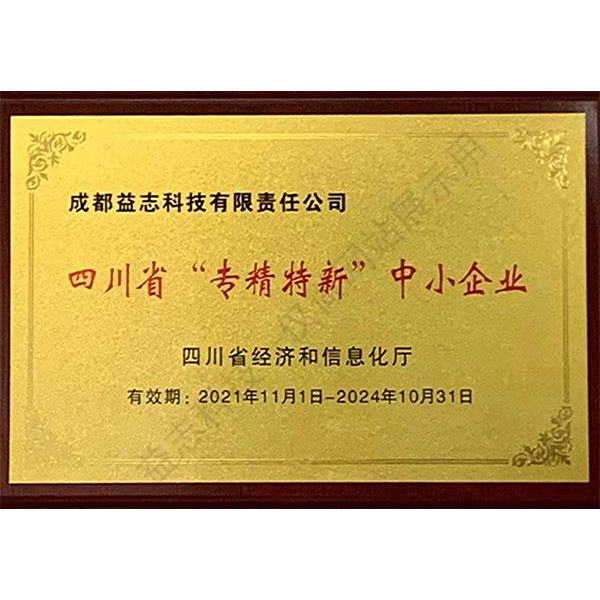
Now the approach has become smarter. Instead of a simple delivery, a pilot project with a full cycle is proposed: audit, design, supply of key equipment, installation supervision and training. And this is where the role of integrator companies that know how to package it is visible. For example, a design instituteChengdu Yizhi Technology Co.(establishedChengdu Huaxi Chemical Technology Co.), which works at exactly this level - not just sells a machine, but offers a solution for specific reserves and production goals. Looked at their websiteyzkjhx.ru— it is clear that the focus is on complex projects for methane utilization, from mines to power plants. This is the next level.
Where and how does it work? Real cases and rakes
The main export destinations are, of course, the CIS countries with a developed coal industry (Kazakhstan, Ukraine, Russia) and partly Southeast Asia (Vietnam, Indonesia). In each case the story is different. In Kuzbass, for example, hydraulic fracturing (fracturing) technologies in methane wells, developed in China to increase production rates, have taken root well. But they “took root” - said loudly. At first there were problems with geomechanics - although our formations are similar, they are not identical, and the fluid injection parameters had to be selected again, and there were cases of insufficient effect.
Another example is emission monitoring and forecasting systems. Chinese systems, based on sensor networks and real-time analysis software, are often more "advanced" in terms of algorithms, because we trained on a huge number of emergency situations. But their implementation is limited by the need for deep integration with the existing automated process control system at the mine, and this is always a headache with communication protocols and, again, with responsibility. Miners are distrustful of “black boxes”.
But in Kazakhstan, at Ekibastuz, the introduction of technologies for using coal mine methane for cogeneration has been more successful. There, Chinese contractors immediately came with a package: gas purification equipment, generator sets, a maintenance contract. The key was the payback calculation that they provided - not unfounded numbers, but a detailed model with local electricity tariffs. It worked.
Why not everywhere and always? Barriers to exports
The first and main barrier is not technical, but regulatory. Safety standards (for example, requirements for explosion protection of equipment), certification procedures, building codes are different everywhere. Chinese equipment certified according to GB requires a long and expensive recertification according to the CU TR or local standards. Sometimes it is easier to adapt a design from scratch, which kills the cost advantage.
The second barrier is the qualifications of local personnel. Complex systems require not just operators to operate, but engineers who understand the principles. Chinese companies now necessarily include long-term training in the contract, but the language barrier and the difference in basic technical education make themselves felt. I remember how at one site downtime due to a broken valve lasted two weeks - they were waiting for a specialist from China, because local mechanics were afraid to disassemble the unit without detailed diagrams in Russian.
The third point is competition with local players and established connections. The coal industry is a conservative and often clannish industry. The introduction of foreign, albeit effective, technology may encounter resistance not at the technical, but at the managerial level. Sometimes a project fails not because it is worse, but because the local drilling rig manufacturer has long-standing agreements with the mine management.
What's in the bottom line? Prospects and trends
So does China export technology? Yes, definitely. But this is not a wave, but rather targeted streams into those niches where there is a clear advantage: comprehensive solutions for difficult geological conditions, technologies for processing and using low-concentrated methane, predictive analytics systems. This is not mass export, as with solar panels, but a piece-by-piece, project business.
The trend of recent years is moving away from selling a “piece of iron?” to selling services and results. For example, contracts where payment is tied to the volume of methane produced and utilized or to the electricity received. This requires the exporter to immerse even deeper into the customer’s realities and share risks with him. Companies likeChengdu Yizhi Technology Co., with their design and engineering model and registered capital of 120 million yuan, are precisely designed for such long-term and capital-intensive projects.
The future, in my opinion, belongs to hybrid models. Not ?Chinese? or ?Russian? technology, but joint development or adaptation. When Chinese expertise in modeling and efficient equipment is combined with local knowledge of geology and regulations. There are already examples of creating joint engineering centers in Russia for such work. This is the only way to make technology exports truly sustainable and efficient, rather than just sporadic deliveries.
Personal observation: the detail that changes everything
I would like to finish with one detail, which, in my opinion, symbolizes the essence of this whole “export”. At one mine in Siberia, I saw Chinese engineers spend months tinkering with the threshold settings for methane sensors. Not with the sensors themselves, but with the logic. Their software was configured to trigger preventively when concentrations sharply increased, even if the absolute value was below normal. Our rules dictated that we wait for a specific number. The debate was heated. As a result, a compromise was found by creating a two-level warning system. This seemingly small technical detail - the protocol for reacting to data - is the very “technology” that is most difficult to export. This is not a patent or a drawing, but a decision made based on someone else’s, often bloody, experience. And you understand its value only when you yourself pass by the grille of the cross ventilation shaft and hear the steady hum of the system, which now contains a piece of this, someone else’s, experience. This is what real export is.