Chinese exporters of NHD technologies?
2026-01-07
When you hear this question, the first thing that comes to mind is huge, shiny new factories somewhere in Jiangsu or Shandong. But reality, as usual, is much more prosaic and interesting. Many people immediately look for ready-made “out-of-the-box solutions”, but NHD is not a machine that they bought, brought and launched. Rather, it is a story of deep adaptation and often of unexpected partners.
What is really hidden behind the “export of technology”?
The concept of "export" It's pretty arbitrary here. We do not sell a patent in an envelope. We are almost always talking about a turnkey project: from basic engineering and supply of critical equipment to installation supervision and commissioning. A client, say, from the CIS, wants not just to buy a license, but to get a working production facility with guaranteed parameters for purity, output and energy consumption. And here the most difficult part begins - translating the Chinese experience into local realities.
One key point that is often overlooked is raw materials. Chinese installations are designed for a certain quality of cyclohexanone or phenol. Try running the same circuit on raw materials with other impurities - and that’s it, NHD parameters (that is,N-methylpyrrolidone) are dancing. It is necessary to adjust technological regimes on the fly, sometimes even making changes to the design of columns. This is not stated in any catalogue, it is pure practice.
I remember one early project in Kazakhstan. We supplied the standard package for China. But local cyclohexanone had an increased content of light fractions. At the NHD purification stage, this resulted in constant energy wastage and product instability. They found an almost homemade solution - they added a preliminary stripping column, which was designed literally on the knees with local engineers. The equipment was ordered on site. This saved the project. After this, you understand that your value lies not in selling hardware, but in your ability to solve such non-standard problems.
Player landscape: not just giants
Of course, there are large government institutions like SEI or LPEC, which have dozens of giant complexes in their portfolio. But their interest, frankly speaking, rarely extends to relatively small, from their point of view, projects abroad with a volume of 10-20 thousand tons. Their equipment is often monsters, designed for mega-factories.
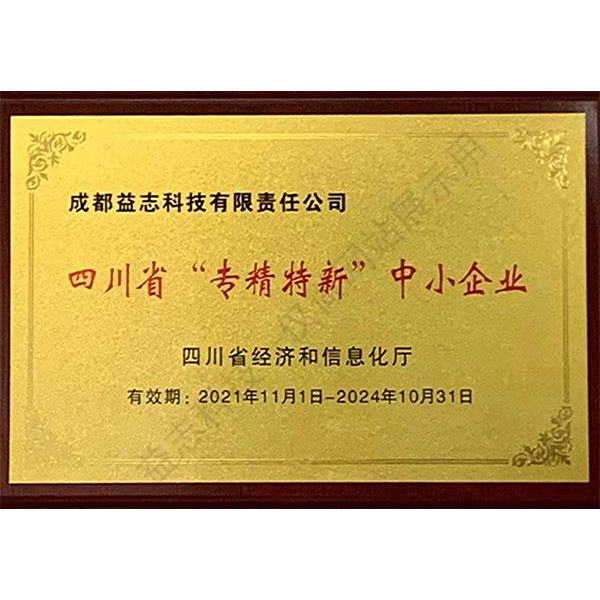
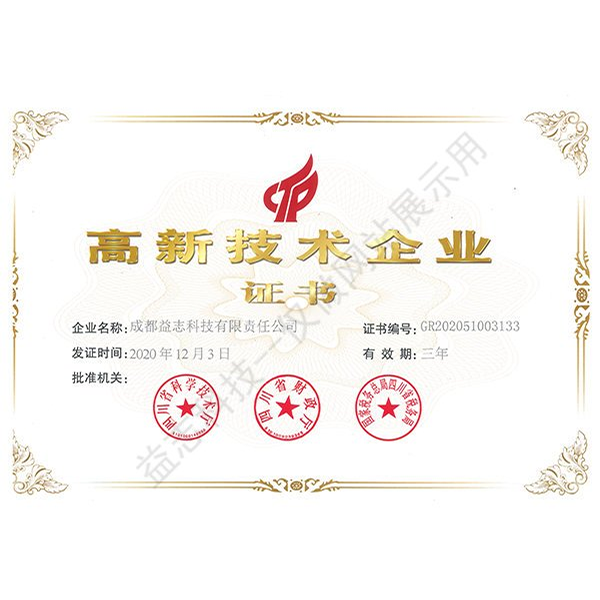
And the niche of medium and small projects is being filled by companies of a different type. These are often design institutes or engineering companies that grew out of large chemical holdings. They have access to real-world operational data, know where the technology hurts, and can offer more flexible solutions. Like for exampleChengdu Yizhi Technology Co. (yzkjhx.ru). This is not a random name. It is a design institute established by Chengdu Huaxi Chemical Technology Co., Ltd., with a registered capital of 120 million RMB. For me, such structures are always interesting potential partners. They are not just sellers, they often have real Huaxi production behind them, which means their technology has been tested in practice. Their website is not just a business card; there you can usually find specific cases on distillation and purification of solvents, which for a specialist says a lot.
When working with such partners, you are faced with another problem - their weak “export” Preparation. The documentation may be technically perfect, but only in Chinese. Translations are done hastily, and sometimes terms appear in the specifications that are understood only at the home factory. You have to be a translator not only of the language, but also of engineering culture.
Pitfalls: where do people most often stumble?
In addition to the raw materials that I have already mentioned, there are several more critical points. The first is the requirements for product purity. In China, standards can vary depending on the end use - for electronics, for polymers, for gas purification. European or Russian GOSTs/TUs often impose more stringent requirements for individual, seemingly minor impurities. For example, to the content of water or amines. If at the technical specifications stage you don’t “catch” this difference, all subsequent cleaning may be ineffective.
Second ?ambush? - These are auxiliary systems. Chinese projects are sometimes optimized to the limit, counting every valve. But in conditions of, say, the Siberian winter, completely different solutions are needed for thermal insulation, heating of pipelines and redundancy of pumps. What works in Sichuan will simply freeze at -40°C. And this modification often has to be done on site, which increases the cost and time frame.
And third is the “repair culture”. Chinese equipment is often designed for high maintainability by the factory itself. But there are no such workshops or spare parts reserves abroad. Therefore, it is critically important from the very beginning to lay down an increased supply of key elements - seals, filters, heaters. Without this, the client will face long downtime after six months of operation.
Case: a failure that taught you more than success
I would like to talk only about successes, but one failed episode was perhaps the most instructive. It was about modernizing the receiving installationN-methylpyrrolidoneat one old post-Soviet enterprise. We came with a beautiful project from a famous institute. Everything has been calculated, the devices have been selected.
But we made a fatal mistake - we didn’t spend enough time auditing the existing hardware. The old column that was planned to be used turned out to have uneven packing and hidden corrosion in the lower part. Instead of insisting on replacing it (this increased the cost of the project by 30%), we made concessions to the client and tried to adapt the modes. As a result, the selectivity of the reaction dropped, the yield of the target product was 15% lower than planned, and we still couldn’t figure out the energy costs. The project was eventually completed, but it did not bring the economy that was expected. The client was dissatisfied, and we were even more so.
The conclusion was harsh: never, under any circumstances, should a thorough diagnosis of existing capacities be neglected if the project is not “from scratch”. It is better to include in the estimate the replacement of questionable equipment immediately, rather than having to deal with the technical and commercial consequences for years. After this incident, our pre-project analysis became three times more detailed.
The future: which way the wind blows
Now demands are changing. Previously, the main question was “how much does installation cost?”. Nowadays it is increasingly heard: “What will be the steam consumption per ton of product?” and “how is waste disposed of?” Pressure towards ?green? chemistry is growing even in emerging markets. Therefore, Chinese exporters who can offer not just NHD technology, but energy-efficient technology with closed water cycles and heat recovery, will benefit.
Another trend is digitalization. The proposal is not just to install an automated process control system, but to provide the ability to remotely monitor and analyze key parameters of the installation from China. For the client, this is preventive repair and optimization; for the supplier, this is invaluable data for improving their own technologies. But this raises issues of cybersecurity and data sovereignty that have yet to be resolved.
So, back to the original question... Yes, Chinese exporters of NHD technology are a reality. But these are not faceless fly-by-night companies. These are most often engineering teams with a deep background in real chemistry, who learn from their mistakes and are forced to constantly maneuver between the economic efficiency of their proposal and the harsh realities of foreign plants. Their strength is flexibility and practical experience. Their weakness is sometimes in underestimating “local features”. The success of a project almost always lies in the details that cannot be found in a standard technical data sheet.