China: prospects for ion-liquid desulfurization?
2026-01-07
When you hear aboution-liquid desulfurizationin China, the first thought is another “breakthrough?” a laboratory method that will not take root in industry. Many people think so, and I myself was skeptical about five years ago. But now the picture is changing, and changing quickly, although not without its specific “Chinese” features. features.
From laboratory to factory: how it all began
I remember the first reports at conferences in Dalian or Nanjing seven or eight years ago. Scientists from CAS (Chinese Academy of Sciences) showed graphs with a fantastic degree of purification - 99.9% for H2S and mercaptans. Engineers from Sinopec or CNPC oil refineries sat in the hall, nodded, asked questions about corrosion, about stabilityionic liquidsin a long cycle. The answers were, let's say, theoretical. The main barrier then was not even technology as such, but cost. The production of those specialized ionic liquids, for example, based on tetraalkylphosphonium, was chamber-based and expensive. The idea that this could replace monoethanolamine (MEA) in a plant with a capacity of millions of cubic meters of gas per day seemed utopian.
But the Chinese approach is often to create market demand or political momentum first. Tightening environmental regulations, especially around key economic zones such as the Yangtze Delta or Bohai Bay, has become the driver. It became clear that traditional amines do not always cope with the new limits on the total sulfur content, and the problem of waste disposal (the same spent amines) is becoming more and more serious.Ionic liquidsdeclared themselves as ?green? The alternative is low steam pressure, theoretically complete regeneration, the ability to fine-tune for a specific gas composition.
This is where the first pilots appeared. Not at giants like Sinopec right away, but at medium-sized enterprises, often in cooperation with universities. One of the early projects that I heard about first hand was in the Sichuan gas field. The gas was high in CO2 and H2S, a classic problem for selective purification. Pilot installation ationic liquidsworked, but encountered an unexpected problem - clogging of heat exchangers due to the precipitation of polymer impurities that were not in the laboratory reactor. This was an important lesson: the real stream is always dirtier.
Practical barriers and Chinese solutions
And this is where the fun begins—engineering adaptation. Chinese technology companies, especially those that grew out of research institutes, began to work not on creating the ?ideal? fluids, but rather on solving specific bottlenecks. Main pain points: 1) Price. 2) Viscosity (affects energy consumption for circulation). 3) Long-term stability (thermal and chemical). 4) Restoration of activity after seizure of “heavy” ones. impurities such as thiophene.
The solution followed the path of simplifying and scaling chemical synthesis. If in Europe or the USA they focus on complex cation-anion pairs with unique properties, then Chinese suppliers, in my opinion, have relied on several relatively simple but reliable formulas that can be produced in tons. Let's say, the same phosphonium salts, but with cheaper sources. This reduced the cost per kilogram significantly, although at the expense of some selectivity.
The second point is process integration. Chinese engineers didn’t just “stick it in?” a column with an ionic liquid instead of an amine one. They started offering hybrid schemes. For example, the first stage is a traditional amine for rough cleaning and removal of the bulk of CO2, the second stage ision-liquid desulfurizationfor deep purification from residual H2S and organic sulfur compounds. This sharply reduced the required volume of expensive ionic liquid and solved the problem with its swelling from CO2. This pragmatism is characteristic of the local approach.
Case from reality: not only successes
I’ll tell you about one project that I was indirectly familiar with. The customer is a chemical plant in Shandong; a cracking unit produced a flow of propane-propylene fraction (PPF) with a high content of mercaptans. It was necessary to reduce the total sulfur content to below 10 ppm for polymer production. We chose a technology based on chloride ionic liquids. The installation was designed and supplied by a company associated with a research group from Sichuan.
The first months everything was great. Then problems with the pumps began - the increased viscosity of the fluid at winter temperatures (yes, it can be +5°C in Shandong) led to cavitation. We had to urgently modify the heating system for the lines. Another story: the analysis showed a gradual accumulation of oxidation products and heavy hydrocarbons in the liquid, which were not distilled off during regeneration. After 14 months, activity dropped by 40%. Not a catastrophe, but not the kind of “eternal” one. the liquid that the sellers promised. An empirical solution was found - once every six months, take 10% of the volume for rectification and add a fresh portion. The economics of the project were still positive, but the operational hassles were added.
This is a typical situation. The technology works, but requires more thoughtful and individual service support than the usual “out of the box” ones. solutions. Not all operators are ready for this. They want to “set it and forget it” like with MEA, albeit at a higher cost for the steam boiler.
The role of specialized engineering companies
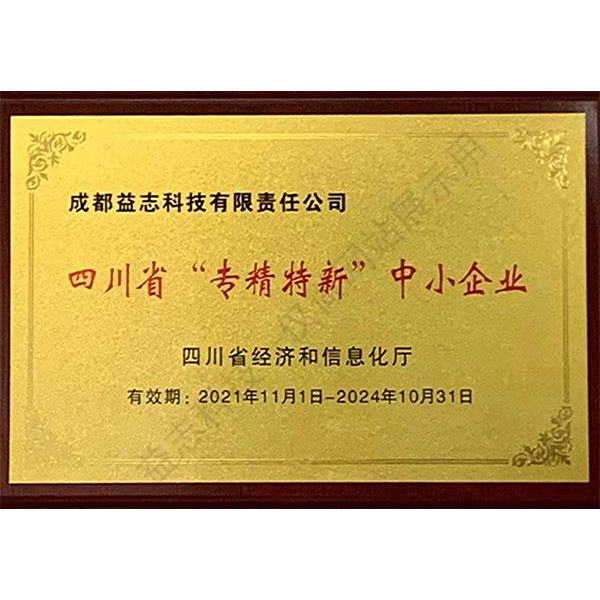
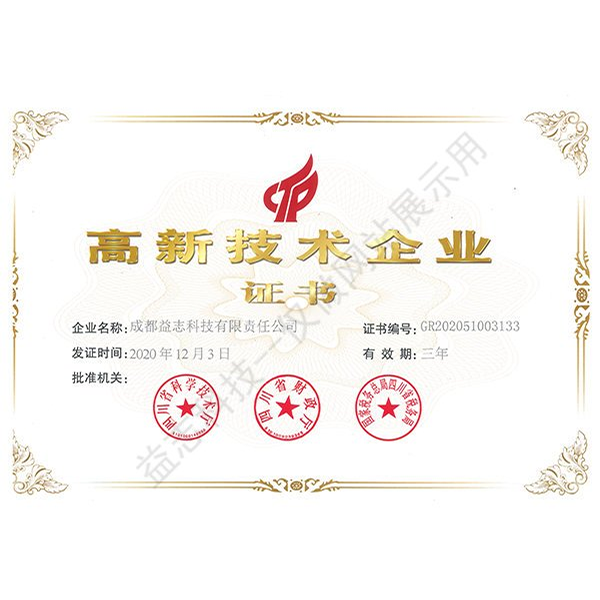
Here an important player enters the picture—design institutes, which take on the role of an integrator between fundamental science and industry. They don’t just sell a reagent, they sell a turnkey technological process, with all the piping, automated process control systems and guarantees for the result. One of the striking examples isChengdu Yizhi Technology Co. (https://www.yzkjhx.ru). This company, created on the basis of Chengdu Huaxi Chemical Technology, is just one of those. Their profile is not just the sale of chemicals, but comprehensive solutions in the field of gas purification and separation.
Their strength, as far as I can tell, is that they have access to their own manufacturing capabilities and can scale up the synthesis of the ionic liquids they need. Moreover, they often offer the client not a standard product, but a selection of composition “to measure?” after analyzing the raw materials. This is critical. The flow from a coal gasifier and the flow from an FCC installation are two very different things, and there is no universal liquid for them.
WebsiteChengdu Yizhi Technology (https://www.yzkjhx.ru) positions the company as a design institute with a registered capital of 120 million yuan, which indicates serious intentions and resources. In contextion-liquid desulfurizationSuch companies are the key link. They take on the risks of debugging the technology, have a staff of engineers for commissioning and, importantly in China, build relationships with local environmental regulatory authorities, helping the customer obtain all permits.
Which way is the wind blowing? Prospects and doubts
So what are the prospects? In the short term (3-5 years), I see niche but steady penetration of the technology. Main growth points: 1) Deep purification of synthesis gas for chemical industries (methanol, ammonia), where the requirements for sulfur are especially stringent. 2) Purification of associated petroleum gases (APG) in medium and small fields, where it is unprofitable to build a bulky amine plant, and a modular plantionic liquidsmight work. 3) Special applications, such as desulfurization of ethylene or propylene for the production of premium polymers.
The medium term (5-10 years) will depend on breakthroughs in two areas. The first is the creation of truly cheap and “indestructible” ones. liquids, possibly based on waste from other industries (Chinese chemists are actively experimenting here). The second is the accumulation of an array of data on long-term (5+ years) operation under different conditions. So far there are few such references, and this is holding back the big players.
The main challenge, in my opinion, does not even lie in the technical plane. This is the conservatism of the industry. Refinery and gas processing plant managers are people who make a career out of reliability. They have worked with amines for decades, they know all their problems and how to work around them. Switching to a new, albeit more efficient, technology is always a risk for them personally. Therefore, the implementation will not be revolutionary, but evolutionary: first on new, “green” ones. projects where there is no legacy infrastructure, or where traditional methods no longer work.
As a result,ion-liquid desulfurizationin China, this is not a myth or a panacea. It is an emerging practical tool that is finding its niche through a combination of political pressure, engineering ingenuity and the pragmatic approach of integrator companies. The process is proceeding at a pace characteristic of China: quickly, with slippage, but irreversibly. It’s worth keeping an eye on, but without rose-colored glasses, there is no such thing as perfect technology.