Chinese equipment with special resin: innovation?
2026-01-31
When do you hear about “special resin?” from China, the first thought is marketing again. Everyone promises a breakthrough, but in reality they send standard epoxies with a big name. But over the past five years, the picture has begun to change, and not everywhere and not all at once. I’ll try to sort it out based on what I saw myself at sites from the Urals to the Far East.
What is hidden behind the term “special resin”?
Here we immediately need to separate two streams. The first is truly special compositions, often based on modified epoxy or polyurethane systems, tailored to specific conditions: chemical resistance in aggressive environments, thermal cycling or adhesion to difficult substrates. The second stream is more likely to adapt standard recipes to the needs of a specific project, which also requires knowledge, but is not innovation.
The key difference between Chinese suppliers now is their willingness to delve deeply into technical specifications. Previously, there was a principle of “take what they give.” Now, especially among strong players, there are engineers who ask clarifying questions about operating temperature, reagent concentrations, and application method. This is already a serious shift. For example, in chemical tank repair projects, it’s details like these that make all the difference.
But there are also pitfalls. Often ?special? means “non-standard viscosity or pot life?”. This creates problems when used on conventional equipment. We have to reconfigure pumps and change mixing heads. Once the deadlines at the site were missed precisely because of this - the resin arrived, but our dispenser simply could not supply it correctly. I had to improvise on the spot.
Equipment as part of the system
The resin itself is half the battle. It still needs to be properly prepared, applied, and polymerized. And here, Chinese manufacturers of complexes, for example, for spraying or vacuum impregnation, have made a big step forward. Previously, they copied European models, but now they often offer their own solutions for automating control of the ratio of components and temperature.
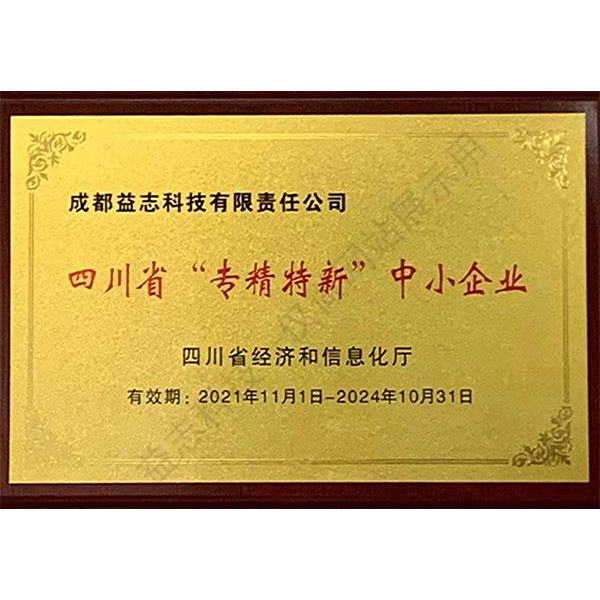
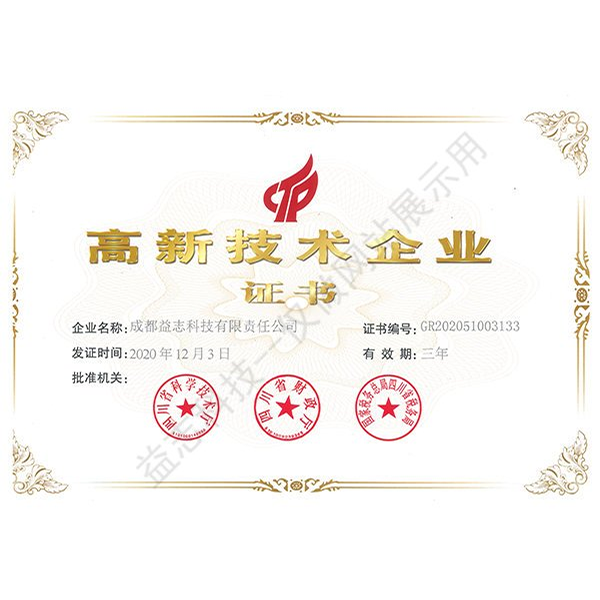
But the main advantage is an integrated approach. Take, for example,Chengdu Yizhi Technology Co.(their website isyzkjhx.ru). This is not just a resin seller. As stated in their profile, they are a design institute created by a chemical company. In practice, this means that they can send an engineer not only with samples of the material, but also with calculations on layer thickness and methods for preparing the surface for a specific substrate. It's valuable.
We tested their system for restoring worn floors in a food production facility. They sent us an airless spraying unit and a specially selected two-component polyurethane composition. The installation was, to be honest, simpler and rougher than its German counterparts, but it was reliable and repairable. And most importantly, the resin set at +10°C, which was a salvation for an unheated workshop. This is an example of that very “special” one. adaptation.
Where is innovation and where is just good engineering?
I've seen real innovation in the area of quick repairs. For example, compositions for sealing leaks under pressure or without stopping production. Chinese laboratories are actively working on thixotropic systems that do not drain from a vertical surface even in a thick layer. This is not a world novelty, but for the CIS market five years ago such materials were rare and cost crazy amounts of money. Now the Chinese offer competitively priced analogues.
Another point is the preliminary tests. Previously, samples were brought “as is”, and you yourself had to test them in your own conditions. Now, again referring to the experience of working with Yizhi Technology, they can provide test reports for resistance to specific chemicals from your technical regulations. Not always, of course, but the request is processed. This indicates a developed laboratory base.
However, you shouldn’t idealize everything. There were also failures. Somehow we ordered a “super-resistant” one. epoxy for pools with acids. In laboratory conditions everything was fine. And in a real container, where there was not only a chemical, but also variable temperatures and mechanical microloads from the structure, the coating began to develop a network of small cracks after six months. The manufacturer looked into it and eventually admitted that they had not taken into account the coefficient of thermal expansion of the base. Of course, the materials were replaced, but the repair deadlines were missed. Innovation? Rather, an expensive lesson for everyone.
Practical nuances of working with the material
Anyone who has worked on site knows that passport data and reality are two very different things. The latest generation of Chinese resins have become more predictable, but they have their own “surprises”. There is. For example, sensitivity to substrate moisture. It is stated that it can be applied at humidity levels up to 8%. In practice, if the surface is not blown with a hot air gun to 4-5%, adhesion at the interface will be weak. This is not a flaw, it's a feature you need to know.
Another point is tinting. Customers often want colored coatings for markings or aesthetics. Many formulations have problems with white pigments - they turn yellow under UV or change tone. You have to either put up with it or look for special series, which are usually more expensive. The mentioned Chengdu Yizhi Technology Co., Ltd. As a design institute with a registered capital of 120 million yuan, it usually offers several lines: standard and ?premium? with improved UV stabilizers, but this must be discussed separately and in advance.
Consumption is a separate issue. Often it turns out to be higher than stated. Not because they are deceiving, but because the porosity of concrete or the roughness of metal on an object is always greater than that of a polished laboratory sample. Good suppliers now provide not just the figure “300 g/m2”, but a table of consumption depending on the application method and type of base. It's professional.
Conclusions: is the game worth the candle?
So are these developments innovations? If by innovation we mean something revolutionary, then perhaps not. I didn’t see any breakthrough discoveries in polymer chemistry here. But if we consider the ability to quickly, flexibly and with good engineering support to adapt existing technological solutions to complex, non-budgetary tasks of the CIS market as an innovation, then yes, this is exactly it.
Risks remain. This is a language barrier in technical documentation (translations can be crooked) and dependence on logistics. But the price/quality/service ratio has improved markedly in recent years. The choice is simple: either you pay three times as much for a European brand with an impeccable reputation, or you work with a Chinese supplier, carefully checking every step, but getting savings and, importantly, personal attention to the project.
My result: ?special resin? from China today - this is most often not a magical composition, but a well-chosen, tested material plus the technology of its use. And this comprehensive, project-based approach that companies such asChengdu Yizhi Technology, - this is their main and very real innovation in our market. You can and should work with this, but with open eyes and a willingness to dialogue.