China: PSA O2 installations – market and ecology?
2026-01-31
When people talk about PSA O2 in China, many people immediately think about gigantic numbers and explosive growth. But in reality, there are a lot of nuances behind this that you won’t see in the reports. It is often overlooked that market growth alone is not an indicator of the maturity of a technology or, more importantly, its true environmental impact. There was a lot of noise around ?green? hydrogen and renewable energy sources, while oxygen PSA systems remained in the shadows, although their role in industrial decarbonization is not a minor issue.
Market: not only numbers, but the structure of demand
If you look at volumes, China is, of course, the leader in production and implementationPSA O2 installations. But the key point is who buys them and why. Previously, the main driver was metallurgy and chemistry, where oxygen was needed simply as a reagent in huge volumes. Now the picture is changing. More and more orders are coming from medium-sized enterprises, not giants, but those who are modernizing local production. For example, small workshops for glass processing or wastewater treatment. What is important for them is not so much the absolute purity of O2 (up to 99.5%) as reliability and ease of operation. And here the first pitfalls begin.
Many local manufacturers, especially in the provinces, still offer systems copied from old Soviet or early German models. Yes, they are cheaper. But their energy efficiency leaves much to be desired, and their adaptability to load fluctuations is weak. At one time, we also got burned by this, trying to install such a system at one electronics production enterprise. They promised 93% purity with stable consumption, but in practice, when pressure surges in the network, the oxygen output dropped to 88%, and the process went haywire. We had to urgently improve the control system, which meant additional costs and downtime.
The trend now is hybrid solutions. Not just pressure swing adsorption, but a combination with short-cycle heatless regeneration or even elements of membrane technologies at the pre-treatment stage. This allows you to reduce energy consumption by 15-20%, which is already a serious argument for a client who counts every kilowatt-hour. But so far only a few are implementing this. Why? More fine-tuning and understanding of technology not as a “black box”, but as a process is required. And staffing in the regions is a big problem.
Ecological effect: you need to count differently
Here is the biggest gap between declarations and practice. Often in presentations they write: “PSA O2 installation - an environmentally friendly solution?”. Formally, yes, when compared with cryogenic installations, which require enormous energy consumption. But the ecological footprint must be calculated from the extraction of raw materials to disposal. And this is still difficult in China.
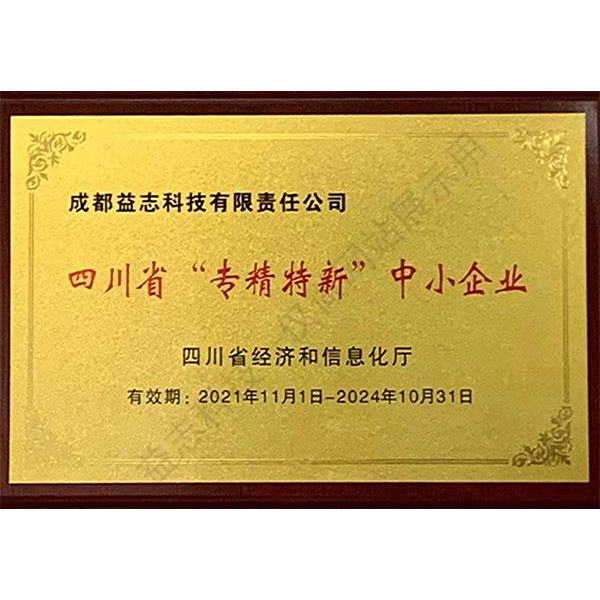
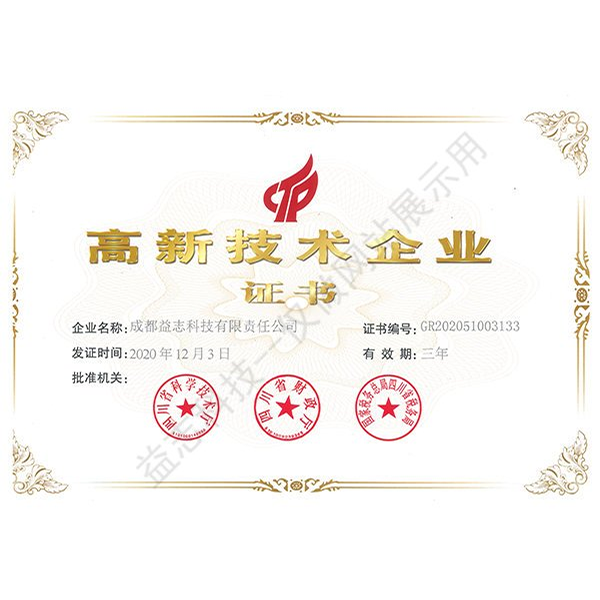
Take, for example, zeolite molecular sieves, the heart of any PSA system. Most manufacturers purchase them domestically. The quality varies, but the main thing is the resource. Cheap sieves lose their effectiveness after just 1.5-2 years of intensive work and need to be replaced. What about recycling? Most often, it simply goes to a landfill, because recycling special adsorbents is not economically profitable. It turns out that we save energy in the process, but create a problem with solid waste. On one of the projects, we tried to implement an on-site screen regeneration system, together with engineers from Chengdu Yizhi Technology Co. They have competence in the field of designing chemical technological systems. The idea was not just to change, but to restore part of the capacity. But we were faced with the fact that this requires a separate line with reagents, and this complicates operation for plant personnel. The project was frozen, although technically it was feasible.
Another aspect is indirect influence.PSA O2often used to enrich air in oxidation processes, such as wastewater treatment or waste incineration. Higher oxygen concentration increases combustion efficiency and reduces emissions of unburned hydrocarbons and dioxins. This is a real plus. But if the installation is unstable and supplies oxygen in spurts, the temperature in the furnace fluctuates and, on the contrary, more harmful by-products may form. I saw such a situation at a waste incineration plant in Sichuan province. We had to completely reconfigure the O2 supply control algorithm to synchronize it with waste loading.
Technological subtleties: where the real problems lie
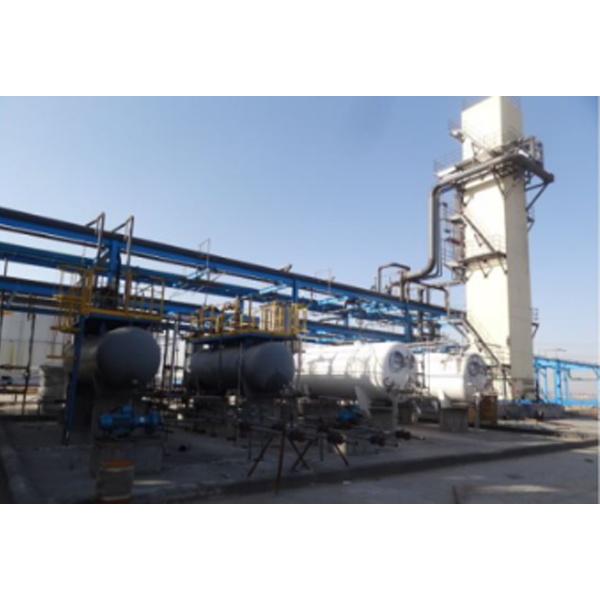
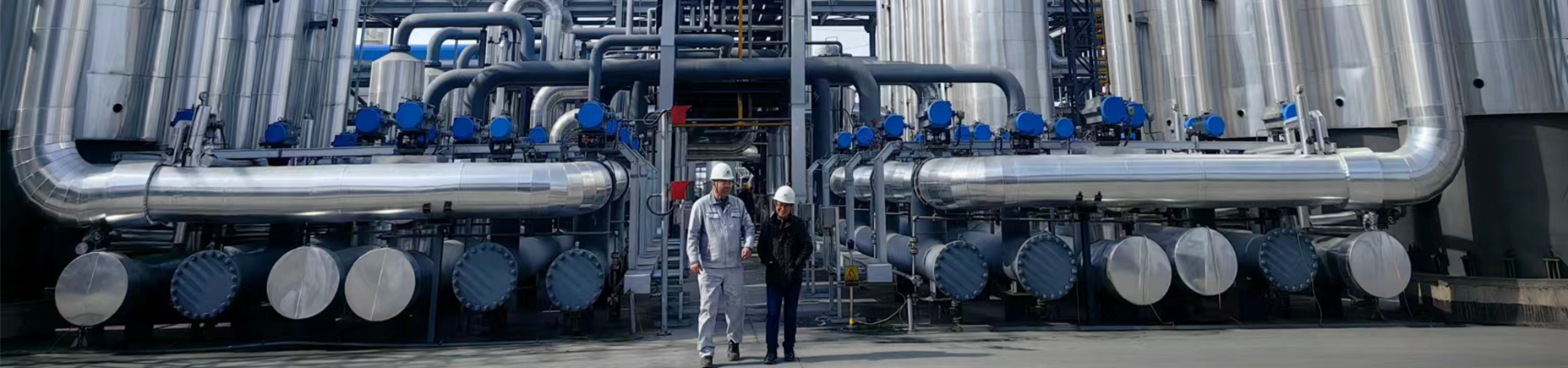
In theory, everything is smooth: air -> compressor -> dryer -> adsorbers -> production oxygen. In practice, every arrow is a potential headache. Compressors, for example. Chinese manufacturers often save on them by installing units with low maintainability. Vibration, overheating - and now dust and oil enter the adsorbers, killing the sieves. We now always recommend that customers install an additional filtration system, even if it is not included in the basic configuration. More expensive at the start, but significantly increases service life.
The adsorbers themselves. The design seems simple: a cylinder filled with a sieve. But a lot depends on the quality of welds and internal distributors. There have been cases when, due to microcracks in welding, a “short circuit” occurred. flows, and oxygen purity did not rise above 90%. Looking for such a malfunction is hellish work. We have to turn off the columns one by one and carry out pressure tests.
Control system. Progress is noticeable here. Previously, there were simple PLCs with basic logic. Nowadays, systems are increasingly installed that can adapt to changes in humidity and temperature of incoming air and predict the load. But again, this is in the installations of the upper price segment. For the mass market, management often remains the weak link. The staff is not trained, the interface is incomprehensible, and as a result, the system does not operate in the optimal mode, but in the one that was “somehow configured and not touched?”.
The role of design institutes and integrators
The situation here is interesting. The market is divided into those who sell ?iron? (ready-made installations), and those who sell turnkey solutions. The latter, as a rule, win in the long term because they can optimize the system for a specific customer process. Such companies include, for example,Chengdu Yizhi Technology Co.(website:https://www.yzkjhx.ru). This is not just an equipment seller, but a design institute created on the basis of a chemical technology company. Their approach is often different: they first deeply analyze the customer's process cycle and then propose a PSA configuration. Sometimes they even discourage excess power or, conversely, recommend redundancy.
Their experience, like ours, shows that the success of a project depends 40% on a competent pre-project survey. One of their cases is integrationPSA O2 installationat an ethylene oxide production plant. Not only cleanliness was critical there, but also the stability of the supply pressure with an accuracy of 0.1 bar. The standard installation did not provide this. Together we had to develop a custom system of buffer tanks and precise regulation, practically “sewing up” it. it to the existing reactor. We worked for several months, but the result was worth it - the product yield increased and the amount of waste decreased.
Companies like Yizhi often act as a bridge between academic developments (such as new zeolite formulations from universities) and industry. They have a resource for testing new solutions in pilot projects. But they also face conservatism from customers. Many business managers prefer a solution that has been proven for decades, albeit less effective, than to take risks with an innovation, even if it promises savings.
A look into the future: what will move the market next?
I think that the next five years will be determined by two factors. The first is the tightening of environmental standards, not at the level of emissions, but at the level of resource consumption (energy, water, raw materials). This will force us to reconsider the life cycle of installations. The second is digitalization. Not just for show, but real online monitoring with predictive analytics. Imagine that the system itself warns that after 200 hours of operation the adsorption efficiency in column A will drop by 5%, and suggests a maintenance plan.
Solutions are already emerging where data from installation sensors is collected in the cloud and analyzed using machine learning algorithms. This allows you to detect anomalies that a human operator simply would not notice. But this is being implemented slowly, again due to cost and mistrust in such technologies.
And one last thing. Don't forget about alternatives.PSA technology- not a panacea. For very large volumes and high purities, cryogenic distillation is still beneficial. For small volumes and medium purities, membrane systems are beginning to be used. The future most likely lies in hybrids, where PSA will be one of the steps, and not the only process. The task of engineers and integrator companies is not just to sell installations, but to select the optimal technological route for each specific task. And here, experience such as that accumulated at Chengdu Yizhi Technology Co., where the registered capital of 120 million yuan allows it to take on complex complex projects, will be increasingly valued. After all, in the end, we are not talking about the equipment market, but about the market for efficient and environmentally friendly industrial solutions.