China: biogas - the future of methane technology?
2026-02-05
- From raw gas to commercial methane: where teeth break
- Raw materials: not only manure, and far from simple
- Technological nuances: what they don’t write about in brochures
- The role of specialized engineering companies
- Economics and politics: what drives the market
- Looking forward: the future lies in integration and smart systems
When people talk about biogas in China, they often immediately think of giant gas treatment plants or rural artisanal pits. But the real picture, especially in terms of technologies for obtaining preciselymethane, much more complex and interesting. Many colleagues mistakenly reduce everything to “production of gas from manure?”, missing the key technological transition - from just gas to high-calorie, stable methane, suitable for injection into networks or use as a motor fuel. This is where the real challenges and opportunities begin.
From raw gas to commercial methane: where teeth break
I'll start with the main pain. Getting gas from organics is half the battle, and often less. Typical biogas from plants is 50-65% methane, the rest CO2, hydrogen sulfide, water vapor. For combustion in a boiler on site, it’s all right, but for commerce, no. To getbiomethane, needs serious cleaning and upgrading. And this is where many projects, especially five to seven years ago, stumbled. They set, for example, PSA (pressure swing adsorption) or membrane separation, but did not take into account fluctuations in the composition of raw gas or the content of siloxanes from some food waste. The membranes quickly failed, and the automation couldn’t cope. I've seen several of these "preserved" ones. facilities in Sichuan province - expensive equipment is rusting.
Now the approach has become smarter. They don’t try to do everything perfectly and at full capacity right away. First, they launch a cogeneration electricity production line to get a stable cash flow and understand the real behavior of raw materials. At the same time, the pre-treatment system is being worked out—H2S removal and drying. And only then, at the second stage, a fine purification unit for methane is added. It is more time-consuming, but more reliable. The key point is the integration of all stages into a single technological chain, and not just buying a “boxed” one. solutions.
Here, by the way, the role of design institutes that have experience specifically in chemical technology, and not just in construction, is clearly visible. It is necessary to understand the processes of absorption, adsorption, and catalytic reactions. For example, for deep purification from CO2, methods are now often combined - membranes provide a rough cut-off, and then the gas is treated with amine washing. But this requires precise calculations and selection of materials. Without experience in chemical engineering, it is easy to fail.
Raw materials: not only manure, and far from simple
Agricultural waste is a classic, but it has its own problems. Seasonality, dispersion, logistics. But, in my opinion, raw materials from the food industry and organic fraction of MSW are becoming more promising. The concentration is higher, the volumes are more predictable. We worked on a project for a starch processing plant - there is waste from the process, stillage, essentially a ready-made substrate liquid with a high BOD. It would seem ideal for anaerobic digestion.
But the problem turned out to be inhibitors. In the same stillage, after certain stages of raw material processing, traces of antibiotics or other biocides could remain, which suppressed the methanogenic consortium. It was necessary to introduce a system for preliminary monitoring of raw materials and an adaptive dosing system into the reactor. This was not specified in the original technical specifications; we had to improvise on the spot. Experience has shown that laboratory tests for biodegradation are a mandatory step before design, no matter what the “standard” one. the type of raw material seemed.
Another point is cogeneration with other processes. For example, at a pig-breeding complex, a biogas plant solves the odor problem and provides energy. But if there are greenhouses nearby, then recycling heat from a cogeneration unit and even CO2 (after purification) for feeding plants is a completely different economics of the project. It becomes virtually waste-free. Such integrated solutions are the future, but they require complex cross-industry planning.
Technological nuances: what they don’t write about in brochures
In advertising catalogs, everything looks smooth: raw materials → fermenter → gas → purification → methane. In reality, there are dozens of pitfalls. Let's take, for example, the reactor itself. For highly concentrated effluents, fully stirred reactors (CSTRs) are often used. But if there are a lot of suspended solids in the raw material, they settle, form “dead zones,” and reduce efficiency. You have to either re-grind the raw materials, which is expensive, or switch to a two-stage scheme with a hydrolysis reactor in front.
Or process control. Online monitoring of methane content, volatile fatty acids, and pH is no longer a luxury, but a necessity for stable operation. But sensors, especially for the aggressive environment inside the fermenter, are capricious things. Often rely on indirect indicators and operator experience. I saw how at one installation an old master could determine the beginning of acidification of the reactor better than a freshly installed chromatograph by the sound of a running pump and the smell of gas. The technology must be adapted to local operating conditions and not simply copied.
The hydrogen sulfide removal stage is especially critical. If it is not enough, a primitive scrubber with iron filings is enough. But at high concentrations, serious chemical or biological treatment is required. Biological desulfurization (such as Thiopaq) is effective, but requires maintaining strict conditions for bacteria. In winter, with unstable heat at one of the installations in Heilongjiang, the bacteria simply “fell asleep”, and H2S broke through further, poisoning the catalyst at the next stage. We had to urgently install a backup chemisorption scrubber.
The role of specialized engineering companies
It is precisely because of such complexities that the importance of companies that deal not just with selling equipment, but with the full cycle is growing: from analysis of raw materials and feasibility study to design, commissioning and personnel training. These are not construction contractors, but technology partners. Their value lies in the accumulated patterns of solving non-standard problems.
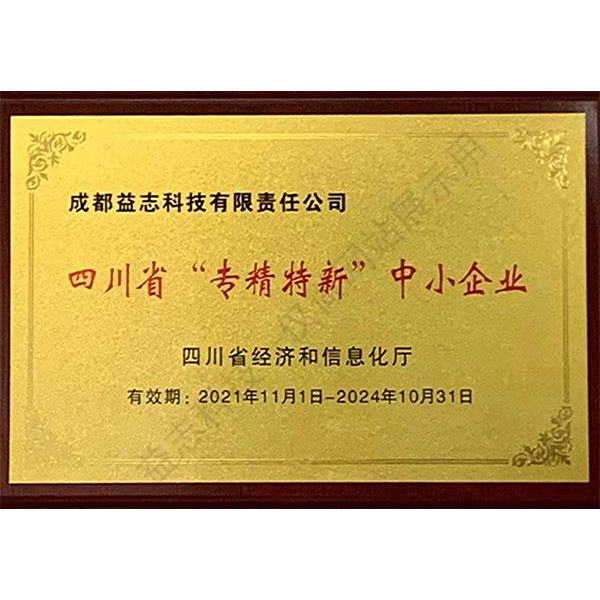
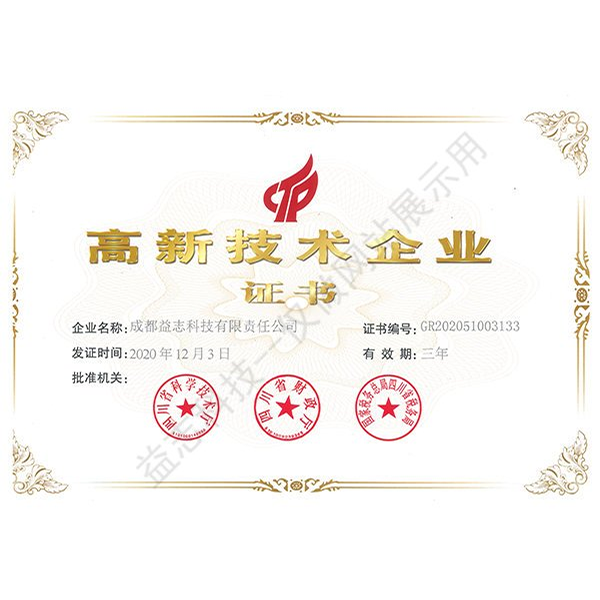
Here, for example,Chengdu Yizhi Technology Co.(their website ishttps://www.yzkjhx.ru). This is a design institute created on the basis of a company with a chemical-technological background. In their case, it is Chengdu Huaxi Chemical Technology Co., Ltd. The registered capital of 120 million yuan indicates serious intentions. For me, this is an important signal: when the project is not just an installation company, but an institute with an understanding of the underlying processes, there are greater chances of success. They, as I understand it, often work with complex, heterogeneous flows of raw materials, where individual technological regulations are needed, and not a standard project.
Such organizations usually have their own laboratories for testing raw materials and pilot plants. This reduces risks for the customer. It is much cheaper to simulate a problem on a pilot line than to find it on a million-dollar facility that has already been built. Their approach is often systemic: they look at the entire life cycle of the project, including digestate (waste sludge) disposal. Selling or giving it away as fertilizer is also a whole story that requires approvals and sometimes additional processing.
Economics and politics: what drives the market
Without understanding this aspect, the picture will be incomplete. Technologiesbiomethanein China they are developing not only thanks to the enthusiasm of engineers. There are strict environmental regulations, especially in densely populated and developed regions. The discharge of highly concentrated organic waste into water bodies or fields is now practically prohibited. Enterprises are forced to look for solutions, and a biogas plant followed by wastewater treatment is often the optimal solution.
On the other hand, there is government support. Tariffs for "green" electricity from biogas, subsidies for connection to the gas network. But here, too, not everything is simple. To receive a subsidy, you need to fulfill a bunch of conditions regarding gas quality and have certified cleaning equipment. Bureaucracy can delay the process for years. I know cases where the installation was already working, but documents for connection and subsidies were still being agreed upon.
The most interesting thing begins when they want to pump purified biomethane into the city gas network. The quality requirements here are prohibitively high: dew point, precise methane content, absence of even traces of oxygen. This is the level of technology of gas processing plants. Not every project can afford this. More often, it is used in the form of compressed (CNG) or liquefied (LNG) gas for transport. Refueling for garbage trucks or buses using biomethane is already a reality in several large cities. This is logical and symbolic: waste feeds the transport that takes it out.
Looking forward: the future lies in integration and smart systems
So, the future of methane technologies in China is seen not in the mass replication of simple installations, but in the development of complex, integrated and “smart” ones. systems We are talking about projects where a biogas plant is only one node in a complex of processing organic waste, producing energy, heat and fertilizers.
Key trends that I am already observing: digitalization. Implementation of IoT systems to monitor thousands of parameters in real time and adaptively control the process using algorithms. This will allow you to flexibly respond to changes in the composition of raw materials and maximize methane output. The second is combination with other renewable energy sources. For example, using excess electricity from solar panels to run compressors or cooling systems in the gas purification process.
And most importantly, a shift in focus from “gas production?” for the “production of high-quality, standardized methane as a commodity?”. This requires collaboration between technologists, chemists, ecologists and economists. Projects will become larger and more complex, and the role of deep technology engineering, such as that offered inChengdu Yizhi Technology Co., will only increase. Because it is possible to copy a reactor drawing, but the ability to foresee a problem with siloxanes in a specific raw material and implement a solution at the design stage is already a real examination, which determines whether the installation will simply exist or operate effectively for decades.