China: How does pressure swing adsorption removal work?
2026-02-05
If we talk about PSA (pressure swing adsorption) in China, many people immediately imagine huge air separation plants. But in reality, there are a lot of subtleties in this process, and not all of them are obvious even to experienced engineers. It is often overlooked that the efficiency of removing impurities depends not so much on the pressure as such, but on its dynamics - on exactly how the cycle proceeds. This is what I would like to talk about, based on practice.
The essence of the process: not pressure, but its change
The name itself -pressure swing adsorption– is already key. We are not talking about constant high pressure, but about swinging. The feed gas passes under pressure through a layer of adsorbent, for example, zeolite or activated carbon. The required component is, say, CO? or moisture is retained. And then - pressure release. This is where many people make the mistake of thinking that the main thing is to lose more weight. In fact, speed and gradation are important. A sharp discharge leads to dusting of the adsorbent and destruction of the granules. I have seen such cases at hydrogen purification plants - then it takes months to clean the apparatus.
Chinese manufacturers have made great progress in automating these cycles in recent years. But the problem is often different - the desire to save on piping. There are not enough valves, or they are of poor quality, and the cycle does not proceed as designed. The adsorbent does not work at full capacity; impurity breakthrough occurs earlier. We have to shorten the cycle, and productivity drops.
And one more thing - they often forget about the stage of equalizing pressure between columns. It would seem like a small thing, but it provides significant energy savings for re-injection. In our projects we always include at least two levels of leveling. Without this, the efficiency of the installation drops by 15-20%, which is huge numbers for large-scale production.
Adsorbents: selection and degradation
The heart of the system is the adsorbent. China widely uses its own zeolites, and their quality is now quite high. But there is a nuance: different gas mixtures require their own modification. For example, for drying natural gas with high sulfur content, standard 13X zeolite quickly loses capacity. This requires a special impregnation or a combination of layers - first coal, then zeolite.
In practice, I saw how at one of the methanol production plants they could not understand for a long time the reason for the increase in the dew point of purified synthesis gas. We changed modes and checked the automation. It turned out that the supplier, saving money, loaded the adsorbent with a lower binder content. It began to break down in the pressure drop cycle, producing tiny dust that clogged the distribution grids. We had to completely stop and restart the columns. The losses are colossal.
Therefore, now when designing, we always include a margin for cycle time and insist on trial loading of the adsorbent with test cycles on the stand. How does it do, for example,Chengdu Yizhi Technology Co.– their engineers always provide detailed breakdown curves for the customer’s specific mixture before bulk shipment. This protects against many problems at the start.
Automation and cycle control: where the mistakes lie
Modern PSA is a story about valves and a programmable controller. It seems that you set the program and it works. But the reality is more complicated. Systems are especially sensitive to valve timing. A delay of a fraction of a second leads to a pressure surge, a water hammer on the layer. In one of the CO capture projects? from flue gases, this is what caused constant breakdowns of the pneumatic valve actuators.
Chinese controller manufacturers, such as some solutions from Siemens or local brands like Supcon, do a good job. But the software, the cycle control algorithm, is often the know-how of an engineering company. All pauses, dialing and reset speeds are written there. A bad algorithm will "eat" full potential of a good adsorbent. Sometimes it is useful to manually, in the old fashioned way, look at the pressure oscillograms in each column to find the “weak link”. in PLC logic.
Another common mistake is insufficient monitoring. Pressure sensors are located only at the inlet and outlet, but not inside the columns. But it is the pressure profile along the height of the layer that shows how the adsorption front is progressing and whether channels have formed. Now in advanced projects, like those that he publishes on his resourceyzkjhx.ru, set several sampling points in height for periodic monitoring. This is more expensive, but at the stage of commissioning or diagnosing problems it is priceless.
Energy balance: something that is often forgotten
Speaking of efficiencyremoval with adsorption, everyone looks at the degree of purification. But the second key parameter is energy consumption. The main consumer is the compressor, which creates the same pressure. And here a huge reserve lies in energy recovery when pressure is released. Don’t just vent the gas into the atmosphere or into a flare, but pass it through a turboexpander or at least use it to align it with another column.
The implementation of such solutions is limited by the cost of equipment and the complexity of management. For small installations this may not be cost effective. But for large ones, for example, at petrochemical complexes in Jiangsu or Shandong provinces, this gives a payback in 2-3 years. I saw how, after modernization with the installation of a recovery system, specific energy consumption per ton of product fell by almost a third.
An important point is the purity of the purge gas. If part of the purified product is used to regenerate the adsorbent, this is a direct loss. Sometimes it is more effective to use external purge gas, even if it needs to be warmed up a little. The calculation here is always individual and cannot be done according to a template.
Cases and lessons from practice
I would like to give an example of a not very successful, but instructive project. The customer wanted to purify landfill biogas (mainly CH? and CO?) to natural gas quality. We used a standard two-column PSA on zeolites. But they did not take into account the presence of trace siloxanes and hydrogen sulfide. The zeolite quickly became poisonous and the container fell. I had to add a preliminary cleaning stage with activated carbon on the fly. Conclusion: forpressure swing adsorptionA complete analysis of raw materials, including minor impurities, is critical. You cannot take a standard project without adaptation.
But a positive example is the modernization of a hydrogen production unit at a refinery. There was an old PSA there with cycle times calculated empirically. We made a digital simulation of the process, selected a new adsorbent with a steeper isotherm, and optimized the sequence and duration of the stages. As a result, hydrogen productivity increased by 12% with the same raw material consumption. This is to the question that potential often lies in the logic of the work itself, and not in the hardware.
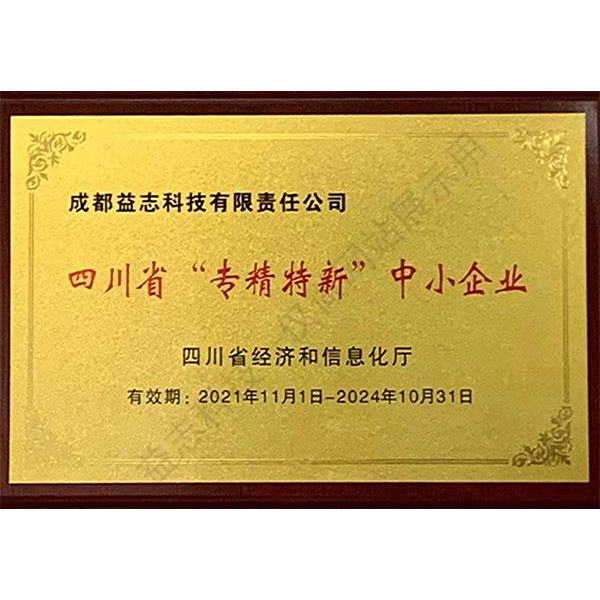
Overall, looking at the market, the Chinese approach to PSA has become very pragmatic. Moved away from simple copying. Companies likeChengdu Yizhi Technology Co., Ltd., which is a design institute established by Huaxi Technology, with a registered capital of 120 million yuan, operates precisely as engineering integrators. They don’t just sell the installation, but model the process for a specific task, taking into account all the pitfalls. raw materials and the required product. This is the main progress – the transition from selling equipment to selling technological results.
So, to summarize, PSA’s work in China is far from just “pressing a button”. This is a complex story where success is determined by the details: the correct selection and testing of the adsorbent, smart cycle automation, energy considerations and, most importantly, a deep understanding of the technology by those who implement it. Mistakes are expensive, but they teach you not to repeat template decisions.