China: leader in VOC tail gas recovery?
2026-02-04
When they talk about China andVOC disposal, the image of giant factories and total control often comes to mind. But reality, as usual, is more complex and interesting. Many, especially on international platforms, still believe that the Chinese approach is simply strict compliance with regulations at any cost. However, over the past ten years, the focus has shifted from the banal “catch and burn?” to realextraction and recoveryvaluable components. And here the real engineering work begins, full of trials, errors and non-obvious solutions.
From standards to process economics
I remember how seven or eight years ago the main driver was the environmental inspection. Plants were installing RTOs (regenerative thermal oxidizers) almost in droves just to meet emissions requirements. The destruction efficiency is 99%, and that’s fine. But then the realization came that burning, for example, toluene or acetone, which can be returned to the cycle, is simply throwing money down the drain. Especially against the backdrop of rising prices for raw materials. That's when the real boom in adsorption, condensation and membrane separation technologies began.
Now the key question in negotiations with a client is not “how can we meet the norm?”, but “what concentration and what composition does yourtail gas, and what can be taken away from this economically? This is a completely different level of conversation. It is often necessary to explain that a deep-cooling condensation installation will pay for itself not in five years, but in two or three, if the flow is stable and the concentration is high. But if the flow is variable, and the composition is “vinaigrette?” - then yes, it’s better to burn it, otherwise recovery will eat up all the profit from operation.
A striking example is paint and varnish production. Previously, coal adsorbers with steam desorption were often installed there, resulting in a condensate mixture that was difficult to use. Nowadays they are increasingly combining: first condensation to select the bulk of solvents, then adsorption at the finish. The economy immediately becomes more attractive.
Equipment and pitfalls
If we talk about specific equipment, the Chinese market is now incredibly diverse. You can also find cheap "block" ones. RTO, and very complex hybrid installations. But here lies the main trap for an inexperienced customer. A cheap solution often turns out to be expensive to operate due to gas consumption to maintain combustion or frequent replacement of the adsorbent.
One of our projects at a chemical plant in Sichuan illustrates this well. The customer initially wanted the most cost-effective option for recycling a low-concentration stream. We proposed a system with pre-concentration on zeolite rotors before RTO. The client doubted whether to overpay for this “set-top box”. As a result, after six months of calculations and pilot tests, I agreed. The result is that fuel consumption for RTO has decreased by 60%, and the payback period for the entire system has been reduced by a year. But unfortunately, such clients who are ready to delve into details are not the majority.
Another sore subject is gas analysis. Without accurate chromatographic composition analysis and monitoring of concentration fluctuations, any system, even the most advanced, will not perform optimally. How many times have I seen situations where an installation was designed for one composition, but in reality something else ended up there, which “poisoned” it? adsorbent or corroded heat exchanger. That's why we now always insist on a long period of measurement before design.
The role of engineering companies
In this chaos of technologies and proposals, the role of competent engineering comes to the fore. This is not just about selling a box with equipment, but about a comprehensive solution: audit, design, technology selection, installation and, critically, commissioning and service. This is where the difference between a sales company and a real designer comes into play.
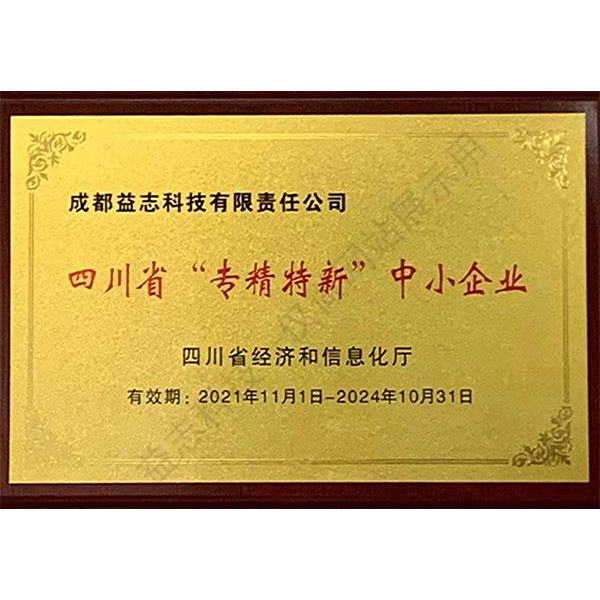
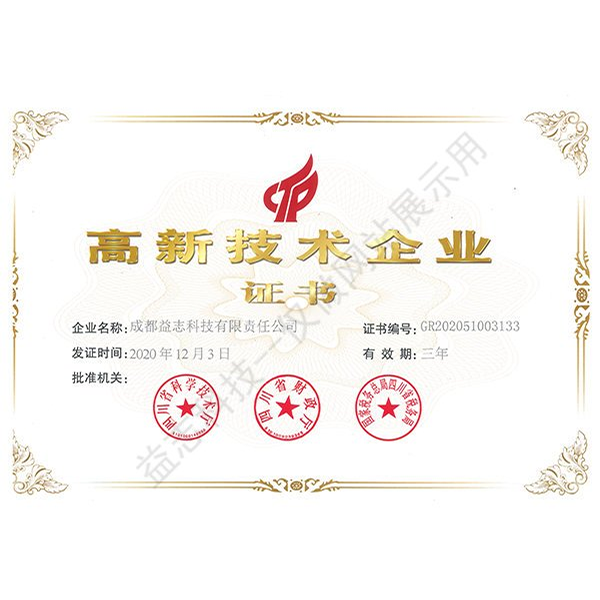
Let's take for exampleChengdu Yizhi Technology Co.(their website isyzkjhx.ru). This is not just a manufacturer, it is a design institute created by Huaxi Technology. With a registered capital of 120 million yuan, they can afford not to trade in ?hardware? from the shelf, but to dive deeply into the customer’s process. Their strength is precisely working with complex, complex flows where methods need to be combined. They are the type who will study your technical process for a month before suggesting anything.
Their portfolio contains interesting recycling casestail gasesin pharmaceutical production, where the requirements for the purity of the returned solvent are prohibitive. A cascade of condensation, membrane separation and fine adsorption is used there. The important thing is that they did not just assemble the installation from purchased components, but developed their own control system that adapts to load fluctuations. This is a level above the market average.
But such companies also have failures. I heard a story about their gas recovery project at a polymer plant. They calculated everything perfectly on paper, but did not take into account the effect of periodic emissions when purging the reactors - peak concentrations and temperatures “killed” them. first stage of adsorption. We had to redo it on the fly, adding a buffer tank and a cooling system. It's an expensive lesson, but an honest one. In our field, there is no growth without such lessons.
International context and future
Comparing with the European or American experience, I see that China is now in a unique position. We have a huge and diverse domestic market, which allows us to test and refine technologies in real conditions faster. European solutions are often excessively expensive and “sharp” under their stable processes. Our engineers have learned to make more flexible and, importantly, more economical systems.
Prospects? I definitely see a trend toward hybridization and intellectualization. Simple ?burners? will go into the niche of the poorest and most complex flows. The main direction is combined systems “recovery + post-treatment”. There is increasing interest in technologies that allow working with low concentrations (less than 1 g/m3) - this is where new adsorbent or membrane materials can take off.
Another point is the integration of VOC recycling systems into the overall “green” concept. plant It is no longer uncommon for heat from RTO or condensed solvents to be returned to the main process, reducing the carbon footprint. This is no longer just about the environment, but a matter of economic efficiency and company image. And in this sense, China, with its scale and speed of implementation, can truly lay claim to the role of one of the leaders in practical, and not just normative,VOC disposal.
Instead of a conclusion: thinking out loud
So is China a leader? If we take the pure volumes of installed installations, perhaps yes. If we look at innovations in the field of basic technologies - not yet, we often use Western developments. But if we evaluate the ability to create inexpensive, effective and, most importantly, solutions that work in the harsh conditions of real production, then we have something to be proud of.
Success is always concrete. It is not in loud headlines, but in a correctly selected adsorbent for a specific mixture, in a well-designed heat exchanger that will not freeze in winter, and in a control system that does not require the constant presence of a technologist. It is this “down-to-earth” one. engineering honed on thousands of sites shapes today's Chinese expertise in VOC disposal. An experience that is already interesting outside the country.
The main thing is not to stop and think that everything has already been decided. Every new project, every non-standard gas flow is a new puzzle. And this is perhaps the most interesting part of the work.