China: innovations in butterfly valves, prices?
2026-02-04
- From copies to own developments: evolution, not revolution
- Price: what does the number in the catalog actually consist of?
- Practical cases: where innovation turned out to be critical
- The role of design institutes and integration with automation
- Looking to the Future: What Will Impact Price and Design Tomorrow?
When people talk about Chinese butterfly valves, two things immediately pop up: copies and low price. But over the past five to seven years the picture has changed a lot. Many, especially in the post-Soviet space, still have not grasped this, continuing to think in stereotypes from ten years ago. I’ll try to break down what’s actually happening with innovation and value creation, based on my own experience of deliveries and working with factories.
From copies to own developments: evolution, not revolution
Yes, the starting point was often the repetition of proven Western or Japanese models. But to call it simply copying is to oversimplify. Local engineers quickly realized where they could simplify without losing functionality for certain environments (say, water, mildly aggressive environments), and where, on the contrary, they needed to be strengthened. For example, a common problem is seat deformation during frequent opening-closing cycles in large diameters. At one of the projects in 2018, we just encountered this, using standard Chinese-made valves for heating networks.
The manufacturer's reaction was revealing. They did not deny the problem, but sent an engineer who collected data for six months, and then suggested a modification to the seat mounting assembly and a different seal material. This was not their ready-made model, but a modification for our case. Now this modification is their standard for diameters from DN400 and above. This is the very soil for innovation: mass production provides a huge base for collecting data on breakdowns, and flexibility allows you to quickly implement changes in the design.
By the way, about materials. This is where the progress is most noticeable. If previously everything depended on cheap stainless steel and cast iron, now they work normally with nickel-based alloys, duplex steel, and various polymers for seats. The goal is not to create a super shutter, but an optimal one for specific conditions and budget. Innovation is often about this balance.
Price: what does the number in the catalog actually consist of?
The main misconception here is that low price equals low quality. Sometimes this is true, but often the reason is different. Firstly, the enormous optimization of supply chain logistics. Casting plant, machining shop, painting, assembly - everything can be within a 50 km radius. This reduces costs radically. Secondly, scale. The foundry of one partner plant can cast cases for a dozen assembly brands, including those that position themselves as premium.
But there is also a downside. The lowest onepriceThe catalog often does not include key options: a specific type of seal (say, EPDM instead of NBR), a specific actuator, a special coating. This is a trap for beginners. The actual price is formed after technical clarification. I remember how in 2020 we received a commercial offer with a very attractive figure, and in the end, after clarification on the environment (there was a weak acid solution), the cost increased by 40% due to the need to supply a lined valve. This is normal practice, you just need to be aware of it.
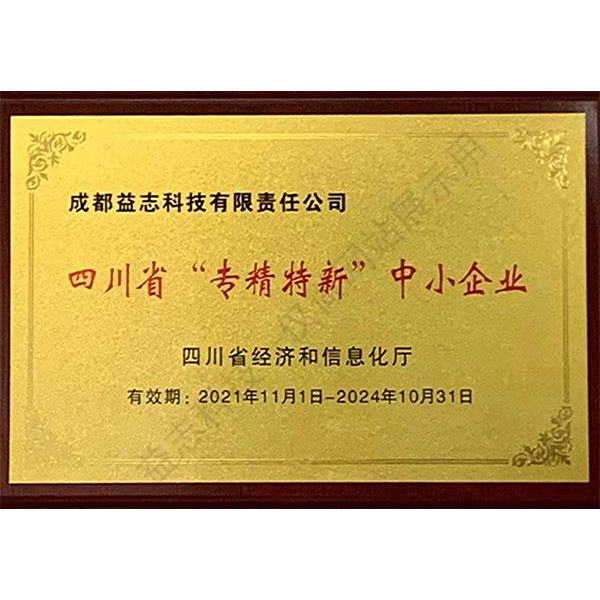
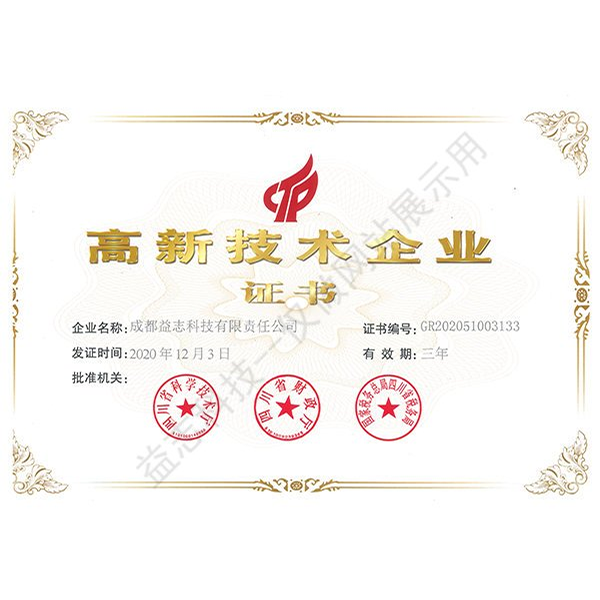
Another point is control. Cheap lines often skimp on 100% output control. You take a sample – it’s perfect. When you take a batch, mistakes are possible. Therefore, working with proven suppliers who have their own design institutes and a full cycle is critically important. Like for exampleChengdu Yizhi Technology Co.(website:https://www.yzkjhx.ru). This is not just a trading company, but a design institute with a registered capital of 120 million yuan, created by a chemical holding company. For me, this is always a signal: the company invests in R&D and is responsible for calculations and selection, and does not just resell hardware.
Practical cases: where innovation turned out to be critical
I'll tell you about two cases. The first is a thermal power plant in Kazakhstan. We needed valves for circulating water containing impurities. Standard solutions failed. The Chinese manufacturer we were working with at the time proposed a non-standard disk design with beveled edges and a forced cavity flushing system. Essentially, a hybrid of a shutter and a mud filter. It worked. But! The innovation was not in the valve itself, but in the engineers' willingness to sit down and model the hydraulic flows in this particular system.
The second case is unsuccessful. Chemical production, we needed seals for alcohol vapors. We chose a model with a Teflon-coated disc and seat from a seemingly advanced factory. In theory, everything was perfect. In practice, after six months of work, the coating began to peel off in areas of friction. It turned out that the application technology for such media required more expensive and time-consuming surface preparation, which was not specified initially. I had to change to more expensive solid ones. Conclusion: innovative coating is not a magic pill, but a complex technology, and its application limits must be known thoroughly.
It is after such incidents that you begin to look at catalogs differently. Now, when choosing, I always ask not just for certificates, but for reports on specific tests in environments similar to ours. And it often turns out that large Chinese players have such a base; they simply do not flaunt it without asking.
The role of design institutes and integration with automation
This is perhaps the most interesting trend. Previously, the plant produced the shutter, and the drive was installed from a third party, often European. Nowadays, a complex is increasingly being offered: a shutter + its own electric drive or pneumatic drive. And this is where both opportunities and pitfalls lie.Innovationare shifting towards integration and communication (communication protocols, diagnostic capabilities).
Companies like the mentioned Chengdu Yizhi Technology Co., Ltd. as a design institute have an advantage here. They can initially calculate and propose a system rather than individual components. For the end customer, this can mean fewer compatibility headaches. In practice, however, there is often a lack of trust in native drives. And sometimes it is justified - the resource and positioning accuracy may be inferior to specialized brands. But for 80% of standard tasks (opened and closed), their solutions are more than enough, and the price of the package is very competitive.
We tested such kits at small energy facilities. The main complaint was not about the mechanics, but about the ease of connection and setup. The instructions sometimes suffered from Chinese translation accuracy. But what’s important is that the feedback worked: the comments sent were reflected in the new version of the manual six months later. This is a dynamic that can also be considered part of the innovation process - the speed of response to feedback from the market.
Looking to the Future: What Will Impact Price and Design Tomorrow?
I think the main pressure will be less on price and more on total cost of ownership. The demand for longer maintenance intervals will stimulate the development of materials science. I’m already seeing requests for valves where the sealing unit can be replaced without dismantling it from the pipeline - this is a clear trend.
On the other hand, digitalization. Built-in wear, temperature, position sensors. This still seems like overkill for many industries, but for critical areas of petrochemicals or pharmaceuticals it becomes relevant. Chinese manufacturers are actively monitoring this trend. The question is whether they can make such a solution not just smart, but also reliable in an industrial environment, and at an adequate price. So far, their strong point is optimizing the known, and not creating something fundamentally new.
And one last thing. Geopolitics and logistics. The cost of sea transportation, customs procedures - all this is now a significant part of the finalprices. Manufacturers who can localize inventory or assembly in sales regions (for example, Russia or Kazakhstan) will gain a serious advantage. This is no longer an innovation in the product, but in the business model, but for us as consumers it will be as important as the design of the drive itself.
In conclusion, to answer the question from the title: innovation in China is in full swing, but it is applied and pragmatic. And the price is a complex puzzle of the cost of metal, the complexity of the design, logistics and, increasingly, the intellectual component in the form of calculations and integration. Simply taking the cheapest thing in the catalog is a road to nowhere. But a competent dialogue with the manufacturer’s technical specialists can open solutions that are very balanced in price and quality.