Where to find exporters of Chinese block desalting equipment?
2026-02-04
If you are looking for where to find exporters of Chinese block desalting equipment, and the first thing you do is go to general catalogs or Alibaba, you are most likely already stepping on the same rake as many before you. The problem is not to find any supplier, but to find one who really understands how toblock desalting equipmentwill behave at your specific site, and not just sell you a beautiful picture from the factory.
Why standard search often fails
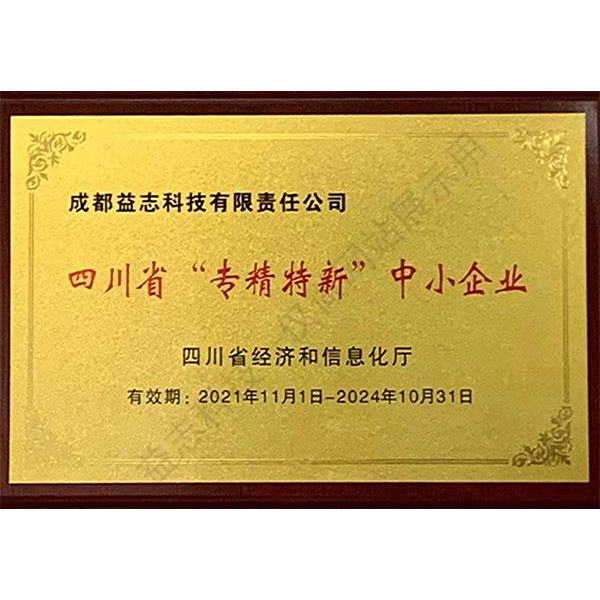
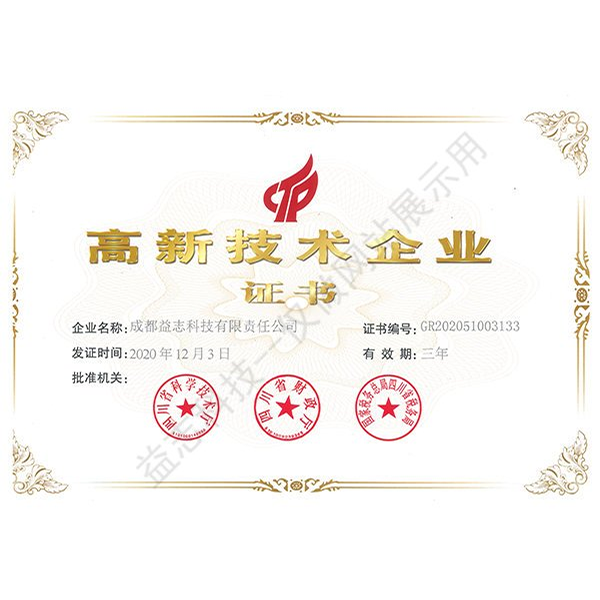
Most business card websites of Chinese manufacturers look like twins: beautiful renderings of installations, a list of standard characteristics and a contact form. When you start asking specific questions about the layout, the material of membrane elements for a certain salinity, or the logistics of oversized blocks, there is often silence or stereotyped answers. This is the first filter. Real exporters who work with engineering, and not just selling hardware, usually have a design institute or a strong engineering division behind them. Here, for example,Chengdu Yizhi Technology Co.is not just a trade name. It is a design institute established by Huaxi Technology. When you see that the authorized capital is 120 million yuan, and not 50 thousand, this already hints at serious project capacity, and not at a “garage” capacity. assembly.
Their websiteyzkjhx.ru– this is already a specialized resource in Russian, which in itself is a signal. They don't expect you to communicate through a WeChat translator. This indicates a focus on the CIS market and an understanding of its specifics - from the regulatory framework to preferences in documentation. But even with such companies you cannot work only on the site. The key point is to request not just a catalog, but an example of a technical and commercial proposal (TCP) for an abstract, but close to your request. You can see a lot by how quickly and how they put it together: will they take into account the need for a winter container for sea transportation, will they offer options for the unit (for example, in a casing for northern regions), or will they simply send a standard PDF with prices.
One of our early mistakes was precisely this: we found a supplier, discussed everything, received the equipment, and then it turned out that their “standard” equipment was in their “standard” range. The package does not include some shut-off valves and sensors, which according to our standards are considered mandatory. I had to buy more locally and redo the harness. From now on, we always ask you to attach a complete piping and instrumentation diagram (P&ID) to the TCP, at least in conceptual form. If the company is ready to provide it at the stage of initial communication, this is a good sign.
Where to Dig Deeper: Industry Paths, Not Broad Roads
In addition to directly searching for companies, there are less obvious but more effective entry points. The first is specialized exhibitions in China, for example, Aquatech China in Shanghai or CIEPEC in Beijing. But now it’s not always possible to go. Then look at the lists of participants in such exhibitions over the past 2-3 years. Often they feature not only giants, but also those same mid-sized technology companies that are the optimal partners in terms of “flexibility/price/quality” ratio. The second is industry reports and patents. If a company, like Chengdu Yizhi Technology, declares itself to be a design and technology institute, they almost certainly have a portfolio of completed projects and, possibly, patents for some layout or automation solutions fordesalting equipment. This can be checked through Chinese patent databases. Having patents is not just “for show”; it often means that they have their own engineering kitchen that can adapt the installation to non-standard conditions.
The third and, perhaps, the most valuable channel is reviews and recommendations from real users. Not from the purchasers, but from those who then service this installation. Ask the potential supplier for contacts of 2-3 clients outside of China, where their equipment has been operating for more than a year. If they give it, that’s half the battle. Call and ask not so much about the quality of the steel, but about how the installation supervision went, how clear the diagrams were, how technical support responded to questions during the commissioning process. Once such a conversation saved us six months of time: the engineer on the other end honestly said that they had problems with the automation, and that it was better to immediately specify in the contract a specific brand of controllers and software for them.
And one more point that many people miss is logistics.Block equipment– it’s modular, but the modules can be very large. You need to look not only at the port of shipment (often Shanghai or Tianjin), but also at how the supplier organizes delivery to the port. Do they have experience with oversized shipments in China? Will they provide all equipment certificates for customs clearance with you? These are the questions you ask after you once waited a month at customs due to incorrectly filled out invoices.
What to ask the supplier so you don’t regret it later
When you are already at the stage of negotiations with a specific exporter, forget about general questions like “what is your quality?” Keep your questions down to earth and technically specific. First: to what standard are the seams welded and are there certificates for it (for example, ASME, PED)? This is critical for pressure. Second: what brand of membrane elements is used in the basic configuration and what alternatives are there? A good supplier will ask you for a source water analysis to suggest this. Third: how is the issue of anti-corrosion protection of the frame and casings resolved, especially when it comes to coastal or northern regions? Just ?painted? - not the answer.
The fourth block of questions is about documentation. Are they ready to provide a complete package in Russian: passport, instruction manual, manuals for pumps and valves, electrical diagrams? And in what format (paper + editable, for example, AutoCAD or PDF)? We once only received the schematics as JPG images, which made any further modifications a nightmare. Fifth and very important: terms of warranty and post-warranty support. 12 month warranty is standard. But what does it cover? Only material defects? What about replacement work? What if the defect appeared due to installation errors that they did not control? It needs to be spelled out clearly.
And last, but most importantly, finances. Payment scheme. Standard 30% advance, 70% against copies of shipping documents is the norm. But if the supplier insists on 100% prepayment without serious reasons, this is a red flag. Also check to see if the price includes sea shipping packaging, loading onto the vessel (FOB terms) and preparation of all export documents. So that later it doesn’t turn out that you need to pay extra for “additional wooden sheathing”.
Case Study: Unobvious Pitfalls
I’ll tell you about one project that we carried out several years ago. We found the manufacturer through an industry catalog, everything looked great, the engineers communicated adequately. We ordered a block-type desalination plant for wash water. Everything went according to plan until it was time for the installation supervision. It turned out that the electrical part of the unit was designed for a voltage of 380V and a frequency of 50Hz, which is standard, but... we had serious fluctuations in the network at our facility. This was not specified in the specification, and the supplier, naturally, assembled everything under ideal conditions. I had to urgently purchase and install stabilizers already in place.
Moral: you need to not just discuss the parameters, but model with the supplier the possible “non-ideal” ones. scenarios on your site. Voltage surges, changes in air temperature (the block-box is located on the street), the quality of the source water is worse than in the analysis provided. A good export engineer should ask these questions himself. If it doesn’t ask, this is a reason to be wary. In the case of the sameChengdu Yizhi Technology Co., judging by the description of their activities as a design institute, their approach should be more systematic. They will probably first request a complete set of data on the object, and only then propose a solution, and not vice versa.
Another stone is ?mute? changes. During the production process, the supplier may, without approval, replace any brand of pump or controller model with a “similar” one. And then, when a replacement is required, it turns out that this “analog” Not available in your country. Therefore, now we always strictly stipulate in the contract that any replacement of key components (pumps, membranes, controllers, main valves) must be agreed upon in writing, with the provision of documentation for the replaced unit.
Summary: Don't look for a vendor, look for a solution partner
So, returning to the original question: where to find exporters? Answer: you need to look not just on trading platforms, but in the professional field. Look for companies with a deep engineering background, like Chengdu Yizhi Technology Co., Ltd. – a design institute with a solid authorized capital. Study their sites for technical content, not just pictures. Use indirect signs: having a website in your language, participating in specialized exhibitions, publishing technical articles or cases.
The main criterion is the supplier’s willingness to conduct a dialogue not in the language of prices, but in the language of technical solutions to your problems. When they start asking you clarifying questions about the property even before you have requested a commercial offer, this is a sure sign. Such an exporter will not just sell youChinese block desalting equipment, but will help you integrate it into your process, avoiding many headaches during the commissioning phase.
So take your time. Gather a short list of 3-5 potential suppliers. Conduct an in-depth interview with each person on the points described above. Request and compare TCH. And only then make a decision. The right exporter in this area is not just a channel for purchasing hardware, but, in fact, your remote technology partner for many years. And finding it is worth the effort.