?China: ion desulfurizers - innovations and applications??
2026-02-04
China: ion desulfurizers - innovations and applications?
When people talk about desulfurization in China, many people immediately think of traditional lime milk scrubbers. But in the last ten years the picture has changed a lot. If earlier the main thing was to “do it” in order to meet the standards, now the emphasis has shifted to “do it efficiently and at lower costs.” This is where the real boom began aroundionic desulfurizers. Many colleagues are still skeptical about them, saying that they are an expensive toy with an incomprehensible resource. They are partly right - the first samples that appeared on the market about eight years ago really suffered from problems with corrosion and stability. But technology does not stand still. Now these are no longer just laboratory experiments, but real installations at large facilities. The most common question I hear is: “Do they really work without constant fiddling with reagents?” My answer is this: they work, but only if they are correctly designed and, what is critically important, adapted to the specific composition of the flue gases. There are no universal solutions here and cannot be.
From theory to practice: where the pitfalls lie
The principle, in general, is beautiful and understandable: the use of ionic liquids or special compositions as an absorbent for the selective capture of SO2. High efficiency, the possibility of regenerating the absorbent, minimizing secondary waste - all this sounds tempting in presentations. But when you start implementing, nuances emerge. The first is sensitivity to inlet gas temperature. While at thermal power plants it is still possible to somehow stabilize, then in metallurgy, especially during converter smelting, the jumps are such that any, even the most stable, ionic medium can begin to behave unpredictably. At one of the factories in Hebei province, we were faced with the fact that after six months of operation, efficiency dropped by almost 15%. It took a long time to figure it out. It turned out that the culprit was not the gases themselves, but the smallest dust that slipped through the pre-cleaning system and gradually changed the physical and chemical properties of the absorbent. We had to completely revise the filtration system.
The second stumbling block is corrosion. Materials for the devices are a separate headache. Ordinary stainless steel often does not withstand this. More resistant alloys or special coatings are needed, which naturally impacts capital costs. Many customers, having seen the estimate, abandoned the technology in favor of “proven” ones. wet limestone methods. But here it is important to consider not only Capex, but also Opex. And hereionic desulfurizersare beginning to show their economics, especially at sites where the issue of disposal or processing of the resulting sulfur is important.
And the third point that sellers often keep silent about is the qualifications of the service personnel. This is not “set it and forget it”. Constant monitoring of the parameters of the absorbent, its viscosity, and acidity is required. If the crew is only used to replacing limestone, there will be problems. We always insist on a long training cycle for the customer's technologists, otherwise all the advantages are nullified.
Case from reality: not only successes, but also lessons
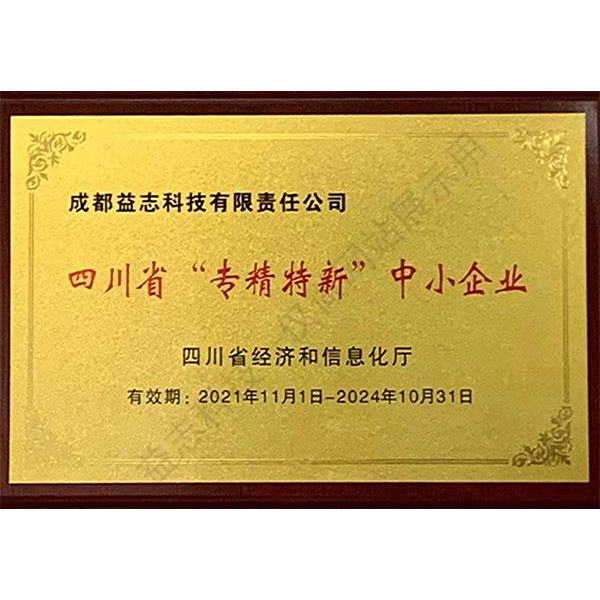
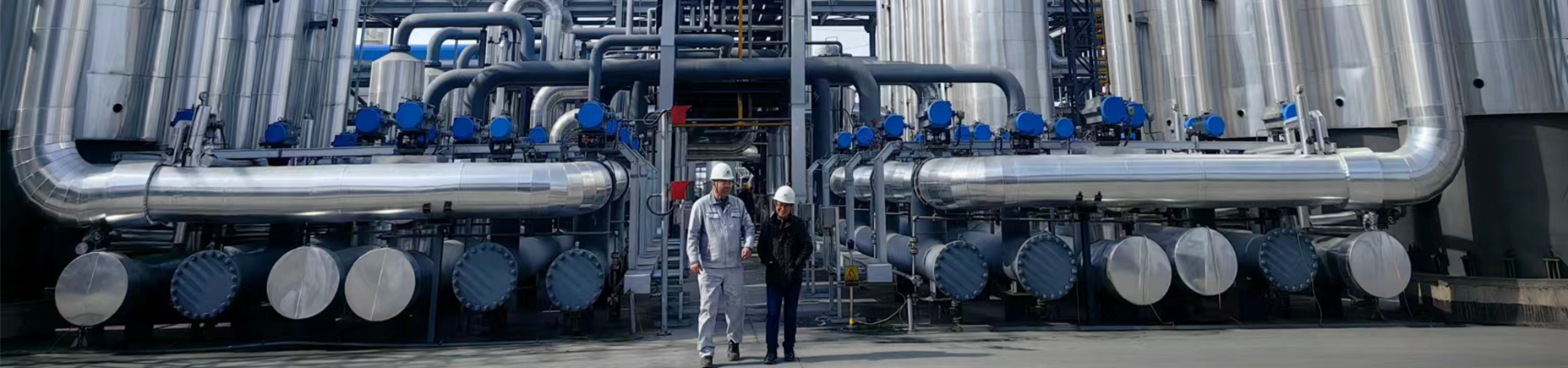
I would like to tell you about one project that we carried out together with engineers fromChengdu Yizhi Technology Co.(their website isyzkjhx.ru). This is their profile - they just grew out of the chemical technology company Huaxi Technology and are engaged in complex design solutions. The task was at a pulp and paper mill. There was a problem with emissions from several small, but widely separated boilers in terms of operating conditions. The traditional system turned out to be cumbersome and ineffective. They proposed a modular installation based on ion desulfurization.
At first everything went well. The pilot module on one boiler showed an efficiency above 98%. But when they began to scale up the entire line, a problem arose with the synchronization of the operation of the modules and the main absorbent regeneration system. In fact, the regenerator did not have time to process the flow of saturated solution from all lines operating simultaneously. It turned out to be a “bottleneck”. The project had to be urgently modified, buffer tanks introduced and the regeneration schedule optimized. This was a valuable lesson: pilot tests should simulate real, not ideal, loads as closely as possible.
As a result, the system was launched. She has been working for three years now. According to the plant's technologists, the main gain is a radical reduction in the volume of solid waste (sludge), which used to be a headache with disposal. Now a concentrated solution of sulfites is obtained, which is partially used in its own technological cycle. The economic effect did not appear immediately, but after about a year and a half of operation, when the additional costs for higher-quality materials for the devices paid off.
Market and players: who makes technologies viable
The Chinese environmental technology market is very competitive and at the same time localized. There are many small companies that make “carbon copies” without delving into the chemistry of the process. This leads to sad consequences and discredits the technology itself. Therefore, the current trend is towards consolidation around strong engineering and scientific centers. Institutions such as the one mentionedChengdu Yizhi Technology Co.(a subsidiary of Huaxi Technology with a registered capital of 120 million yuan) is just an example. Their strength is not that they sell a ready-made device, but that they can carry out the full cycle: from gas analysis and modeling to design, manufacturing of key components and commissioning. They don't hide that theyionic desulfurizersis a piece product, not a conveyor belt.
Another interesting trend is hybridization. Purely ionic desulfurization is not always justified. We often see projects where the first, coarse stage is done by a traditional scrubber, and the second, fine cleaning is done by an ion module. This allows you to reduce the load on the expensive absorbent and increase its resource. Such solutions are especially in demand when modernizing old production facilities, where it is necessary to fit into the existing infrastructure.
Regarding innovation, the main research is now going in two directions. The first is the search for new, cheaper and more stable ionic compositions that are less sensitive to impurities. The second is the integration of data-driven management systems. Sensors that monitor the condition of the absorbent in real time, and algorithms that predict the need for regime correction or regeneration. This is exactly what turns the installation from a “black box”? into a clear and manageable tool.
A look into the future: where technology will be in demand
I do not believe that ion desulfurization will completely replace all other methods. She has her own niche. These are, first of all, facilities with strict environmental regulations and restrictions on waste space. For example, waste incineration plants in urban areas or chemical production, where sulfur is not a waste, but a potential raw material. Also promising is application on ships for cleaning exhaust from marine engines (scrubber), where compact size and the ability to operate in a closed cycle are important.
The key development factor will be not so much the reduction in cost of the technology itself, but the tightening of regulations on waste management. When the sludge from the limestone method becomes not just a by-product, but an object for which you have to pay increasingly more to dispose of it, the economic equation will change in favor of regenerative systems, which include ionic ones.
There are also risks. The biggest is the dependence on supply chains for specific absorbent chemicals. Geopolitics may make its own adjustments. Therefore, local manufacturers who have learned to synthesize key components within the country will receive a serious advantage. In general, the technology has passed the hype stage and is entering the stage of mature, meaningful use. The future belongs to those who understand it not as a magic wand, but as a precise, demanding, but very effective tool in the arsenal of an environmental engineer.