China: biogas exporter through new technologies?
2026-02-08
Here's a question that often comes up at industry meetings: can China really become big?biogas exporter? Many people immediately imagine tankers with liquefied biomethane coming from China - this is perhaps the biggest misconception. Exporting technologies and integrated solutions is where the real game is now. And here everything is not as smooth as it may seem from the outside.
From raw materials to systems: where the real value lies
When we talk about biogas, everyone immediately thinks about agricultural waste. This is true, but only partly. In China, especially in southern provinces like Sichuan, the food industry and urban organic waste have enormous potential. The problem is that the composition of this raw material is unstable. One project at a pig-breeding complex can produce a stable methane output, and next to it there is a vegetable processing plant, where seasonality and the composition of the substrate kill the entire economy. Technology must be flexible. Not just a reactor, but a system of preprocessing, monitoring and adaptation.
I have seen projects where German or Italian equipment, purchased for a lot of money, worked at half capacity precisely because the specifics of local raw materials were not taken into account. Acidity, humidity, the presence of inhibitors - little things that determine success. Therefore, the focus has now shifted to hybrid solutions. Don’t just purchase a unit, but adapt it to a specific waste stream. This is that very new technology - not revolutionary in a scientific sense, but critically important in an applied sense.
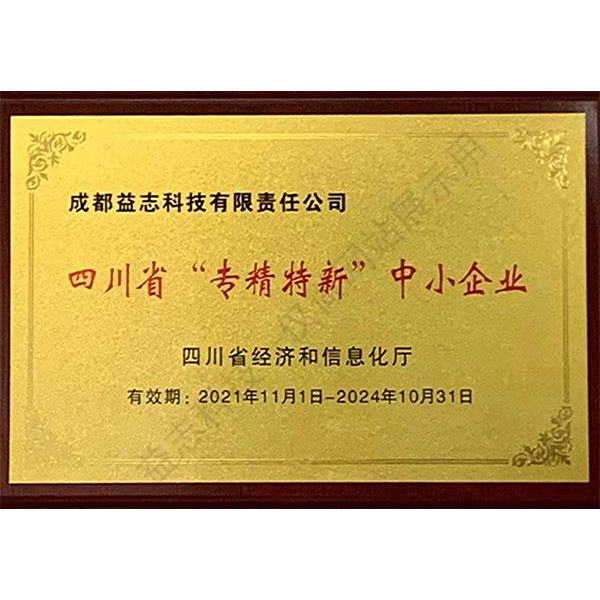
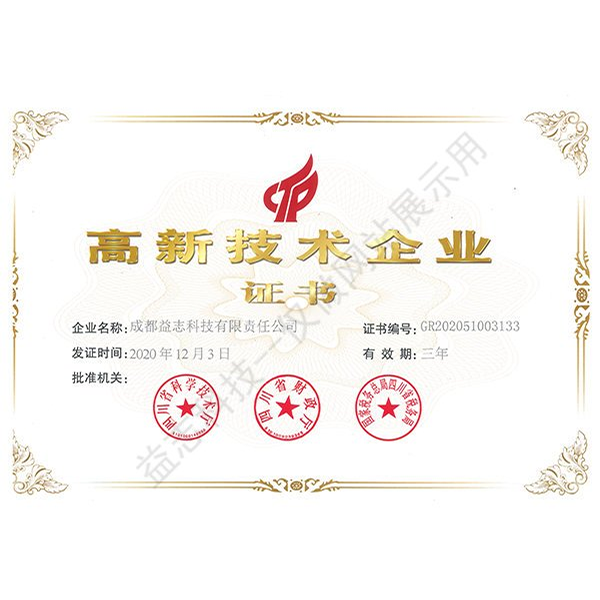
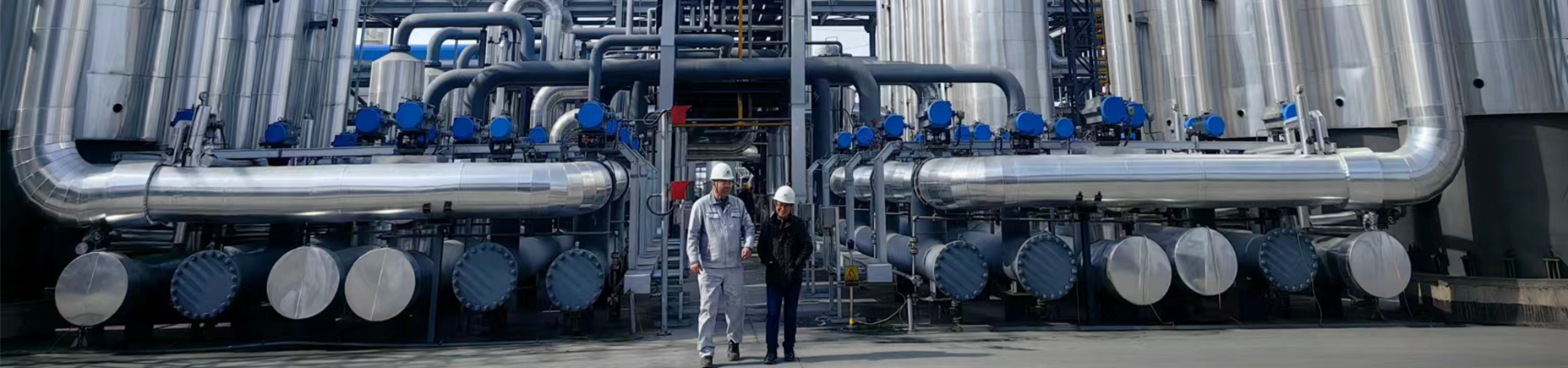
Here, by the way, the experience of design institutes that work at the intersection of chemical technology and practical engineering is interesting. For example,Chengdu Yizhi Technology Co.(their website isyzkjhx.ru), created as a design institute of Huaxi Technology, is just one of these. They don’t just sell reactors, but are engaged in the design of the full cycle - from raw material assessment to biogas purification to biomethane levels. Their registered capital of 120 million yuan indicates serious intentions in this niche. Such players are important because they understand the local context.
Biomethane as a commodity: an infrastructure headache
Let's say we get pure biomethane. What's next? The issue of transportation and use is a separate hell. In Europe there is a gas network where biomethane can be injected. In China, this is more difficult; the network is not developed everywhere, and injection standards are just being formed. Therefore, many successful projects are local closed systems. The plant processes its own waste, produces gas and uses it to generate heat and electricity for its own needs. OhexportThere is no talk yet about supplies abroad.
But export in a different form is already underway. This is the export of knowledge. Chinese engineers have accumulated enormous experience in working with complex, substandard substrates. This experience is in demand in Southeast Asia and Africa, where there are similar problems with agricultural waste. We do not supply gas in cylinders, but design solutions, key components of installations, and cleaning technologies. For example, systems for removing hydrogen sulfide and siloxanes, which have proven themselves using local raw materials.
The failed project that I remember was precisely related to an attempt to make a European project in central China. They calculated everything according to the textbooks, but did not take into account that in winter the temperature of the substrate in the receiving pit dropped below critical, the bacteria simply fell asleep. We had to urgently modify the heating system, which ate up all the margins. Such mistakes are the best teacher. Now any of our pre-project analysis includes not only the chemical composition, but also climatic cycles and the logistics of raw materials throughout the year.
State, money and long payback
There is nowhere in this industry without government support. Green energy tariffs, subsidies, tax breaks are the engine. But there is a trap here. Many players enter the industry precisely for these benefits, building facilities that barely operate just to receive a subsidy. This discredits the very idea. Real projects that reach stable operation have a payback period of 5-7 years, or even more. This is not for speculators.
It is interesting to see how the focus of government support is changing. Previously, they simply gave money for the construction of the installation. Nowadays, it is the operation and volume of clean energy produced that is increasingly being subsidized. This is the right way, it encourages not only to build, but also to manage effectively. Fornew technologiesthis is especially important - you can implement more complex but effective monitoring and automation systems, knowing that it will pay off due to stable operation.
Another point is carbon credits. This market is developing in China. For a potential exporter of biogas or technology, this can become an additional financial flow. But to get it, you need an impeccable data verification system. Again, this is an impetus for the development of digital solutions, sensors, data collection systems - something that can then be replicated and, possibly, supplied abroad as part of a package.
Specific cases: where theory meets practice
Take, for example, a large pig-breeding complex in Hunan province. Initially, there was a simple digester pit for manure disposal - gas was used chaotically, efficiency was low. The task was not just to modernize, but to create a closed-loop system. We installed two two-stage reactors with a heating system from excess heat from the farm itself. Coke filters were added to purify the gas from impurities. The result: biomethane now not only powers the boiler house, but also powers the electric generator, the excess of which is sold to the network. This is not an export in the classical sense, but an export of a model.
Another example is a starch production plant. Here the raw material is highly concentrated organic waste. The problem is acidification of the reactor. The standard solution is to add alkali, which increases costs. Local engineers, in collaboration with the same Chengdu Yizhi Technology Institute, developed a system of stepwise loading and mixing with softer waste from a neighboring plantation. We solved the problem by increasing the overall gas output. Such point solutions are know-how that is valued.
Here is a negative case. An attempt to build a large regional biogas plant collecting waste from dozens of small farms. Failed in logistics. It turned out that transporting liquid manure even 20-30 km reduces the entire economy. The project is frozen. Conclusion: scaling has its limits; sometimes a network of small local installations is more effective than one large one. This is an important lesson for planning.
What's the result? The future lies in packaged solutions
So will China become a biogas exporter? If we talk about physical gas, not on a mass scale in the coming years. There are too many barriers. But it has already become and will become an even more significant exporter of proven technological solutions, engineering services and key equipment. Strength is in adaptability.
Success will be for those who offer not hardware, but a complete package: pre-project analysis, technology adapted for specific raw materials, personnel training, service, and even assistance in obtaining carbon financing. This is a complex product. It is companies like the mentioned Chengdu Yizhi Technology Co., Ltd., with their experience in chemical technology and engineering, that are in the right niche.
Personally, I look at this with cautious optimism. The industry is maturing, moving away from construction for the sake of subsidies to the real economy. New standards will appear, perhaps technologies for producing biogas from algae or other non-core substrates. And then the conversation about exports will take a different turn. In the meantime, the main asset is the accumulated practical experience of working in conditions far from laboratory ideals. This experience is our main export product.