China: leader in LNG block technology?
2026-02-08
When people talk about leadership in LNG technology, many people immediately think of Japanese or Korean giants. This, of course, is not a mistake, but the picture has changed a lot over the past ten years. If previously Chinese companies were mainly associated with large-scale construction and adaptation of foreign technologies, now more and more often you hear about their own developments, and not only in theory, but in specific projects that are already working or are about to be launched. But is this a leader? Here you need to figure it out, look not at loud headlines, but at the details: what exactly are Chinese engineers capable of, where they have really overtaken, and where they are still catching up, and most importantly - how it looks in practice, on the site.
From adaptation to innovation: the evolution of an approach
It all started, as everywhere else, with imports. I remember the first large LNG terminals in China - the heart was the technological lines from Air Products, Linde, Shell. The task was simple: build, launch, ensure reliability. But even then, Chinese contractors and design institutes did not simply copy. They dug into the documentation, counted each valve, tried to understand why the heat exchanger was configured this way, why there were such tolerances. This was not a blind copy-paste, but hard reverse engineering in a good sense, with the goal not to steal, but to understand the principles in order to then do your own thing.
The turning point, in my opinion, was the Silk Road projects and strict localization requirements for domestic projects. The state began to put pressure: you can’t depend on foreign licenses forever. And the first attempts to create their own beganLNG technologies. First for small installations, modular solutions, for example, for refueling ships or remote villages. There, the requirements for efficiency are a little softer, but you can gain experience. And they worked it out. Companies like CIMC Enric have begun to offer complete modularLNG blocksturnkey, which already competed on price and delivery time.
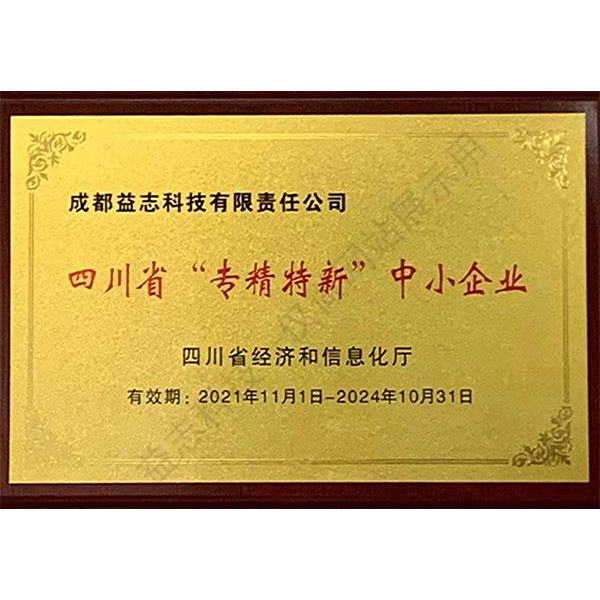
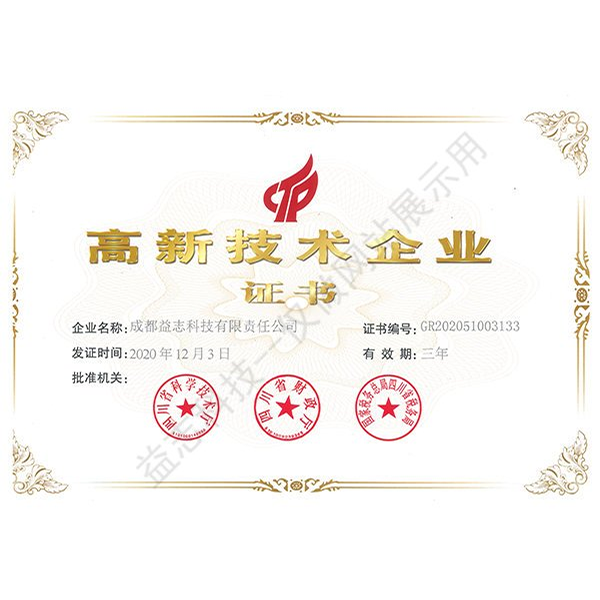
Now we are talking about large-scale base load plants. Chinese engineers are claiming their own liquefaction processes, such as technologies developed in collaboration with universities or institutes likeChengdu Yizhi Technology Co.(their website isyzkjhx.ru- by the way, a good example of how a design institute positions its competencies in cryogenics and gas separation). They don’t just draw diagrams, but already have a portfolio of completed medium-power projects. The key word here is realized. You can write a beautiful theory, but until you go through all the pains of starting up - winter starts, problems with vibration of pumps, setting up control systems - it’s too early to talk about the maturity of the technology.
Strengths: Where China Really Pushes
If we highlight one main advantage, it is the speed and cost of construction. Chinese EPC contractors (Engineering, Procurement, Construction) have squeezed everything possible and impossible out of the modularization process. They build huge sections of the plant in their shipyards, and then transport them by sea to the site and assemble them like a construction kit. The time frame is reduced significantly. For the client, especially in the countries of Asia, Africa, and the Middle East, where rapid commissioning of capacity is needed, this is a decisive argument. The price is also often 20-30% lower than that of Western consortiums.
The second trump card is chain integration. There are companies in China that control everything from the production of special steels and compressor equipment to design and construction. Take the same oneChengdu Yizhi Technology Co., Ltd.is a design institute with a registered capital of 120 million RMB established by Huaxi Technology. They don’t just draw, they have the parent company’s experience in chemical technology behind them. This means that they can offer non-isolatedLNG block, but to integrate it into a more complex chemical complex, which is in great demand today.
And third is adaptability. Western technology giants often come with a ready-made, polished solution that is expensive and time-consuming to change. Chinese engineers are much more flexible. Do you need to change the scheme for a specific gas composition? No problem, we'll recalculate. Need to use more local materials? Let's develop a specification. This willingness to adapt to the project, rather than to adapt the project to the technology, is winning markets.
Weaknesses and pitfalls
But there’s nowhere without a fly in the ointment. The biggest question is the heart of any liquefaction plant: the main cryogenic heat exchanger and the high-capacity turboexpander unit. We have our own technologies, but their energy efficiency in comparison with the decades-proven AP-C3MR or Cascade processes still raises questions. Efficiency is good on paper, but long-term data on actual specific energy consumption per tonne of LNG from full-scale plants is not yet widely published. It's a matter of market confidence.
Another pain is the first pancake. The introduction of any new technology is always associated with risks. I remember the story of one of the first plants that used Chinese liquefaction technology for medium power. There were problems with stability of operation in transient modes (start-stop). Engineers spent several months fiddling around, finalizing control algorithms on site. In the end they launched it, but the deadlines moved forward. For the customer, these were nerves and additional costs. Western competitors immediately point out: But this doesn’t happen with us, it’s worked out for us. Fair enough, but the price of their reliability comes at a corresponding price.
And of course, software for dynamic modeling and optimization of technological processes. Here the leaders are again Western companies. Chinese institutes are actively developing their analogues, but for their software to become an industry standard, it takes time and many successful cases of its application.
Case studies: not only successes
There are successful examples. The same low-power modular stations for gas supply to remote areas in China itself or in Pakistan. They work stably, are cheaper than imported analogues, and they can actually be deployed in a few months. This is a niche where China is already the undisputed leader.
But I had experience communicating on a project in Central Asia. The customer was considering a proposal from a Chinese consortium with its own technology for a plant with a capacity of 1 million tons per year. The price and timing were fantastic. However, upon closer examination, it turned out that energy efficiency guarantees were given with large tolerances, and the contract was strictly tied to Chinese financing and contractors. As a result, the project was frozen. It's a classic dilemma: benefit now versus potential long-term risks. The Chinese win where this risk is acceptable to the customer.
An interesting point is working with acid gas (high CO2 and sulfur content). Here, Chinese institutes, especially those that grew out of petrochemicals (likeChengdu Yizhi), often a more practical experience. They spent decades purifying and separating in chemical plants. Therefore, their decisions on pre-treatment of gas beforeliquefactionsometimes more practical and less over-complicated than those of pure gas Western technology companies.
What's the result? Leadership is more than just technology
So is China the leader or not? If we talk about the purity and efficiency of the technological process for giga projects, then not yet. The leaders are still the same veterans. But if you look at leadership as the ability to meet market demand, then yes, China is already a leader. They satisfy the demand for speed, cost, and solutions for non-trivial problems (low power, complex gas, integration).
Their leadership lies in their industrial approach. They turned constructionLNG capacityinto a highly standardized, modular industry. It's like comparing the one-piece production of sports cars and the assembly line for the production of reliable SUVs. The market needs both.
The future, I think, is hybrids. I can already see a trend: Chinese EPC contractors win the construction tender, but key technology licenses are taken from the same Air Products. Or vice versa - they use their own process, but purchase the main compressors from Siemens or GE. This is fine. Absolute leadership in the entire chain is a utopia. But to be a key, and often decisive, player in the technology marketLNG blocks- China has already succeeded in this. They are not just catching up, they are forming new rules of the game, where speed and flexibility are sometimes more important than ideal, but expensive efficiency. And in this game they are stronger than anyone else.