China: recycling of PVC products?
2026-02-08
When people talk about PVC recycling in China, many people immediately imagine gigantic scales and advanced technologies. In fact, it often comes down to simple, almost artisanal solutions and a constant search for a balance between profitability and the environment. The main difficulty is not the lack of technology, but its economic applicability for a specific, often low-margin, waste stream. This is what I want to talk about, without gloss.
What actually ends up in the ?PVC waste stream??
The first thing you encounter in practice is the extreme heterogeneity of raw materials. Under the general name ?PVC waste? everything is hidden: from clean profile scraps from factories to mixed construction waste with film, cable insulation of various compositions, and even old linoleum with a fabric base. Each type requires a different approach. For example, pure rigid PVC is an almost ideal raw material for regranulation; it can be crushed and put back into production with minimal losses. But the same linoleum or cable insulation is a headache because of plasticizers, stabilizers and, most importantly, foreign materials like fabric or copper.
A common mistake newbies make in business is trying to process it all according to one scheme. I have seen several attempts to create a universal line for processing “any PVC?”. As a rule, this ended either in obtaining a low-quality, useless regranulate with unpredictable properties, or in constant equipment breakdowns due to abrasive impurities. The key point here is toughsortingat the entrance. Without it, any, even the most modern technology, is ineffective.
An interesting case is the disposal of medical PVC products, for example, disposable transfusion systems. The topic is sensitive from the point of view of sanitary standards. Technologically, they can be recycled, but require careful washing and disinfection. The question comes down to the logistics of collection and the cost of such pre-processing. It is often easier and cheaper for the clinic to send it to a landfill as medical waste, which, of course, is not good. Regulatory incentives are clearly needed here, not just market ones.
Technological routes: from simple crushing to pyrolysis
The main and most common method is mechanical processing. Crushing, washing (if necessary), agglomeration or granulation. For clean waste this is a great option. Equipment, for example, from Chinese manufacturers like Zhangjiagang Huade Machinery, is now quite reliable and affordable. But the nuance is in the details: the knives on the crusher for soft film and for hard profile are different things. A common problem is overheating of the material during agglomeration, which leads to destruction of the polymer and yellowing of the granules. We have to select temperature conditions literally by trial and error for each new batch of raw materials.
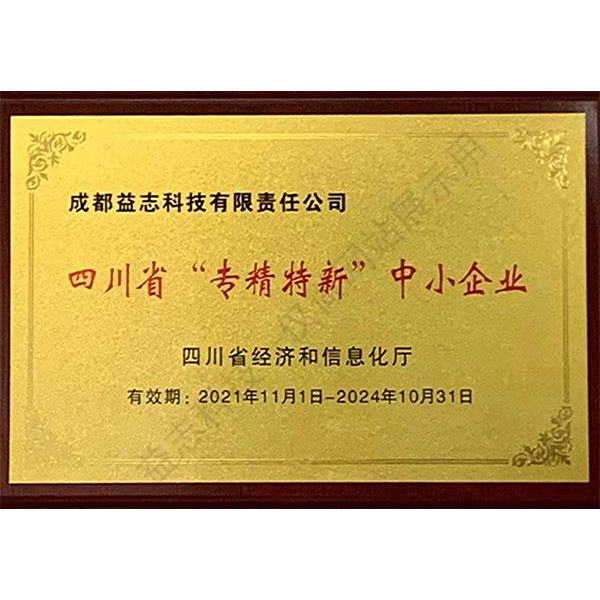
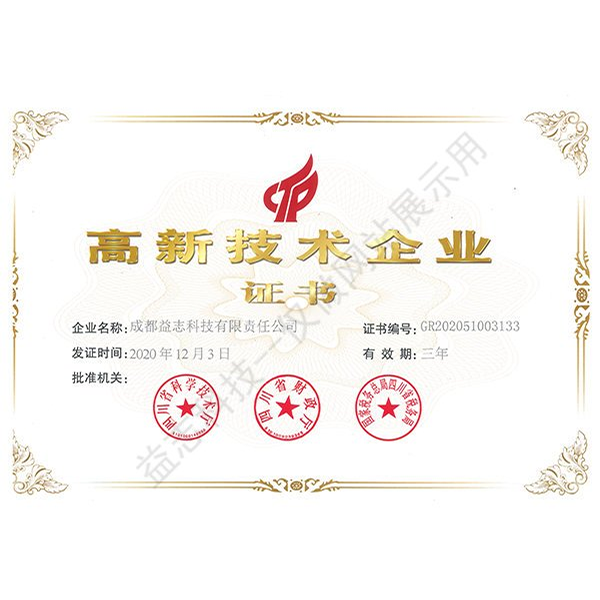
When it comes to highly contaminated or composite materials, chemical methods come into play.Dissolution-precipitation— promising, but requires work with solvents and their recovery. This is no longer the level of a small workshop, but of a serious chemical production. In China, such projects are often implemented with the support of large research institutes. For example,Chengdu Yizhi Technology Co.(their website ishttps://www.yzkjhx.ru) is just engaged in similar technological developments. It is a design institute established by Chengdu Huaxi Chemical Technology Co., Ltd., with solid registered capital. Their approach is not just selling equipment, but designing complete technological cycles for specific customer tasks, which is critically important in the case of complex waste.
Pyrolysis of PVC is a separate and controversial topic. On the one hand, this is a way to recycle something that cannot be processed mechanically. On the other hand, the main problem is chlorine. When heated, it is released as HCl, which corrodes equipment and is a hazardous release. What is needed is either durable reactor materials or efficient systems for capturing and neutralizing HCl to produce, for example, hydrochloric acid. Technologically it is difficult and expensive. I saw several small pyrolysis installations that could not cope with corrosion, and they were quickly put out of action. A high-quality solution requires serious investment.
The secondary raw materials market: who buys and why?
Recycling is half the battle. It is also necessary to sell the resulting regranulate or agglomerate. The main consumers are manufacturers of non-responsible products: garden hoses, mats, some types of film, floor coverings in the lower price segment. Competition with virgin PVC is fierce, so price is a deciding factor. The quality of the secondary product must be stable, otherwise the client will leave.
A paradox arises here. To obtain stable quality, you need stable, well-sorted raw materials at the input. But collection and sorting are the most labor-intensive and costly stages of the chain. Many processors save money on this, hoping to “pull out” quality by equipment settings. It doesn't work. As a result, the market is flooded with cheap but low-quality secondary granulate, which is only suitable for additives in a limited percentage.
A promising segment is the creation of composite materials. For example, adding recycled PVC to mixtures for the production of building profiles (not load-bearing), tiles, pallets. This requires in-depth knowledge of the rheology of polymers and composites. This is where the services of companies such as the mentioned Chengdu Yizhi Technology Co. are in demand, which can conduct research, select a recipe and design a line adapted for the use of recycled materials with their variable properties.
Legal framework and economic incentives
Government policy in China has been actively pushing the industry towards a circular economy in recent years. Increasingly strict standards for waste disposal, including polymer waste, are being introduced. However, there is a huge distance between the resolution and its implementation on the ground. What works most effectively is not fines, but real economic incentives for manufacturers using recycled materials or for companies involved in their collection and processing. For example, tax breaks or simplified licensing.
In practice, it often turns out that legal disposal in compliance with all environmental standards (cleaning waste from car washes, filtering emissions) turns out to be more expensive than illegal dumping or burial. This is a battle between economics and ecology. So far the first one wins. The solution is seen in technologies that reduce the costs of legal processing, making it profitable even without subsidies. And it's a matter of time and engineering.
An interesting point is extended producer responsibility (EPR), which is gradually being introduced. In theory, this should create a stable financial flow for recycling packaging and products. But how this will work for thousands of small manufacturers of PVC products is a big question. Most likely, specialized operators will emerge that will accumulate their contributions and organize logistics and processing. This could become a driver for market consolidation.
Looking to the future: integration and deep redesign
I think the future lies not in individual waste processing plants, but in integrated chemical-technological complexes. A stream of mixed waste will flow there, and the output will be not just regranulate, but a set of valuable products: purified polymers, chemical raw materials obtained by pyrolysis or dissolution, possibly energy. This will make it possible to utilize even the most complex fractions in an economically feasible manner.
The role of integrator companies capable of designing and building such a complex will be key. It is they who, having expertise in chemical technology, design and economics, will be able to create a working model. Design institutes like Chengdu Yizhi Technology Co., Ltd., with their experience and the resources of parent company Huaxi Technology, are at the forefront of this process. Their job is not about “buy our crusher”, but about “let's design a solution to your specific waste problem from collection to final product”.
In the end, the answer to the question ?? is a story not about a single technology, but about a complex, often chaotic, but dynamically developing field. A field where the crude practice of collection points coexists with high-tech chemical processes, where success is determined not so much by the equipment as by the ability to organize the flow of raw materials and find an economically feasible use for the recycled material. And it is at this intersection of engineering, chemistry and economics that the most interesting work is currently underway.