China: MEA/MDEA/NHD desulfurization technologies?
2026-02-09
When people talk about desulphurization in China, many people immediately think of large-scale installations and “advanced” ones. Western licenses. But the real picture on the ground, especially with solvents such as MEA, MDEA and NHD, is often more complex and prosaic. There are subtleties here that are not always obvious from technical catalogs.
MEA: simplicity that is deceptive
Monoethanolamine. It seems like a classic of the genre, many people started with it. In China it is still used, but, frankly speaking, often out of inertia or at low capacity. The main problem is the high corrosion activity and tendency to degradation in the presence of COS and CS?. I remember one project in the coke industry, where they insisted on MEA because of its low cost. As a result, after a year and a half, the replacement of heat exchangers was “eaten up” due to corrosion. all the initial savings. Regeneration is a different story; energy consumption is significantly higher than that of modern analogues.
Now its share is declining, but in niche applications where the gas composition is relatively simple and stable, it still holds. The key is strict control of the regeneration temperature and solution concentration. The slightest deviation and problems begin.
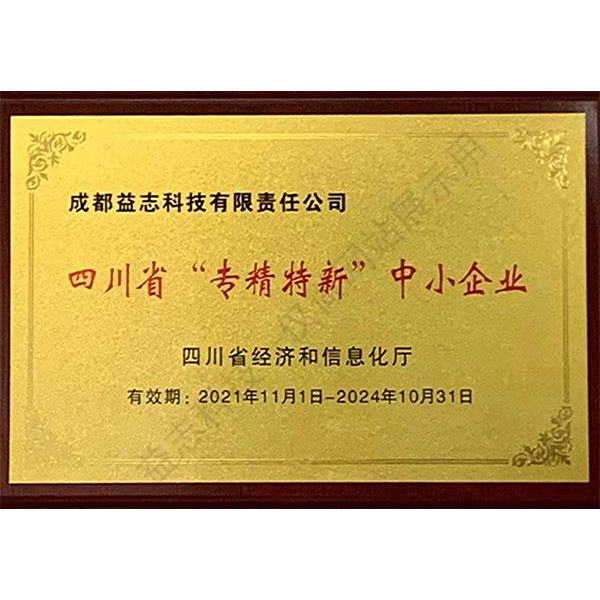
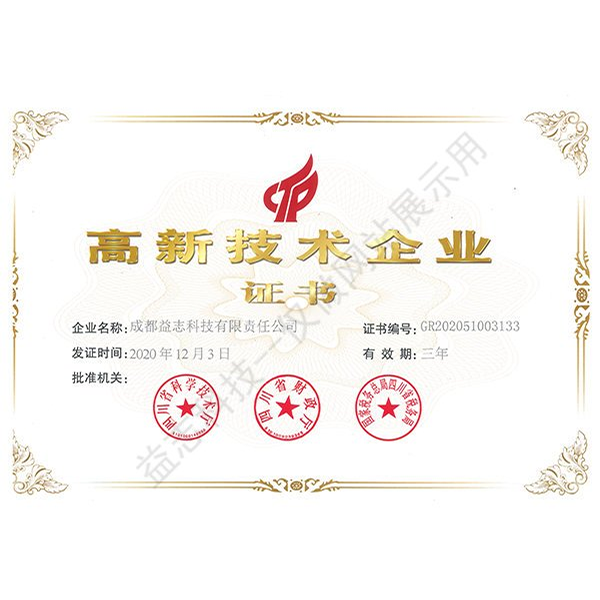
Interestingly, some local engineering companies, likeChengdu Yizhi Technology Co.(a design institute created by Huaxi Technology) sometimes offer hybrid MEA-based solutions for specific flows, but always with caveats and enhanced monitoring. This is not a mainstream story.
MDEA: working ?horse? Chinese gas purification
But methyldiethanolamine is really the basis. Widely used in refineries for the purification of natural and associated petroleum gas. Its selectivity for H?S in the presence of CO? – the main advantage. But not everything is smooth here either. Efficiency strongly depends on the correct selection of concentration and, critically, on the use of activators.
In practice, you often see that designers take a standard recipe, and then the adjusters “dance with a tambourine” for months. around the column to get to the passport details. Supplements like piperazine or MMEA are an art. One coke oven gas treatment plant had to combine MDEA with a small amount of MEA to “pull out” it. required cleaning depth. It worked, but the absorption kinetics became capricious.
Another point is foaming. Chinese raw materials can be very “dirty”. Impurities of higher carboxylic acids, amines, fine suspended matter - all this leads to abundant foaming in the absorber. It is necessary to install powerful filtration systems and be sure, I emphasize, be sure to use anti-foam additives. Without them, emergency stops are guaranteed.
NHD: your own, “branded” development
Polyethylene glycol dimethyl ether - this is an interesting topic. Technology actively promoted in China for purification of acid gases in processesdesulfurizationunder high pressure, especially in the production of ammonia and methanol. The main advantages are low vapor pressure (lower losses), good selectivity and, importantly, resistance to thermal and chemical degradation.
But this is not a panacea. The viscosity of NHD is significantly higher than that of amines. This imposes special requirements on the design of the circulation system - pumps, heat exchangers. In winter in the northern provinces there may be problems with starting if proper heating is not provided. I saw how at one installation in Xinjiang, the first day after the planned remainder was spent only on warming up and bringing the physical properties of the solution into working condition.
Its application is often associated with complex technology packages. Companies deeply immersed in this segment, such as the one that createdChengdu Yizhi Technology Co.Huaxi Technology offers it as part of its know-how for certain processes. This is not a product that you can simply buy in a drum and pour into a system designed for MDEA.
Practical pitfalls and pitfalls
Any, even the most perfect formula, faces the reality of exploitation. One of the most common problems is insufficient purification of raw gas at the inlet. If gas with drops of hydrocarbon condensate or solid particles enters the absorber, this kills any solution. Amines become contaminated and NHD loses its properties. Good separator scrubbers are needed, and maintaining them is not a minor task.
The second is water. The quality of feed water for solution preparation and make-up is often underestimated. Hardness, ion content - all this affects salt formation and corrosion. At one facility, for a long time they could not understand the cause of pitting corrosion in the regenerator. It turned out that the make-up water contained an increased chloride ion, which, under high temperature conditions, created local active zones.
And third – “human factor”. Operators accustomed to working with MEA may not feel the nuances of working with MDEA or NHD. Circulation overload, non-optimal temperatures on the plates, savings on regeneration steam - all this negates the advantages of even the most advanced technology. Training and detailed, clear regulations are not bureaucracy, but a necessity.
Looking forward: hybrids and customization
The current trend is not the search for one universal solvent, but the creation of hybrid compositions for a specific task. Mixtures of MDEA with various activators, combinations of amines with physical solvents. The goal is to reduce energy costs for regeneration and increase sulfur capacity.
Chinese engineering companies are actively working in this field. They often start not from an abstract “best practice”, but from an analysis of the customer’s specific raw materials. For example, a gas with a high content of COS and mercaptans may have its own specific formulation. Websiteyzkjhx.ruis just an example of such a company that positions itself not just as a supplier, but as a design institute with a focus on gas purification technology.
The future, it seems to me, belongs to more “smart” people. systems. Where the composition of the solution and the operating mode of the installation are flexibly adjusted to the changing composition of the raw materials. But this requires serious investments in analytics and process control systems. In the meantime, the basis is a competent, balanced choice between the proven MDEA, specialized NHD and their modifications, taking into account all, even the most unpleasant, operational details. The main lesson is that there is no perfect technology; there is only one that is correctly selected and, more importantly, properly operated.